
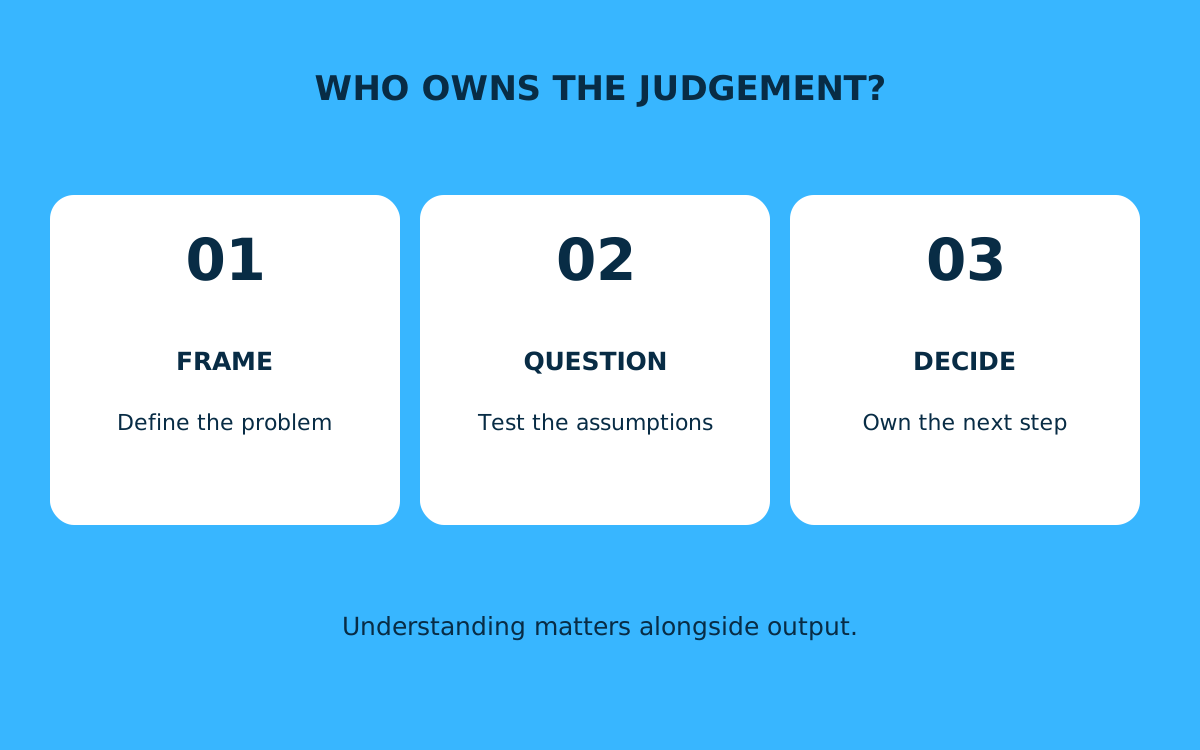
The useful question behind the “100x employee” idea is what a person continues to understand and decide when software can do more of the work.
In an October 12 opinion article, Merative India leader Dipu Gopinath describes an architect who used AI to revive a previously shelved product feature. The employee recognised the opportunity and pursued it. The anonymised account illustrates the author’s argument about curiosity and ownership; it does not establish a measured hundredfold productivity gain.
Three ways to work with AI
Research offers a more specific lens. Harvard Business School’s account of a 2025 working paper describes more than 200 BCG consultants completing the same strategic task. Researchers identified three patterns: repeatedly working through the problem with AI, retaining control of the core analysis while using AI selectively, and handing over most of the task with little engagement.
According to that account, selective users achieved the strongest recommendation accuracy among the groups. The account associates more integrated use with AI-related skill development, while extensive delegation produced quick, polished work without the same observed development of expertise. Even active collaboration could reinforce an incorrect approach.
These observations concern a particular task and group. They do not prove that one working style always wins, that the patterns are permanent personality types, or that Indian employees will experience identical outcomes.
Why this matters for teams
Consider a hypothetical Indian operations team reviewing a recurring customer-service failure. AI could group complaints and suggest explanations. Someone still needs to decide whether those groups reflect the actual process, which evidence contradicts the explanation and what a proposed change would affect.
That responsibility can move between people, but it needs an owner. A polished recommendation is easier to evaluate when the person presenting it can explain the assumptions and identify what would change their conclusion.
For managers, this suggests a development question alongside the output target: after using the tool, can the employee explain the problem better than before? That is an editorial test to consider, rather than a validated training intervention.
The Crunch
Judge the work and the understanding behind it. AI-assisted speed becomes more useful when people retain enough knowledge to challenge the answer, choose the next step and take responsibility for the result.