
India’s microdrama companies are bringing AI into more stages of production, from deciding which scripts to develop to creating scenes and adapting dialogue. For a format built around short episodes watched on phones, the attraction is clear: teams could try more ideas within the same budget.
Bullet Microdrama’s Trinetra AI and Eloelo Group’s Dolphin AI show how that ambition is taking shape. Their progress also raises a practical question: how much of the benefit survives the work needed to turn generated material into a show people want to follow?
The Breakdown
Trinetra divides the process among three tools. Bullet says Trishul evaluates scripts, Rudra produces visual material and episodes, and Damrooh handles language and audio work. Its product description says the system brings together 37-plus AI models.
Eloelo, which runs Story TV, introduced Dolphin AI through an early-access launch. The product promotes the ability to keep characters and visual style consistent across multiple shots, while combining video with voiceover and music.
In its launch announcement, Dolphin said AI had helped Story TV increase output from 100 shows a month to 250. That is a company-reported production figure. It does not establish whether audiences watched for longer, returned more often or paid more.
The opportunity for a smaller studio is to explore a setting, character or visual treatment before committing to a full production. The value depends on how much usable work the experiment produces and how much correction it needs.
Why This Matters
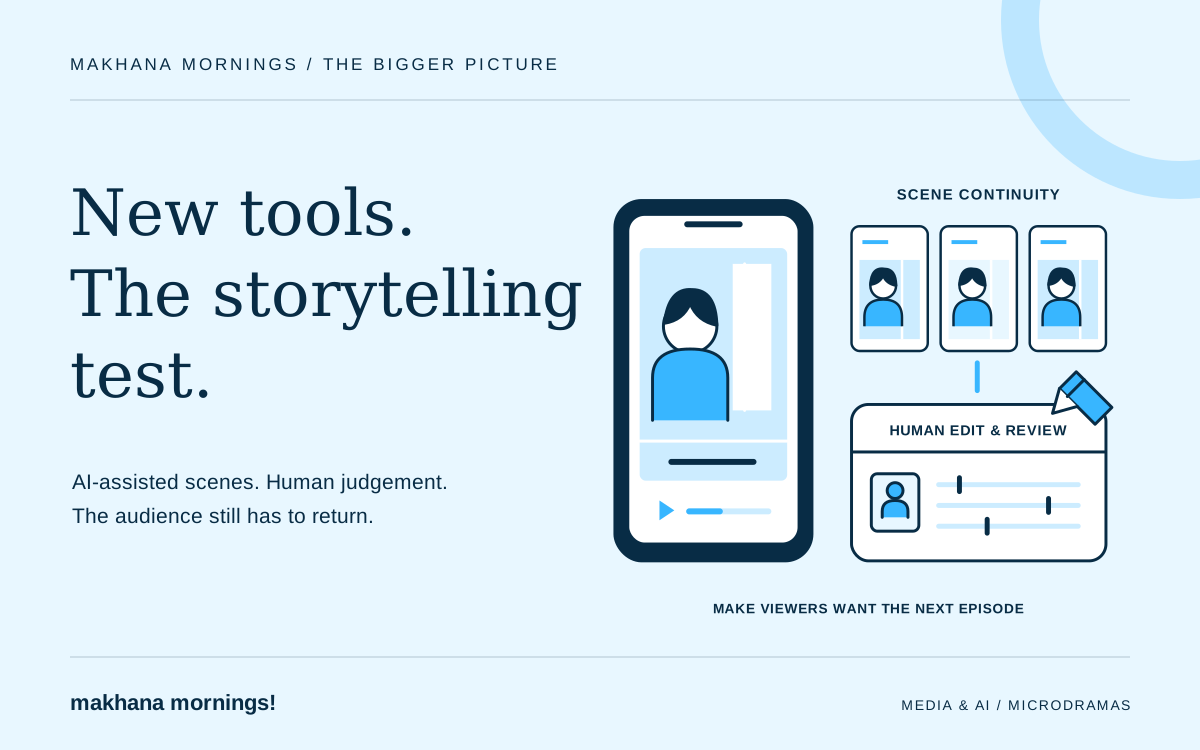
A generated scene is one part of a finished series. Editors still have to judge whether the sequence makes sense, whether dialogue matches the picture and whether a character remains recognisable from one episode to the next.
A public recruitment post from Bullet’s AI-adoption team makes some of that work visible. Its AI content operations internship includes manually correcting outputs and checking dubbing, lip synchronisation, audio and subtitles. The post illustrates the tasks involved; it does not establish the effect of AI on overall employment.
Regional adaptation adds another layer. KadhaiShorts chief executive Sabarish Venkat says the Tamil platform mainly uses AI for visual effects and is exploring dubbing and translation. He stresses the need to adapt humour and colloquial speech for each audience.
For Indian creators, that distinction matters. A technically accurate translation can still sound awkward. Language review and creative judgement belong in the production budget alongside the software.
The Big Picture
The useful cost comparison is between completed, usable shows of similar length and quality. It should include writing, generation, repeated attempts, editing, sound, rights checks and final review. Comparing a software package with a full live-action budget leaves too much out.
Audience demand needs its own evidence. In an analysis published on October 14, consultancy Redseer estimates that about 4 crore people paid for microdramas at least once in FY26, while the average monthly paying audience was 1.5–1.7 crore.
These are estimates for the wider microdrama market, not a measure of demand for AI-generated shows. They highlight why attracting a first payment and building a continuing paying audience need separate attention.
Platforms can assess the new tools by tracking the cost of a finished episode alongside how many viewers finish it, return for the next one and keep watching over time. A larger catalogue is useful when it improves those outcomes.
The Crunch
AI is giving microdrama teams more ways to develop and produce stories. Its lasting value will become clearer through comparable production budgets, dependable quality and viewers who choose to come back.