
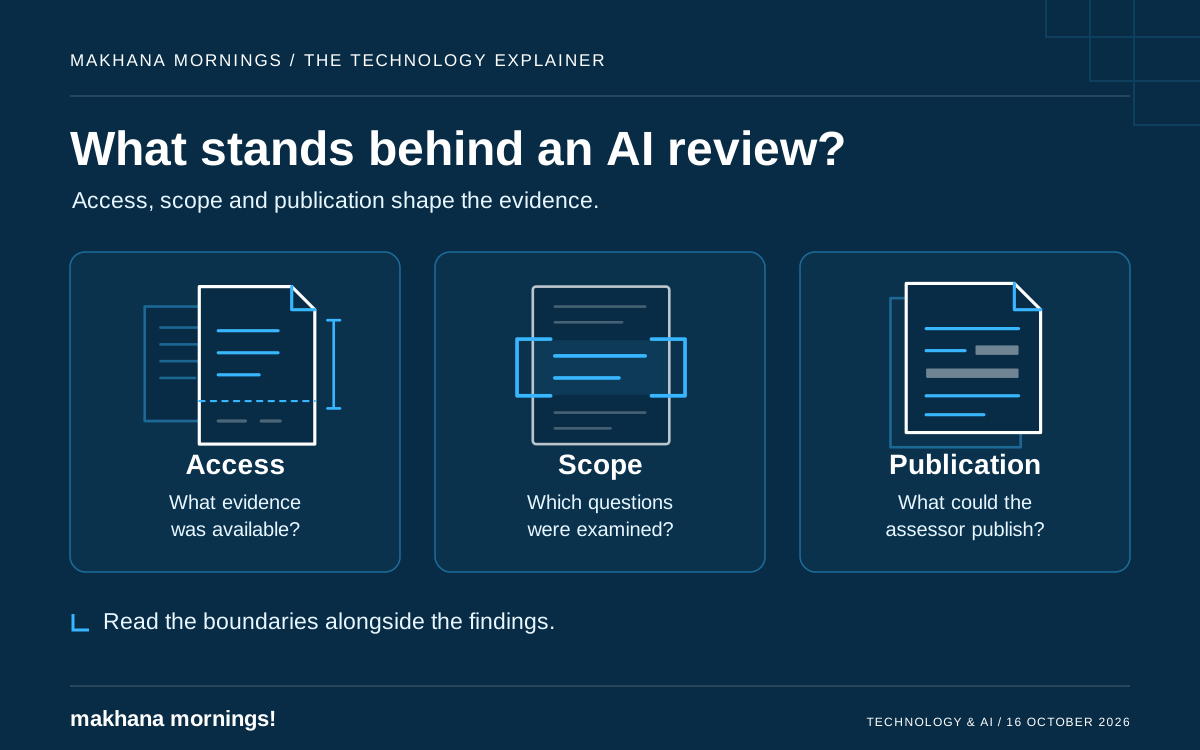
An outside AI reviewer can see only what its agreement allows. The value of a review therefore depends on the evidence available, the questions investigated and the freedom to publish what was found.
Anthropic’s October 15, 2026 update makes those terms more concrete. It says six staff from the nonprofit METR have been onboarded with access comparable to its risk-assessment teams. Exclusions cover categories such as customer data, legally privileged material and model architecture information.
The Breakdown
Under this arrangement, Anthropic says it cannot veto METR’s publications. It can require redactions within specified categories. METR can publicly discuss whether it considers those removals justified.
The company also describes three tiers. At the first, it controls access and approves publication. The second allows broader access and publication without approval, subject to redactions. The third adds the employee-like access described for METR. The programme is voluntary.
These differences matter when a supplier says its systems receive external scrutiny. A review limited to selected questions can still be useful, but readers need to know which conclusions the evidence can support.
What the evaluator is trying to establish
METR published its own general proposal on October 14. It concerns whether developers could lose control of AI systems used inside their organisations. That is a different scope from testing every customer-facing application.
Its proposed investigations ask whether agents might pursue harmful actions, whether controls would catch them, and whether AI-assisted research could accelerate development beyond the ability to assess its risks. These are research questions, not findings that those outcomes will occur.
The proposed work would draw on staff interviews and internal records. METR seeks private interviews, publication of reports within an agreed scope, and disclosure of access limits and redactions. This general proposal should not be read as the complete contract governing its Anthropic engagement.
METR explicitly limits the assurance such work can provide. Its proposal excludes areas including protection of model files against theft, the strength of isolated testing environments and organisational governance. It would not give METR authority to approve or block deployments.
Independence needs more than an outside name
In a separate October 14 statement, METR says it has chosen not to accept payments or donations from frontier AI companies. It does accept free model access, while saying it could afford to pay for that access without materially affecting operations.
Financial separation does not remove dependence on cooperation. METR acknowledges that voluntary engagements still rely on developers granting access and permitting publication. Its transparency approach asks readers to consider the agreed scope, time available, missing evidence, conflicts and restrictions alongside the result.
It also says its practices are still evolving: not all previous or ongoing work meets its current preferred standard. That qualification matters when comparing an older evaluation with a newly announced arrangement.
The Big Picture
For Indian businesses and global capability centres assessing an AI supplier, these disclosures offer a practical way to read a review. What system and version were examined? Which risks were in scope? What evidence was unavailable? Could the assessor publish an unfavourable conclusion?
An assessment of a developer’s internal research cannot, by itself, establish that a particular customer workflow is suitable for use. Buyers still need evidence relevant to their own application. Equally, a limited review need not be dismissed if its boundaries are clear.
The broader debate about the pace of AI development becomes more useful when it produces evidence people can inspect. These announcements describe steps towards that goal. They do not establish that the industry has slowed, or that an evaluated system has been certified safe.
The Crunch
The strength of an AI safety review lies in what the assessor could examine, what it could publish and how clearly it explains the gaps. An outside name on a report starts the inquiry. The terms and evidence determine how much confidence the report deserves.