
The Asian Development Bank and Japan have signed financing agreements with AM Green Ammonia (India) Private Limited for a project to replace natural-gas-based ammonia production with a renewable-powered process. ADB’s October 15 announcement describes planned capacity of about 1.1 million tonnes a year.
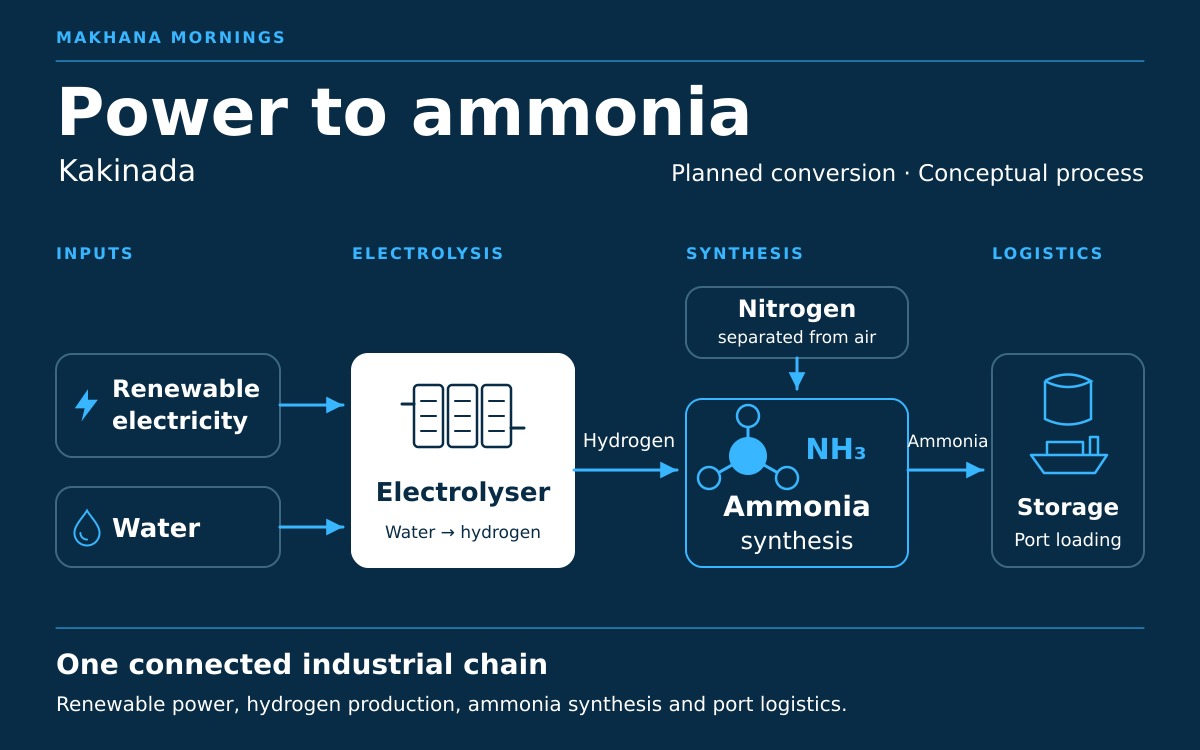
The project is at Kakinada, Andhra Pradesh, where an existing fertiliser-industry site is being repurposed. Its engineering scope shows what that change involves: hydrogen-making equipment, nitrogen separation, ammonia synthesis, storage and a loading facility at the port.
What is being converted
In its August 2024 investment announcement, AM Green said it had acquired the existing Kakinada urea plant earlier that year. The planned investment covered a hydrogen-generation unit, its integration with ammonia production and supporting infrastructure.
Rely’s October 2024 engineering-contract announcement made that scope more concrete. It included electrolysers supplied by John Cockerill, units to separate nitrogen from air, two ammonia-synthesis trains, storage, port-loading equipment and utilities. Rely’s assignment covered engineering, procurement services, construction management and commissioning.
Using an existing site therefore still entails a broad equipment and infrastructure programme, connecting chemical production with storage and shipping.
Where renewable power enters the process
Electrolysers use electricity to split water and produce hydrogen. Ammonia synthesis then combines hydrogen with nitrogen. As the International Energy Agency explains, electrolysis offers an alternative to producing the hydrogen from natural gas; the source of electricity therefore matters to the production route’s emissions.
The Kakinada design links those processes to renewable power and storage. Rely’s 2024 announcement described a combination of wind, solar and pumped-hydro storage. A September 30, 2026 joint announcement by AM Green and purchaser Hintco, concerning a separate Phase 2 supply arrangement, also described alkaline electrolysis supported by renewable power and pumped-hydro storage.
The practical challenge is integration: power supply has to support hydrogen production, which in turn feeds the ammonia plant. The IEA’s ammonia roadmap identifies the use of variable wind and solar power in this production chain as an operating challenge. Storage is part of the announced Kakinada response.
What the financing adds
The financing includes a $100 million loan from the Leading Asia’s Private Infrastructure Fund 2, financed by Japan International Cooperation Agency and administered by ADB. ADB describes the fund as infrastructure cofinancing intended to fill gaps alongside its existing private-sector financing operations.
That structure supplies capital for the conversion rather than paying AM Green for ammonia deliveries. The disclosed loan is one component of the investment, not the total project cost. ADB calls this the first investment under ACCEL, its energy-security initiative with Japan.
The October announcement does not establish loan disbursement, completed commissioning or actual output. It also provides no measured emissions savings. The engineering scope and renewable-power design should therefore be read as the project being financed, not as achieved operating performance.
The Crunch
AM Green’s Kakinada project is an industrial conversion linking renewable power, hydrogen production, ammonia synthesis and port logistics. The new financing supports that investment; its value depends on making those parts work together.