
A Bengaluru job advertisement offers a detailed view of the human work behind industrial AI. Augury is seeking a Remote Operations Engineer to help review automated alarms and support people operating manufacturing plants.
The listing sits alongside a broader expansion. On October 15, Augury announced a new engineering hub in the city, adding to its presence in the United States and Israel. The company says the centre will develop agentic capabilities for its Industrial AI Workforce.
Together, the announcement and vacancy show the capabilities Augury wants to build in India. The job description makes the operational part particularly concrete.
The Breakdown
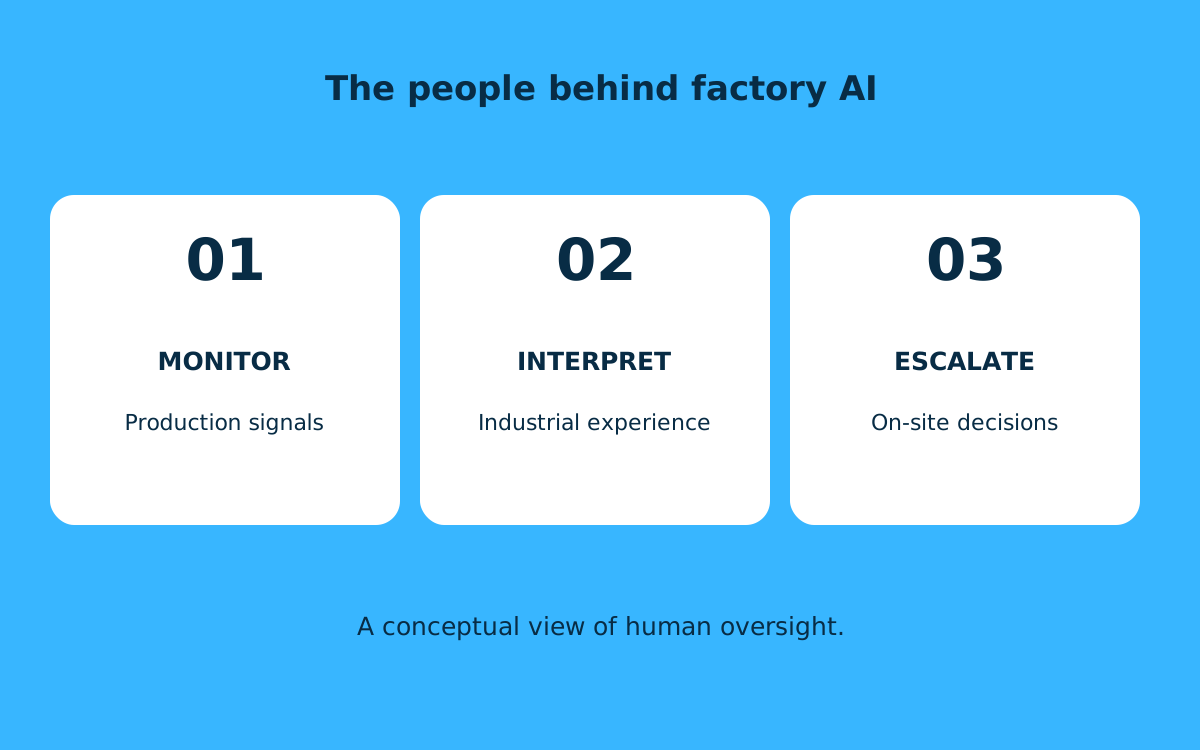
The advertised role covers production monitoring, communication with on-site teams through tools such as Teams or voice calls, and event records for handovers between night shifts and daytime personnel. It also includes reviewing deviations and escalating difficult process issues.
Augury seeks four to eight years of manufacturing-process experience and familiarity with industrial control and monitoring systems. The specified educational backgrounds include process and chemical engineering.
That is a meaningful detail for Indian professionals assessing opportunities around AI: manufacturing experience is central to this particular role. The vacancy establishes what Augury wants to recruit. It does not show how many people have been hired or whether this service has delivered better production outcomes.
Why This Matters
Remote support introduces a practical question: how does knowledge of a particular plant reach the person reviewing its data?
A reading can be interpreted more usefully when the reviewer understands the conditions in which it was collected and what the team on site is doing. An event record and a shift handover help preserve that context when another person takes over.
Augury’s product description says customers define thresholds, approval requirements and operating constraints for its agents. It also says actions are recorded and traceable. These are the company’s stated controls; their effectiveness in a specific installation would need to be checked there.
For a manufacturer evaluating the service, the division of responsibility therefore deserves attention alongside the software. The remote engineer, the on-site operator and the automated system need clear roles when a recommendation requires judgement or an unexpected condition arises.
The Big Picture
A related technology effort shows how recommendations might enter the maintenance process. In July, Rockwell Automation and Augury announced a partnership linking Augury’s industrial intelligence with Rockwell’s maintenance software.
Their description assigns Augury’s Reliability Agent the job of identifying machine-health issues and recommending responses. Fiix MAX is intended to help turn those recommendations into maintenance workflows and work orders. The announcement expected an initial offer in September; that forecast alone does not establish its current availability or performance.
For India, these plans illustrate a possible role in applying manufacturing knowledge through a technology-enabled service, alongside developing the software itself. One company’s expansion and vacancy cannot establish a wider employment trend. They do, however, identify the experience needed for this specific work.
The Crunch
Augury’s Bengaluru plans put experienced industrial judgement inside its AI proposition. The next evidence to watch is how remote support and on-site responsibility work together in named deployments, including how exceptions are resolved and whether the plant benefits.