
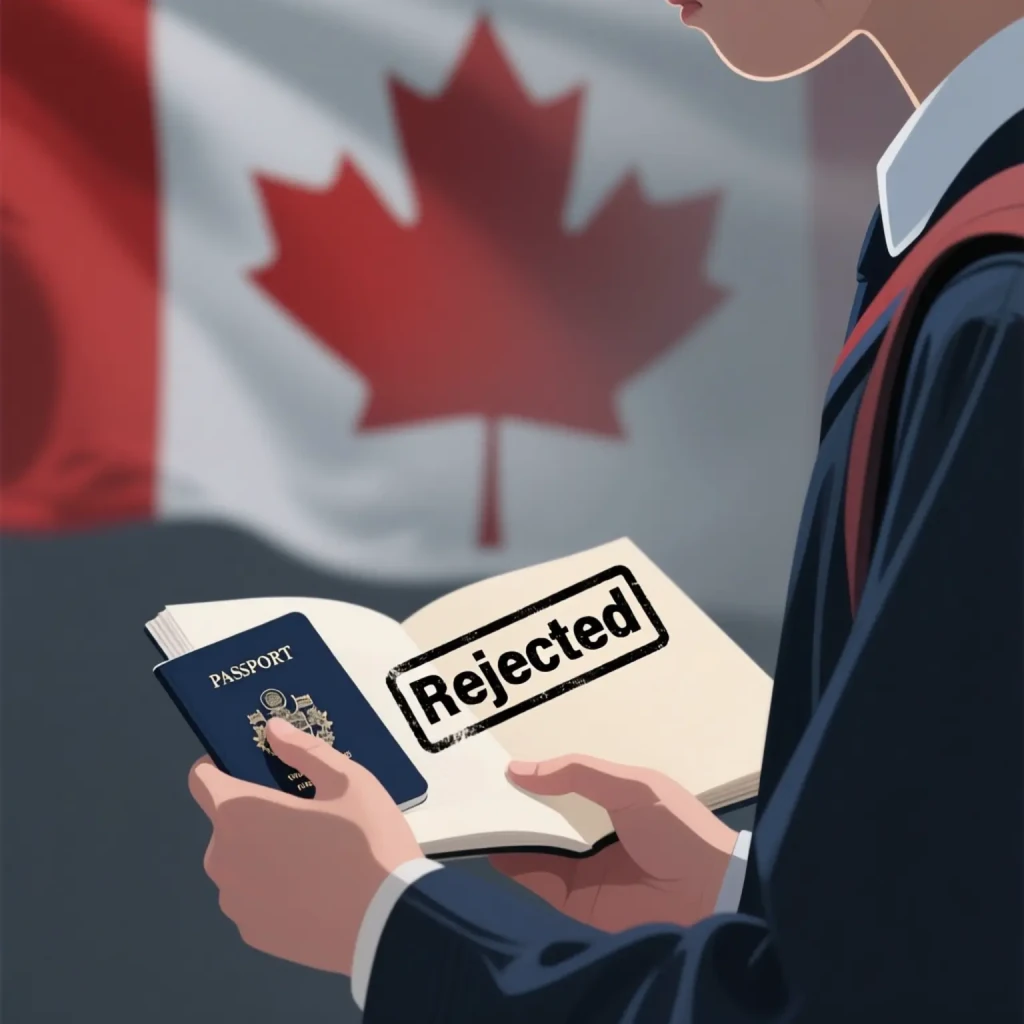
The Canada dream may be slipping away for thousands of Indian students. New data shows that 74 percent of Indian study permit applications to Canada were rejected in August 2025, more than double the rejection rate a year earlier. The sharp increase comes amid a sweeping Canadian government effort to curb visa fraud and tighten temporary migration rules. Once one of the most sought-after destinations for Indian students, Canada is now facing backlash as universities, families, and education agents scramble to adjust to a new era of scrutiny.
Breakdown:
Canada’s overall rejection rate for study permits stood at 40 percent in August, but for Indian applicants it reached 74 percent, the highest among all major countries. The number of Indian applicants also dropped sharply, from 20,900 in August 2023 to just 4,515 in August 2025. Canada’s immigration department says the rise in refusals is part of a crackdown following the discovery of more than 1,500 fraudulent letters of acceptance in 2023, most originating from India.
To prevent further fraud, Canada has implemented enhanced verification processes and raised financial thresholds for applicants. Officials say the measures aim to protect the integrity of the immigration system, even as they recognize the value of Indian students. Canada’s Foreign Affairs Minister Anita Anand reiterated that while the country remains open to legitimate students, it must ensure credibility in its visa system. The Indian embassy in Ottawa has urged fair consideration, reminding Canada that its institutions have long benefited from Indian talent.
Universities, meanwhile, are feeling the pinch. The University of Waterloo reports a two-thirds drop in Indian enrolments, while others like Regina and Saskatchewan face similar declines. For many students, the message has shifted from “study, work, stay” to “study, if you can get in.”
Why This Matters:
The sudden tightening of visa approvals reshapes a long-standing education corridor that has driven cultural, academic, and economic exchange between India and Canada. Beyond affecting thousands of aspiring students, it signals a broader shift in how destination countries are managing migration and fraud. For Canada, the fallout could be significant, as universities lose diversity and billions in international student revenue. For India, it raises questions about developing stronger domestic education pathways and ensuring ethical practices among agents and consultancies.
The Big Picture:
The India–Canada education relationship has been a cornerstone of soft diplomacy for over a decade, with Indian students forming the largest foreign cohort in Canada. The current freeze comes at a time of strained diplomatic relations following allegations by Canada in 2023 that further soured bilateral trust. As Canada rebalances immigration priorities and tightens oversight, other destinations like Australia, the UK, and even European nations could gain from the shift. The episode also underscores a growing global pattern: countries that once courted international students are now rethinking the trade-off between openness and integrity.
The Crunch:
The visa rejections tell two stories. One of systemic overcorrection by a country trying to regain control of its immigration system, and another of India’s overreliance on foreign degrees as an escape route. For ambitious students, it is a reminder to plan smarter; focusing on verified institutions and transparent financial proof. For policymakers, it is a cue to rethink the talent pipeline: if opportunity abroad is closing, India must open more doors at home.