
A lower maximum retail price matters when it reaches the pharmacy counter. India’s new cancer-drug pricing measure makes that last step central to its implementation.
The Breakdown
The government’s October 17 announcement covers 137 identified non-scheduled anti-cancer drugs, with revised prices taking effect on November 9, 2026. The National Pharmaceutical Pricing Authority (NPPA) has capped the trade margin at 30% of the maximum retail price.
The government expects MRP reductions of up to 70%, depending on existing price structures. That is an expected upper limit, not a uniform discount, a reduction already observed or a promise that total treatment bills will fall by the same percentage.
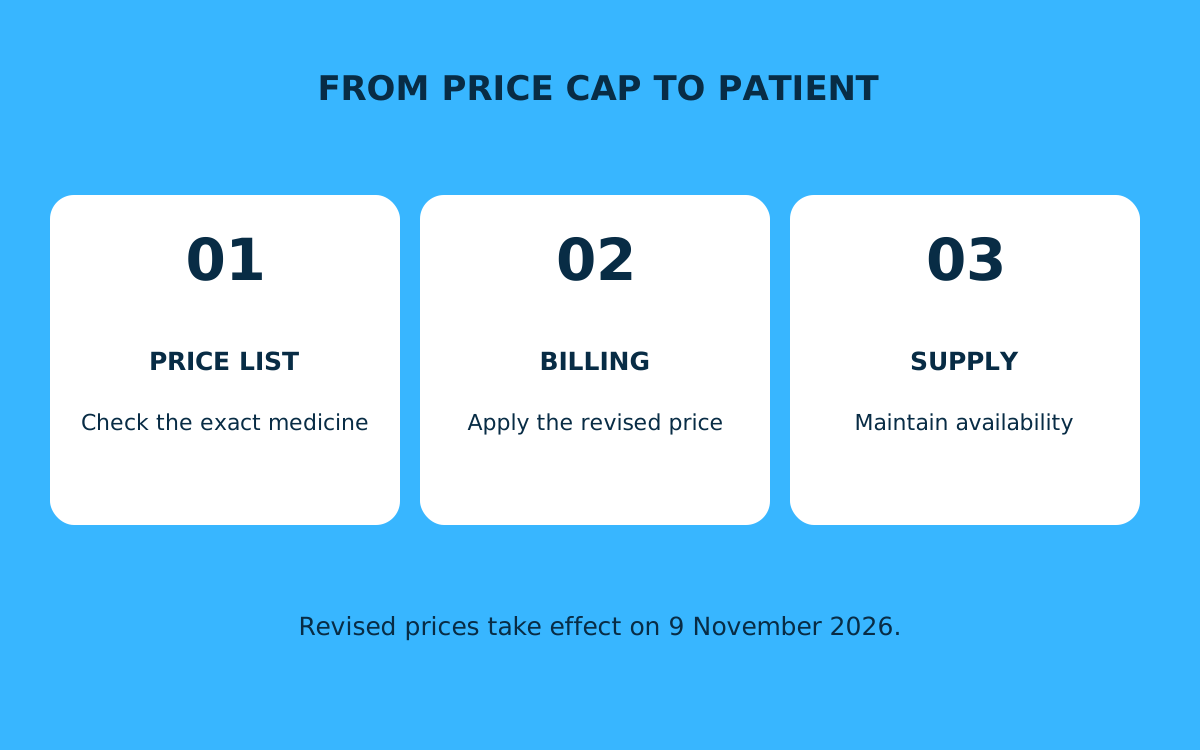
Manufacturers must report revised prices within seven days of the Gazette notification and circulate price lists. Hospitals and retailers are required to display and apply the revised prices from the effective date. The announcement also requires companies to maintain production and supply of the notified formulations.
What the earlier exercise tells us
“Non-scheduled” describes formulations outside Schedule I of the Drugs (Prices Control) Order. It does not mean that the government has no power to regulate their prices.
There is a useful precedent, but it is historical evidence rather than a forecast for this round. In February 2019, the government announced a trade-margin intervention for 42 anti-cancer medicines. Its initial table of expected price reductions covered 105 brands: five were in the 70%-and-above band, while 45 were in the up-to-25% band.
That spread explains why the maximum percentage makes a poor guide to an individual bill. The starting price and the particular product matter. Neither those early 2019 estimates nor the new headline maximum establishes what a patient will actually save in November 2026.
Why this matters
There are two separate outcomes to assess: whether the permitted selling price changes and whether the medicine remains available at that price. A headline reduction alone cannot answer both questions.
For hospital and pharmacy operations, the implementation task extends across purchasing, price records and billing. The useful evidence will be medicine-specific revised lists and the amounts subsequently charged, rather than an assumed percentage saving applied to every purchase.
This is a pricing change. It does not establish that different medicines are clinically interchangeable or remove other costs from cancer care.
The Crunch
November 9 is the implementation date to watch. The real test is whether the announced relief appears consistently in the price of the relevant medicine while supply continues.