
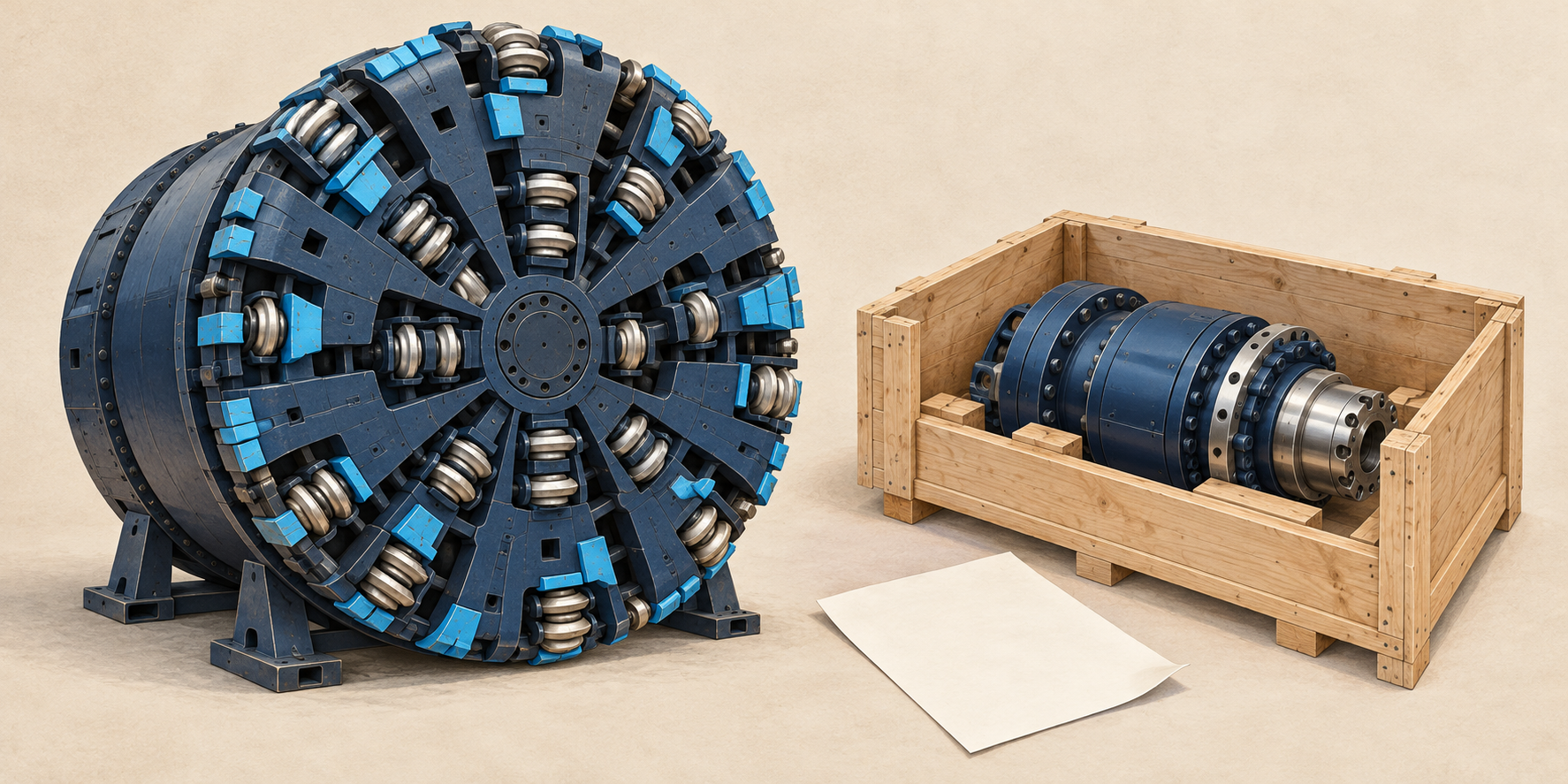
For an infrastructure buyer, ordering the right machine is only part of the job. The project also needs a dependable route for replacement components, technical support and later purchases. China’s new machinery controls make those questions worth revisiting.
The Breakdown
China’s commerce ministry and customs authority issued Announcement 50 on October 19, effective November 18, 2026. It covers full-face tunnel-boring machines, specified parts and remanufacturing technology, plus certain walking excavators and high-altitude wet-shotcrete equipment subject to technical criteria.
Exports to sensitive countries and regions in dispute with China require licences; other destinations use registration-based export certificates. On that route, exporters and end users must undertake not to transfer covered Chinese-origin items to disputed destinations without permission. Overseas organisations and individuals need permission to transfer or provide those Chinese-origin items to sensitive disputed destinations. India is not named.
In an accompanying statement, the ministry said applications meeting the rules would be approved. That is not a delivery timetable.
Why This Matters for India
India reportedly faced customs-clearance delays for some tunnel-boring machines from China since 2024, and received machines in March 2026. The earlier difficulties included equipment made in China by German supplier Herrenknecht. Those earlier events are distinct from the newly announced controls, which have not yet taken effect.
That history highlights a useful distinction: a supplier’s headquarters and a machine’s manufacturing location answer different questions. For procurement teams, the relevant starting point is the actual equipment and component supply chain, rather than the nationality of the brand alone.
The project-level questions
A practical review can separate three issues. First, what exactly is being bought: a finished machine, a replacement assembly or technical work? Second, where will it be made and shipped from? Third, what evidence does the supplier have for the delivery date it is offering?
Commercial discussions can then test the schedule against documented assumptions: who is handling export clearance, when the required paperwork is expected, and what happens to the project plan if shipment timing changes. These are planning questions, not a finding that any particular Indian project will be delayed.
Alternative sourcing needs the same discipline. A different brand or a local assembly location does not, by itself, explain where every required component originates. Nor does a proposed manufacturing expansion establish that a replacement machine is available for the site’s required date.
The Crunch
Read the equipment list and the delivery plan together. The useful next evidence is supplier-specific documentation and confirmed shipment milestones, not a headline that treats every machine, destination and project alike.