
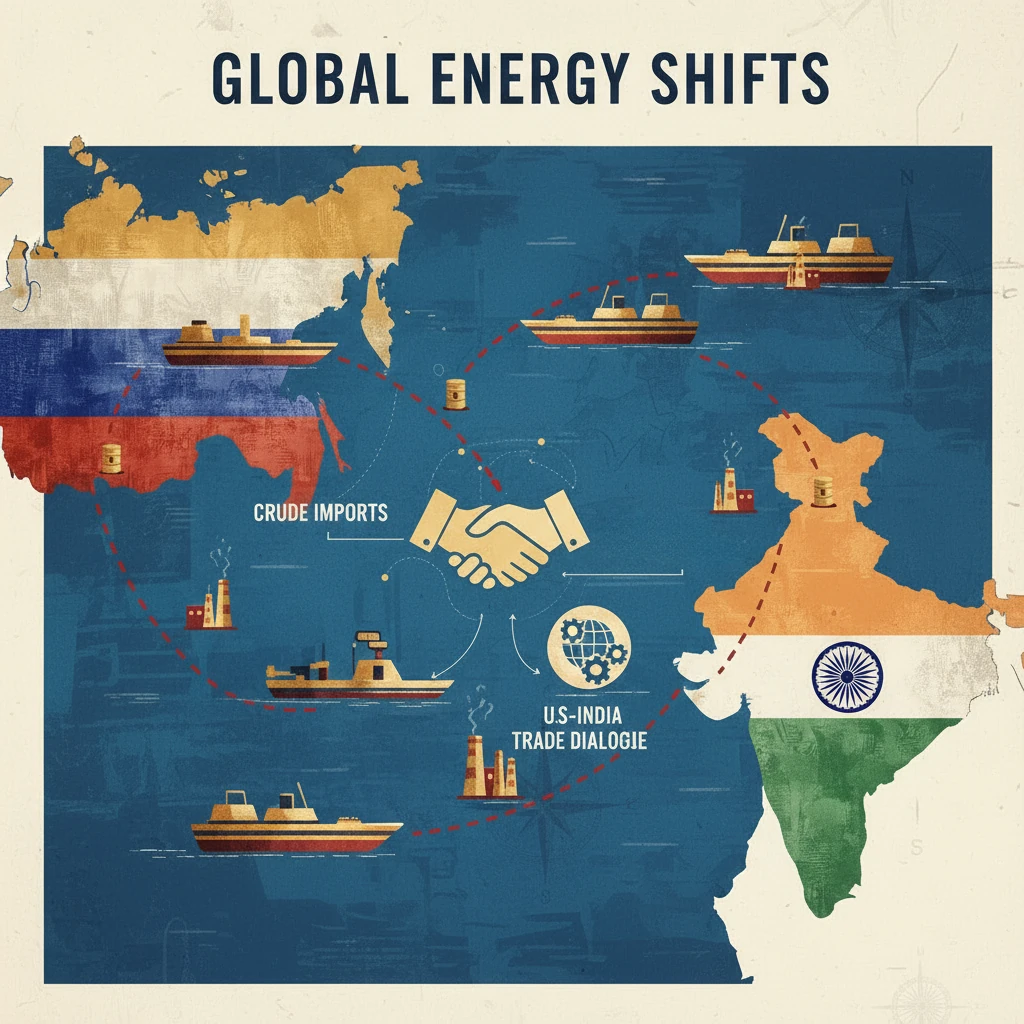
India’s energy diplomacy is under the global spotlight again. Washington says New Delhi has halved its imports of Russian crude, but industry data and local refiners paint a different picture. The claim comes amid strained U.S.-India trade talks and President Trump’s push to curb Russian oil revenues that fund the war in Ukraine. Yet tanker data suggests India’s oil purchases from Russia are rising, not falling, as refiners ramp up output for the festive season and take advantage of discounted prices.
Breakdown
Context:
Since the start of the Ukraine war, India has become the largest buyer of discounted Russian seaborne oil, accounting for more than a third of its total crude imports. This shift has drawn increasing pressure from the United States, which views Russian energy sales as a key source of war financing. For India, however, cheap Russian crude remains critical for controlling inflation and sustaining refinery margins in a price-sensitive market.
What Happened:
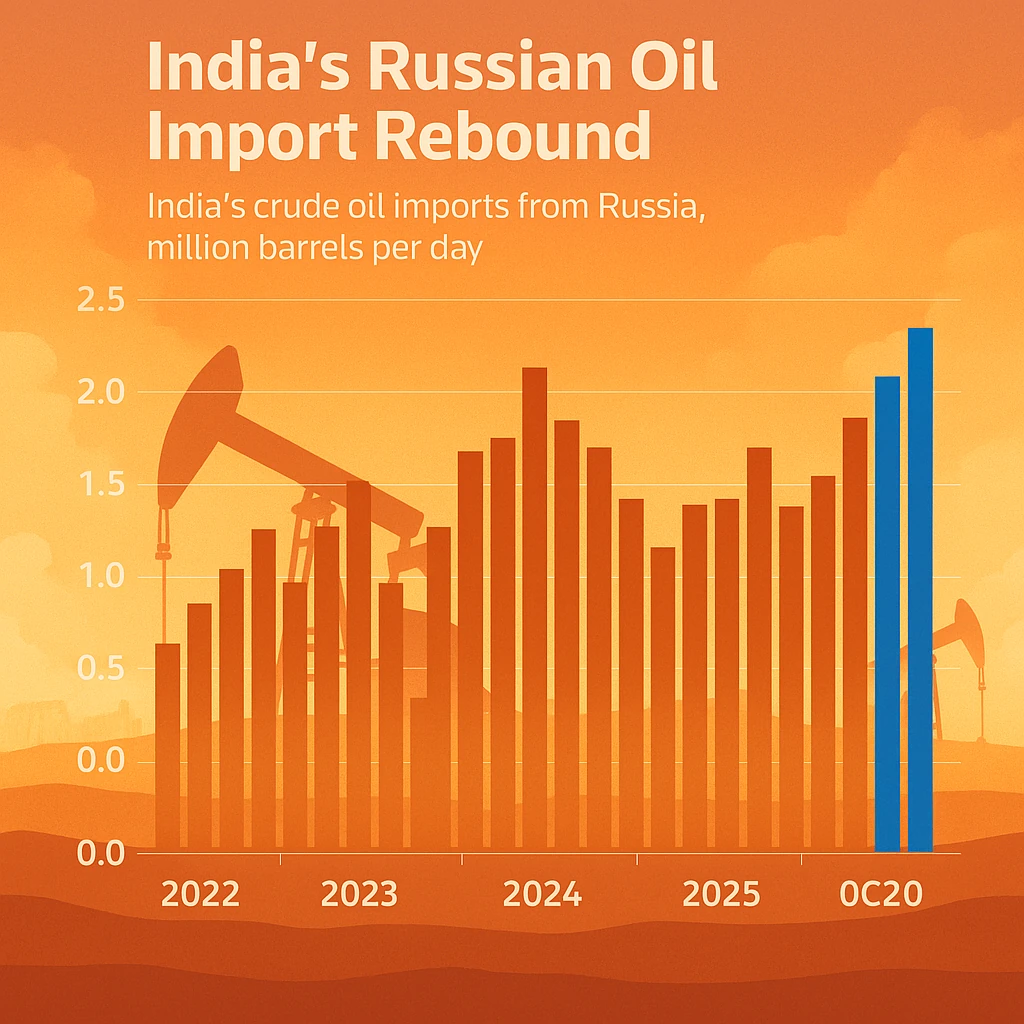
On Thursday, a White House official claimed Indian refiners had already cut Russian oil purchases by 50 percent after “productive talks” in Washington. Hours later, Indian industry sources contradicted the statement, saying no such instructions had been issued and no cut was visible. In fact, data from Kpler shows India’s imports of Russian crude are set to rise 20 percent this month to 1.9 million barrels per day.
President Trump said Prime Minister Narendra Modi had assured him India would stop buying Russian oil. India’s foreign ministry said it was unaware of any such call. Meanwhile, India’s oil minister has asked refiners for detailed import data for November and December, possibly in response to U.S. pressure.
Trade Frictions:
Russian oil has become a sticking point in broader U.S.-India trade negotiations. Trump has imposed steep tariffs—up to 50 percent—on Indian goods, citing continued Russian oil imports as a reason. India had earlier pledged to double annual U.S. energy purchases to $25 billion, aiming to balance trade while diversifying supply sources. But talks have stalled as Washington links tariff reductions to visible cuts in Russian crude buying.
The Numbers:
Russia accounted for roughly 36 percent of India’s crude imports—about 1.75 million barrels per day—in the six months through September. After a dip during the July–September quarter, imports are rebounding as refineries ramp up for domestic demand. Moscow, for its part, remains confident, with the Kremlin promising to maintain discounted supplies to India despite U.S. pressure.
Why This Matters
India’s energy strategy balances geopolitics with economics. Cutting Russian oil abruptly could raise fuel prices and strain domestic supply, but resisting U.S. pressure risks trade penalties and diplomatic friction. With Washington tying tariff relief to energy diversification, India must walk a fine line between pragmatism and partnership. The situation highlights the new complexity of global energy diplomacy, where oil barrels double as bargaining chips in trade negotiations.
The Big Picture
India’s approach reflects its long-standing policy of strategic autonomy. While aligning with Western powers on technology and defense, it continues to buy Russian crude to meet energy security needs. The U.S. aims to redirect India’s purchases toward American energy exports, but logistical and pricing realities make an immediate pivot difficult.
At a time when global supply chains remain volatile and energy markets politicized, India’s balancing act underscores its growing role as both a major energy consumer and a diplomatic swing state in global oil politics.
The Crunch
For now, the numbers speak louder than statements. India’s refiners are still buying, Russian tankers are still arriving, and trade flows remain strong. The real test will come in December and January, when current orders play out and New Delhi must decide how much political capital it is willing to spend to keep cheap oil flowing.