
An overseas payment can pass through a bank where the recipient has no account. A new circular from the Foreign Exchange Dealers’ Association of India, or FEDAI, addresses who can authorise currency conversion at that intermediary stage.
Its October 15, 2026 guidance sits alongside an October 12 advisory on foreign-exchange service charges and paperwork. Together, they focus on the handling of a payment: the instruction to convert it, the fees attached to processing it and the bank’s response when documents are delayed.
Who decides when the currency changes
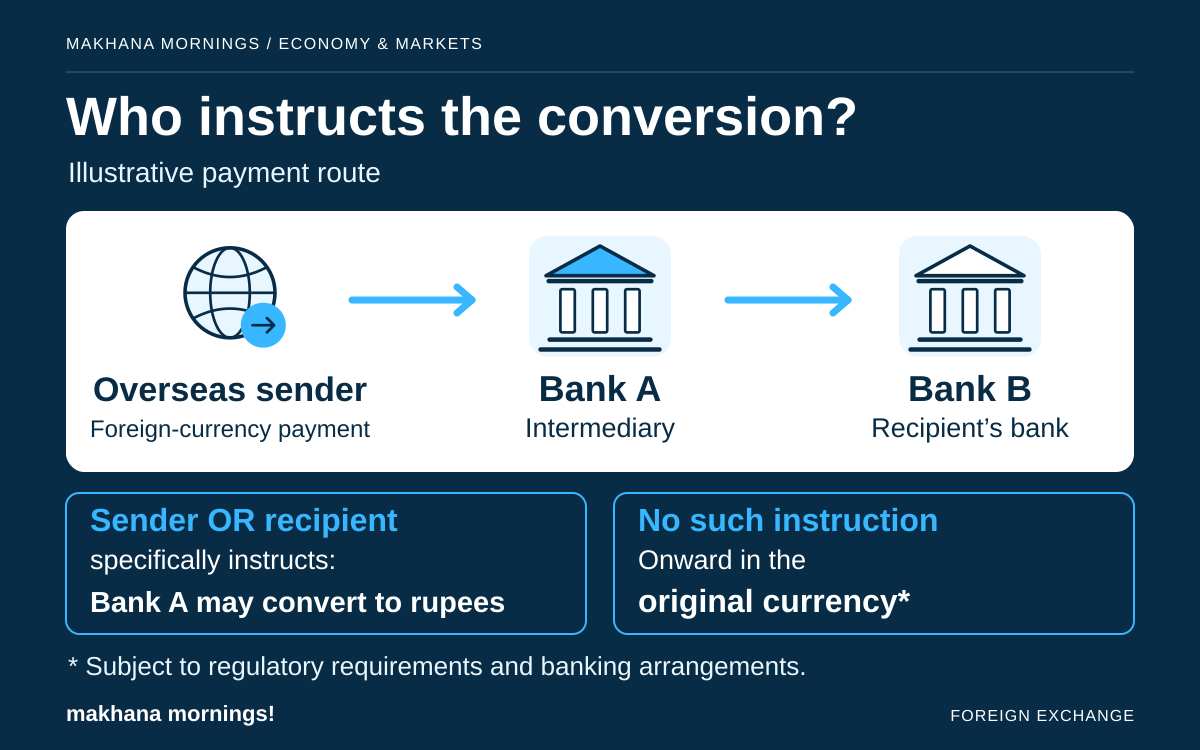
FEDAI is the self-regulatory organisation for authorised foreign-exchange dealers. Its October 15 circular addresses an Indian intermediary authorised-dealer bank receiving foreign currency for a beneficiary whose account is with another authorised-dealer bank.
The intermediary should not convert that payment into rupees solely to pass it on unless the sender or recipient specifically instructs it to do so. Without that instruction, FEDAI says the funds should continue in the original currency, subject to regulatory requirements and the banking arrangements in place.
For example, a business’s dollar payment might reach Bank A before being routed to its account at Bank B. The guidance addresses Bank A’s conversion decision. If conversion is instructed, Bank A may use the prevailing exchange rate under its own policy. The circular specifies no guaranteed rate or saving.
Processing charges face a separate test
The October 12 advisory asks banks to review charges against the work involved. It flags percentage-based fees for routine transactions, high minimum charges on small payments, and charges for record reconciliation, reporting and follow-up reminders. It does not set a universal fee cap or eliminate charges for genuine services.
The underlying RBI regulations, effective from October 1, require transaction-handling charges to be reasonable and proportionate. They also prohibit banks from charging an exporter, importer or merchanting trader for that customer’s regulatory delay or violation. FEDAI says the regulatory issue must instead follow the applicable process; a bank penalty cannot substitute for it.
Delayed paperwork still needs a decision
FEDAI also advises against routinely holding funds solely because documents are pending where an extension is permitted and no other legal or regulatory restriction blocks processing.
For service exports, the RBI rules allow the bank to extend the Export Declaration Form deadline after considering a reasoned request from the exporter. That is a discretionary assessment. Other documentation, transaction checks and anti-money-laundering requirements continue to apply.
Why this matters for a business
A payment dispute can involve different questions: who instructed the conversion, which bank applied the rate, and what work a separate fee covered. Keeping those questions distinct helps a business understand a shortfall without assuming that every deduction has the same cause.
The RBI framework requires banks’ policies to list process charges and provide a grievance-escalation route, including an appeal at a higher internal level. The policy and main features of the operating procedure must be available on the bank’s website. Those disclosures give the customer a basis for asking the bank to explain its handling of a payment.
The Crunch
FEDAI’s guidance makes the payment trail more accountable: intermediary conversion needs the specified instruction, and processing charges must relate to the service provided. For a business receiving foreign currency, knowing who converted the payment and why each fee was charged is as important as checking the amount credited.