
An Indian Global Capability Centre can have the parent company’s name above the door while relying on outside firms for recruitment, payroll, technology or day-to-day operations. The practical question is which responsibilities the parent wants to keep, which it wants help with, and which it intends to take over later.
Competition for this work is widening the choices. Big Four firms are offering managed, co-managed and build-operate-transfer arrangements as multinational companies expand their Indian centres. Comparing those offers requires more than a setup price: each can leave a different organisation behind.
Breakdown
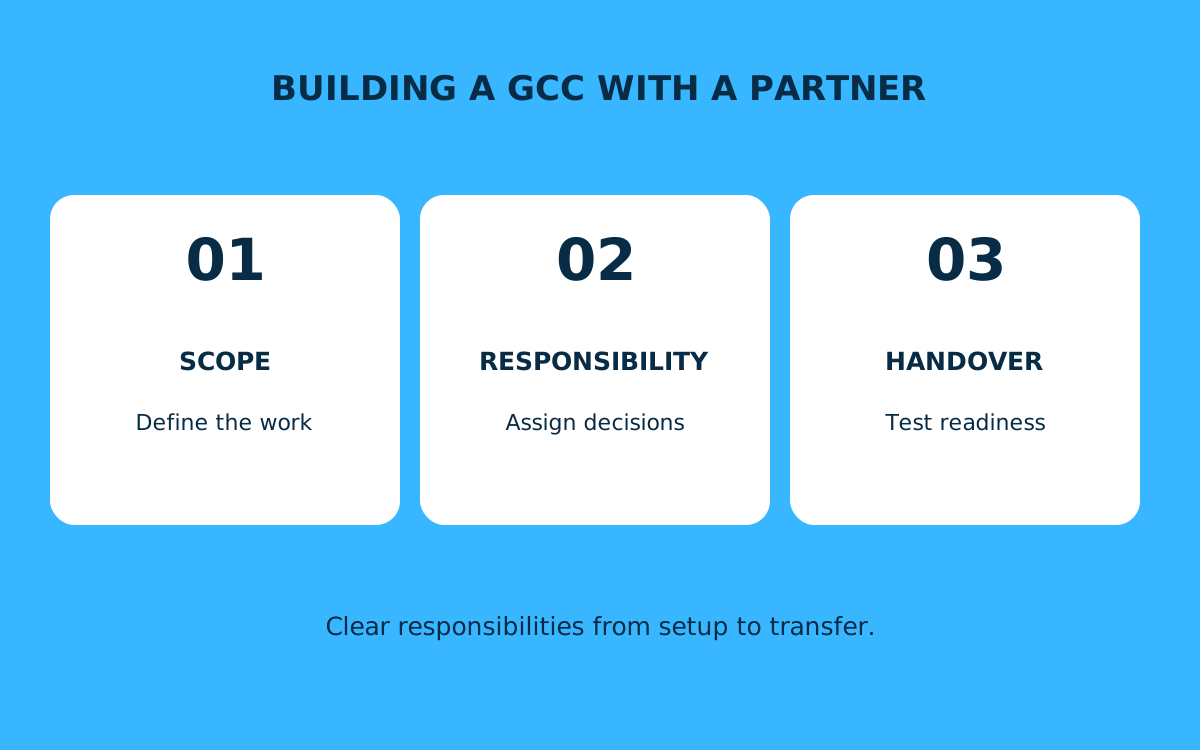
Start with the scope. EY’s Capability Center-as-a-Service offering covers tasks such as facilities, IT infrastructure, hiring and payroll setup, alongside ongoing recruitment, compliance and finance support. Its deployment options range from building a centre to managing service delivery. A company can therefore buy help with particular functions rather than hand over every part of the operation.
There is a concrete example of that narrower role in Deloitte’s published client stories. The firm identifies Barclays in a case concerning tax and SEZ/STPI-related operational support for a banking centre. That describes specialist services around a GCC; it does not establish that the adviser runs the bank’s entire centre. The distinction matters when comparing providers’ experience.
A transfer model asks a different question: what will the client eventually receive? Deloitte’s Build-Operate-Transform-Transfer model describes establishing and operating a centre, changing its processes and technology, then transferring it. Its description explicitly allows a full or partial handover, with the treatment of operations, intellectual property, employees, knowledge and assets ideally settled early.
These are providers’ descriptions of their services. They explain the available structures, but do not independently establish promised savings, faster delivery or better performance. Nor are these models newly launched simply because competition for GCC mandates is growing.
Why This Matters
For a company entering India, outside support can address gaps in local recruitment or operational knowledge. The trade-off deserves attention before the first hiring round. If a provider supplies the managers, systems and documentation, the parent needs to understand how it will continue running the work when that relationship changes.
Three practical questions help make an offer comparable. Who approves hiring and changes to the work? Which systems and operating knowledge will the client be able to use? What must be demonstrated before responsibility transfers? These are operating choices to settle with the provider, rather than benefits that follow automatically from the GCC label.
The same logic applies to ongoing support. Keeping payroll or tax administration with a specialist may be a deliberate long-term choice. A defined specialist role and an arrangement intended to transfer an entire operation need different measures of success.
The Big Picture
For Indian GCC leaders, the opportunity is to build the internal capacity to oversee partners as well as deliver work. A centre needs people who understand its processes, can challenge service performance and can make decisions when an exception falls outside a standard workflow.
What to watch is whether proposals make those responsibilities visible: who owns each decision, what evidence shows the operation is ready, and how the team will function after handover. A low setup quote says little about those questions on its own.
The Crunch
Choose the GCC partner with the eventual operating model in view. The opening day is only one milestone; the lasting test is whether the company can run the capability it intended to build.