
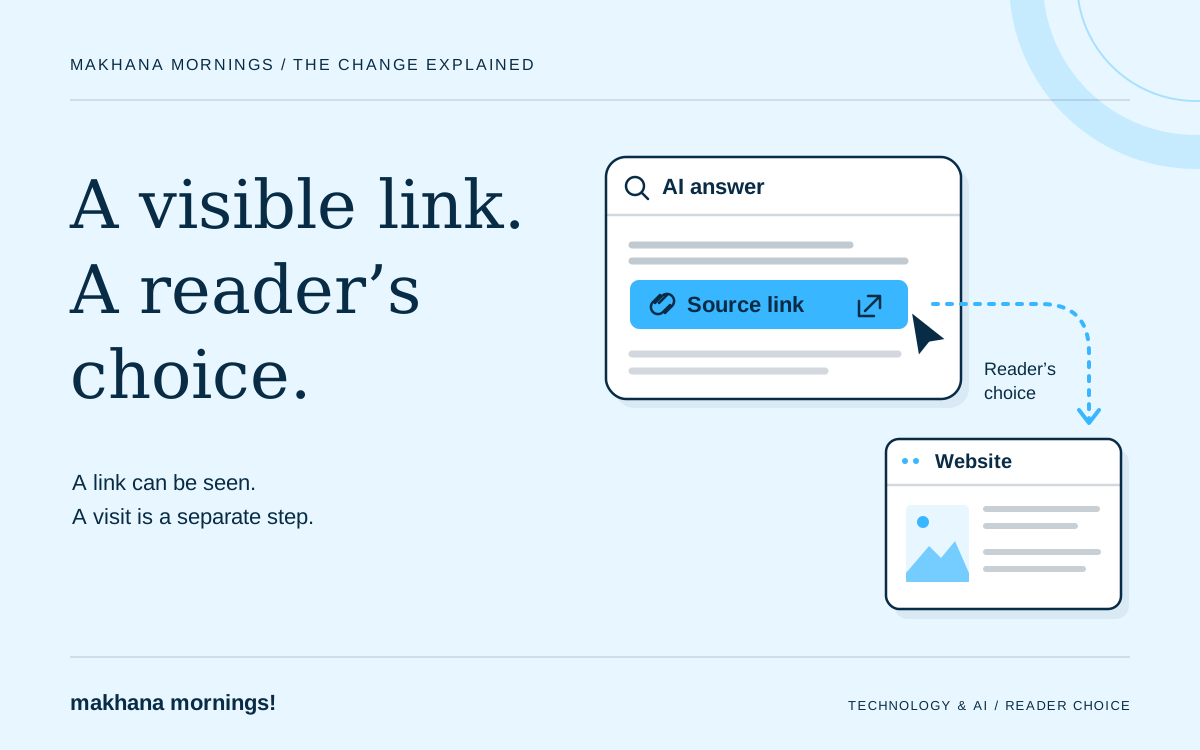
Google announced changes on October 15, 2026, to make website links more prominent in AI Mode and AI Overviews. For publishers, creators and brands, the important question is what happens after a link is seen.
The Breakdown
Links embedded within AI answers will appear higher more often. Google is also expanding its carousels of timely articles to more places and languages, including highlights for users’ Preferred Sources. Related-article links at the end of some answers are getting thumbnails and a more prominent design.
Two other changes remain tests. Google plans a section near the top of an answer for one or two official websites relevant to a task. It has also begun testing clickable creator and publisher names on video results in AI Mode, leading to their Search profiles.
The announcement does not provide a complete country or language schedule. It therefore does not establish that every feature is available to every Indian user.
Visibility and Visits Are Different Measures
A prominent link gives a reader an opportunity to visit a website. Whether they do so depends on their next action. Seeing a source inside an AI answer is different from opening its page, subscribing to its journalism or buying from its store.
Google already offers a dedicated Search Console report for appearances in generative AI search features. Its documentation says the rollout reached websites worldwide by August 31. The report shows impressions, with breakdowns such as page, country and device. An impression records that a link was shown; it does not establish that someone clicked it.
The report may not appear for a site that has too few qualifying impressions. It also excludes Search Labs experiments. These limits matter when comparing an announced feature with what a particular website can actually observe.
Why This Matters for Indian Businesses
For an Indian publisher or online business that relies on discovery through Search, the distinction is practical. More appearances may increase exposure, while visits and the actions visitors take determine the direct value of that traffic. Both sides need to be assessed before calling a layout change a business gain.
The October announcement offers no measured traffic result from these changes. Their effect will need to be assessed as they reach users, with attention to differences between locations, languages and types of searches.
The Crunch
Google is giving source links more room inside AI answers. For publishers and brands, the commercial test is whether that visibility produces visits and useful engagement. The design changes alone cannot establish that outcome.