
A sofa can stay with a household for a year and with a rental company for much longer. That difference helps explain the appeal of renting furniture and appliances, and the financial work required to make the business succeed.
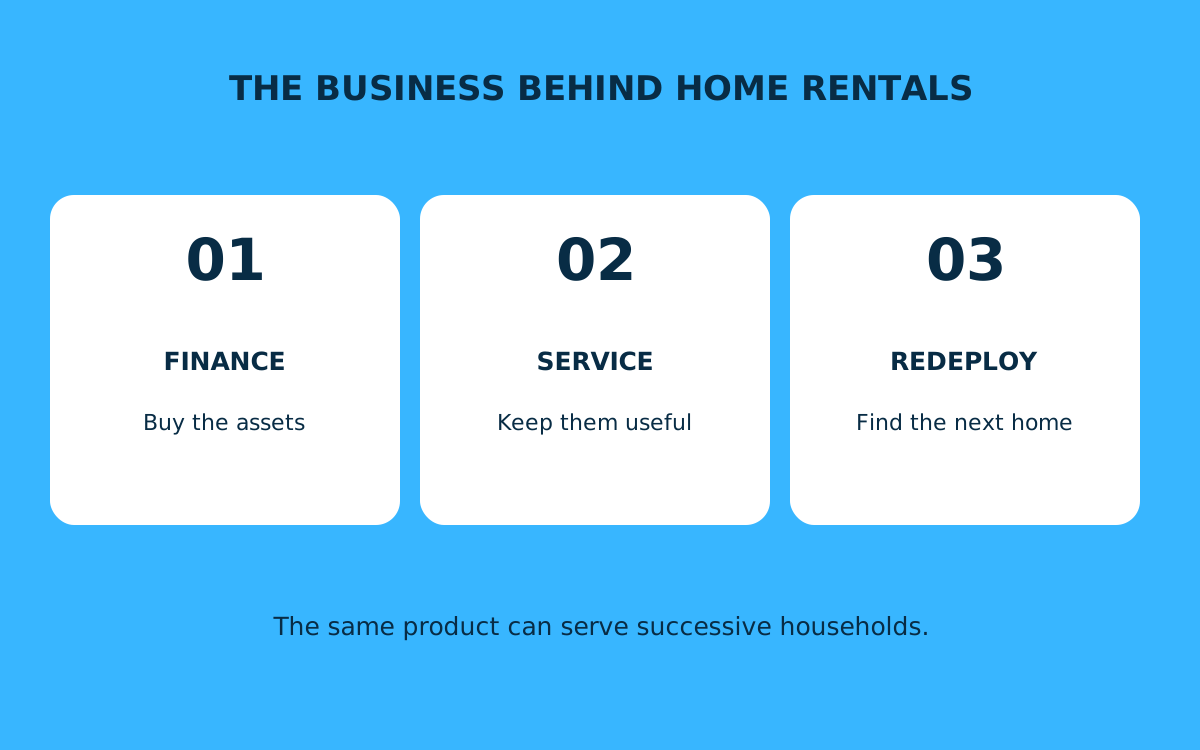
As Indian rental firms expand across the home, customers gain an alternative to paying for everything upfront. The provider still has to buy the assets, keep them usable and find the next customer when a subscription ends. Flexibility has a cost somewhere in the system.
Breakdown
Rentomojo’s October investor presentation gives a useful view of that trade-off. Across FY24 to FY26, its cash-flow statements show approximately ₹463 crore spent on property, plant and equipment, compared with about ₹380 crore of net cash from operating activities. These are cumulative company figures over three financial years, rather than the cost of any individual rental contract.
The comparison shows why growth requires attention to financing as well as subscriptions. A company buys an asset before collecting all the rental income it hopes to earn from it. Keeping that asset with paying customers, limiting time between subscribers and controlling refurbishment costs can therefore matter as much as winning the next order.
For the household, the calculation runs in the opposite direction: how long will the product be needed, and what happens when the plan changes?
Rentomojo’s customer guidance says early closure can carry charges under the contract, with the amount depending on the product category and committed tenure. It also describes continuing a subscription after relocation where the company serves the destination city. The precise agreement still matters; flexibility should not be read as a promise of cost-free cancellation everywhere.
Why This Matters
A monthly rental and a loan instalment may look similar on a bank statement, but they leave the customer with different outcomes. A purchase can leave an asset to keep or resell. A rental pays for use during the agreed period, with support and return arrangements governed by the contract.
That makes a headline monthly price an incomplete comparison. A household needs to consider the full period of use, upfront payments, maintenance, moving costs, early-exit charges and any resale value it expects to recover. The convenience of avoiding a rushed sale when moving cities can also have value, even when it is difficult to express as a single number.
The Big Picture
For rental businesses, expanding from beds and sofas into appliances adds more than another product category. Servicing, spare parts, delivery and redeployment become part of the proposition customers are paying for.
The operating challenge is to offer an easy experience while managing a physical asset repeatedly. A product sitting unused still ties up money. A product that needs frequent repairs can consume the income it was bought to generate. Neither risk disappears because the transaction starts on an app.
What to watch is whether companies can support expansion with cash generation and reliable service, while making the limits of customer flexibility clear. Revenue growth alone cannot answer all three questions.
The Crunch
Renting can make a move easier for the customer. The business works when the provider can keep the same assets useful and earning across successive homes.