
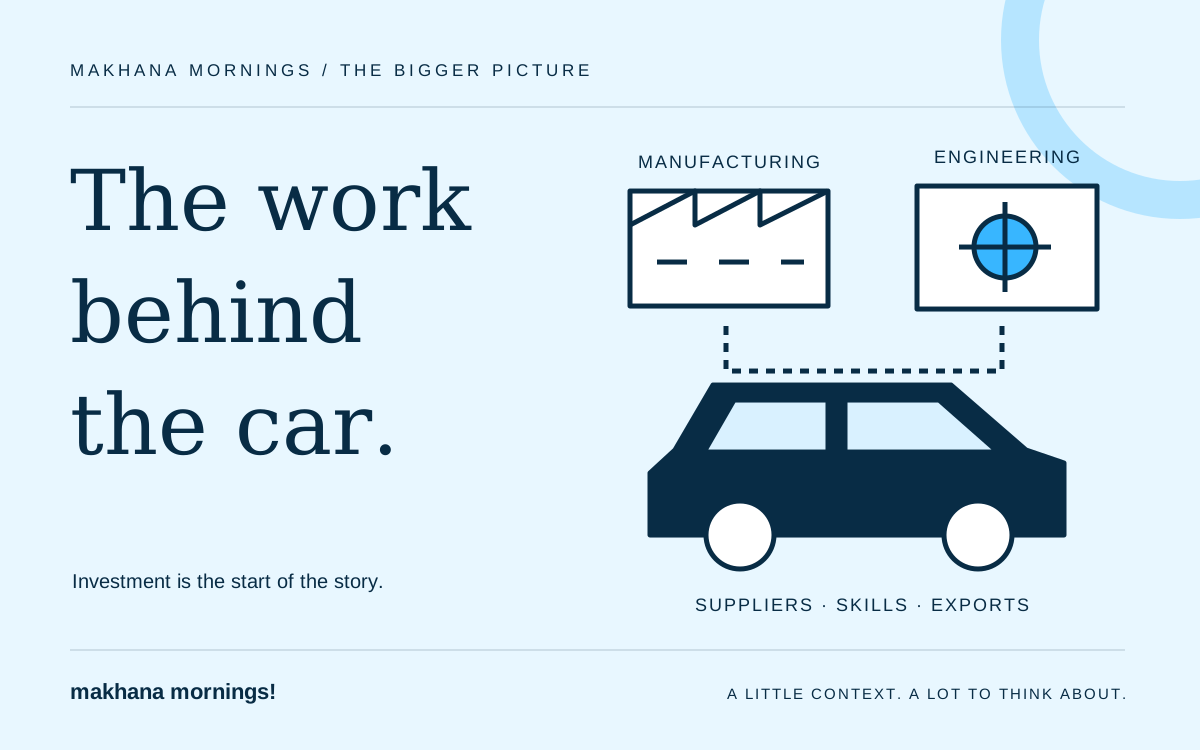
A finished car is the end of a long chain of work. Teams must design parts, test systems, make components and get the car to a buyer. Hyundai Motor Group’s latest India plan puts all that work in focus.
On October 13, the group announced a $15.5 billion plan for 2026–2032. A day later, Hyundai Motor India formally opened its Pune plant. The news raises a useful question: how much more of the work behind each car will happen in India?
The Breakdown
The plan covers more factory capacity at Hyundai Motor India and Kia India, support for suppliers, research and new transport businesses. About $700 million is planned for the group’s Indian research and development centre, including a vehicle test track. A dedicated investment entity will coordinate the wider plan.
After the Pune opening, group leaders gave more detail on where the money would go. Around 60% is for better facilities and the ability to make more vehicles. Around 20% is for new businesses, including artificial intelligence (AI), ventures and startups.
The Pune plant can make 170,000 vehicles a year, with plans to raise that to 320,000 by 2030. But this week’s event was a formal opening. Passenger-vehicle production at Talegaon had already begun on October 1, 2025.
The new spending plan also needs care when compared with earlier promises. Hyundai Motor India had already announced a ₹45,000 crore plan through the financial year ending in 2030. The October 13 announcement did not say how much of the new $15.5 billion is on top of that. Adding the two totals could count some spending twice.
Why This Matters
For an Indian parts maker, the key next step would be a contract. Which part is needed, how many, to what standard and for how long? Those details help a firm decide whether to buy machines, get a new production process approved or train staff.
The same goes for engineering teams. A local test track and more research work could bring more design and testing tasks close to factories and suppliers. There could be more value if Indian teams get to solve design problems as well as carry out production tasks.
Those gains are still possible outcomes. Supplier deals, finished facilities and the work given to Indian teams will show how much the plan delivers.
People looking for jobs need to keep the timing in mind too. The announcement points to more jobs in factories, engineering and supply chains, but gives no number. A seven-year spending plan does not tell us how many people will be hired right now.
The Big Picture
India already has a large market at home and sells vehicles abroad. In the 2025–26 financial year, factories sent about 46.43 lakh passenger vehicles to dealers in India. These shipments are called dispatches. Exports reached about 9.05 lakh, up 17.5% from the year before. The reported figures exclude BMW, Mercedes, JLR and Volvo Auto.
That gives a business making vehicles in India two possible sources of demand. The quality of the work matters too. A supplier that meets the needs of several markets may have more chances to win work. That still depends on which products are chosen, whether the supplier meets the required standards and what orders follow.
A plant’s capacity tells us how much it can make. Actual output and sales show how much of that capacity is being used. Plans to sell abroad also need buyers, reliable deliveries and products that suit those markets.
The Crunch
Watch for a clearer spending schedule and details of any overlap with earlier promises. Supplier contracts, progress on research and the number of vehicles made will also help show what is changing.
Hyundai’s plan offers India a big chance to win more industrial work. Its value will become clearer as the money turns into equipment, more design work and steady orders. Follow the work behind the cars to see what the investment delivers.