
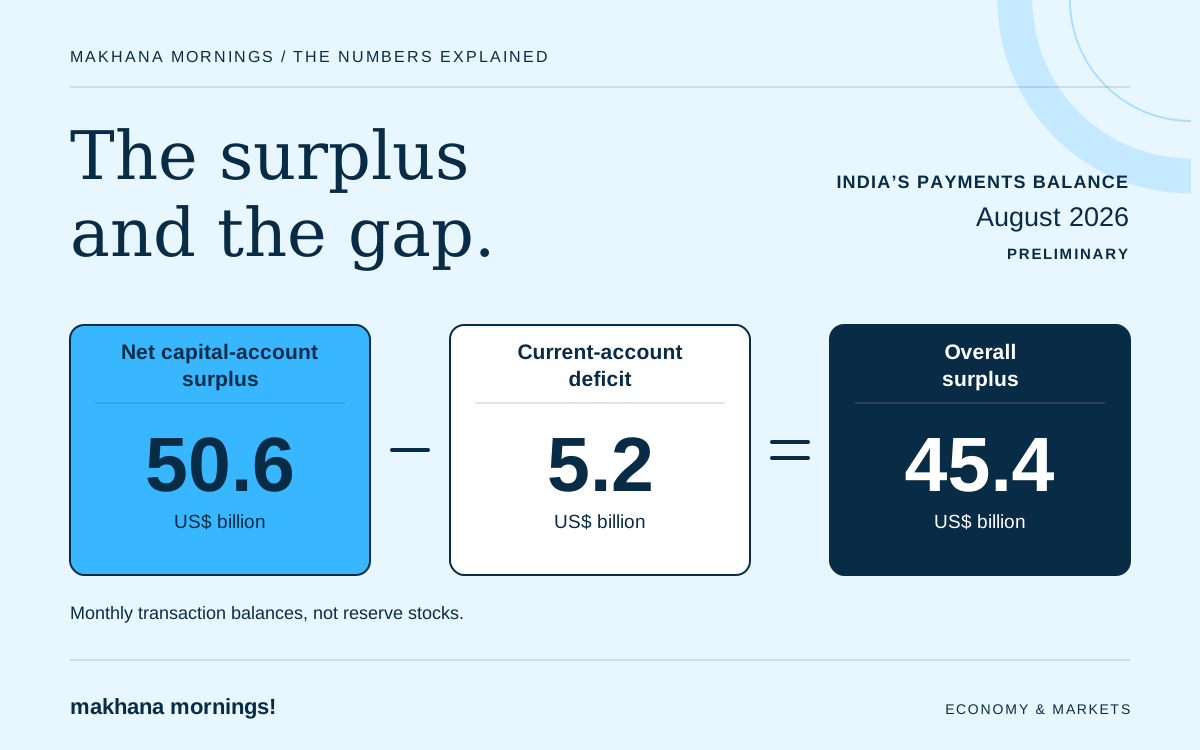
India recorded an overall balance-of-payments surplus of $45.4 billion in August 2026 while its current account remained in deficit. A surge in money flowing through the banking system helps explain how both can happen.
The RBI’s preliminary figures, released on October 15, put the current-account deficit at $5.2 billion for August, down from $6.1 billion a year earlier. Net capital-account inflows were much larger, producing the overall surplus.
The Breakdown
The current account brings together trade in goods and services, cross-border income and transfers such as remittances. A smaller goods deficit and a larger services surplus helped improve August’s balance.
Bank deposits and investment flows appear elsewhere in the accounts. Net deposit inflows from non-resident Indians, or NRIs, reached $83 billion in August. Other banking flows offset some of that amount, leaving net banking-capital inflows of $64.7 billion.
After investment, borrowing and other flows were included, the RBI’s net capital-account surplus was $50.6 billion. Subtracting the $5.2 billion current-account deficit gives the reported $45.4 billion overall surplus.
These are figures for August alone. The separate overall surplus for April–August was $58 billion.
Why This Matters
The deposit surge came during the RBI’s special dollar–rupee swap programme, launched on June 8. Its window for mobilising foreign-currency non-resident deposits closed on August 31.
The RBI had already reported substantial inflows under that programme. Those cumulative scheme figures cover a different period and accounting basis from August’s net NRI deposit flows, so they cannot be added together.
This distinction matters when judging the economy’s external position. Funds entering bank accounts or investments can finance a gap between the country’s current receipts and payments. They do not change the amount earned from exports or received through remittances.
The Big Picture
The longer comparison is less favourable for the current account. Its deficit widened to $18.3 billion during April–August 2026, from $12.8 billion in the same five months of 2025. August’s improvement therefore sits within a larger year-to-date gap.
The overall payments surplus also needs to be distinguished from the change in the published stock of foreign-exchange reserves. Balance-of-payments figures measure transactions; reserve values also move with valuation changes. The dates and accounting basis must match before those numbers are compared.
The Crunch
August’s large payments surplus reflects the strength of financial inflows, especially NRI deposits. The wider April–August current-account deficit shows why India’s external earnings and its sources of funding need to be watched separately.