
A gap in the budget-smartphone market is attracting Indian brands. The challenge is whether they can keep a phone affordable while funding the hardware, software and support that make it usable over time.
The Breakdown
October 16 reporting describes Mivi and Boltt entering the lower-priced smartphone market and Micromax evaluating a return. Those are different stages of commitment. Reports of other brands considering entry also need care: GoBoult denied having plans to launch smartphones.
The opportunity is emerging alongside rising component costs. Lava’s product head said the price of its entry-level 5G offering had moved from ₹7,999 to ₹14,499. That is a company description of its range, rather than a market-wide inflation measure or proof that the same handset doubled in price.
What the advertised price includes
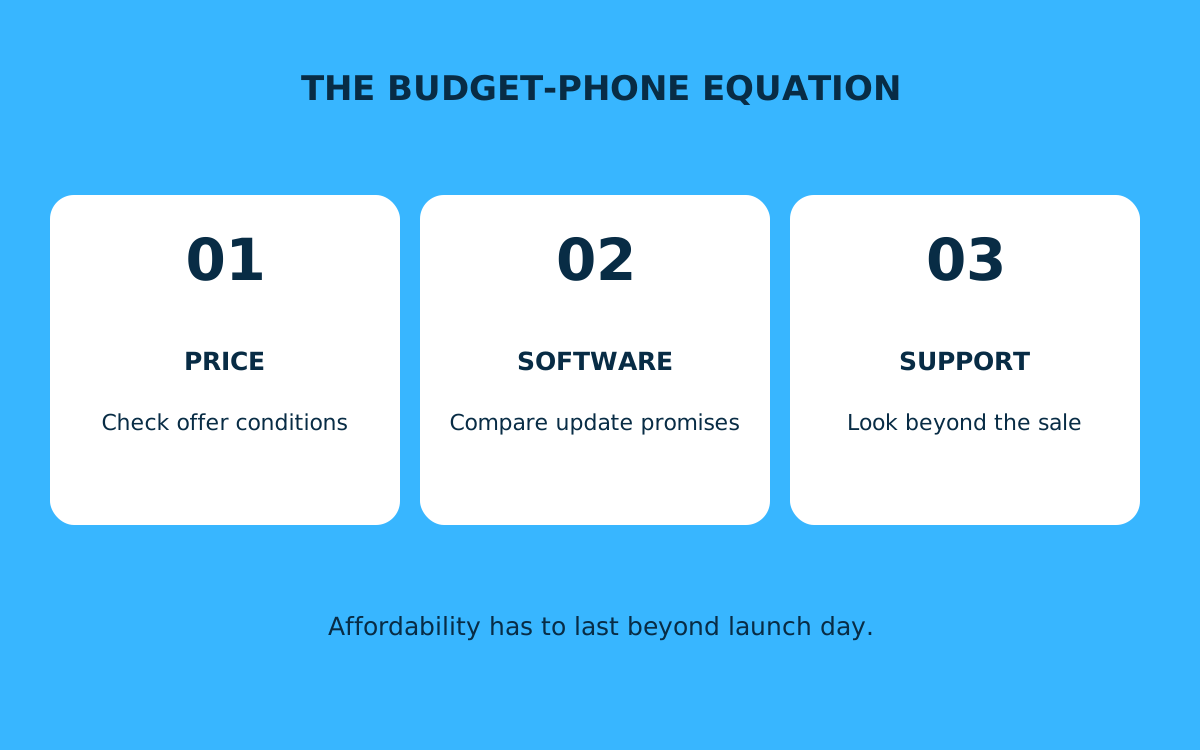
Mivi’s One 5G provides a concrete example. Its September launch price started at ₹14,999 for the 4GB/128GB variant. An October company release advertised a ₹11,999 effective festive price that included applicable bank or UPI offers. That conditional promotion should not be treated as the unconditional price available to every buyer, or as a verified price today.
The distinction also matters when comparing brands. The same storage variant, purchase date and payment eligibility need to be compared before a headline discount says much about underlying affordability.
Mivi’s own product page promises upgrades through Android 18 and a one-year warranty. These are useful, model-specific commitments to compare, while actual update delivery and service performance remain matters to observe over time.
Where policy fits
The Mobile Phone Manufacturing Scheme was approved on July 15, with ₹62,500 crore allocated over five financial years through 2030–31. It supports eligible manufacturing sales at differentiated rates of 2.25%–5%, with additional support linked to domestic sourcing and Indian-brand design and research.
Eligibility matters. An incentive can change a manufacturer’s economics without translating into an equal discount on every device. A company’s nationality, the location of assembly and the amount of locally developed technology also describe different parts of the business.
Why this matters
For buyers, the meaningful comparison extends beyond the launch price. Software-update commitments, repair access, warranty terms and the performance of the exact model all belong in the decision. These are checks to make, rather than claims that any particular brand performs poorly.
For an emerging brand, a low entry price can win a first purchase. Keeping the customer requires a support operation that continues after the promotional sale ends. The business question is whether the selling price and expected repeat demand can sustain that obligation.
The Crunch
Watch confirmed launches, model-specific support commitments and sustained sales. Interest in entering the market is an early signal; a dependable, affordable product is the test that follows.