
A refrigerated warehouse is only one part of keeping perishable food safe. The journey into it, the loading bay and the delivery to a retailer matter too.
That is the business implication of FSSAI’s October 15 advisory on handling, storing and transporting foods such as khoa, paneer, meat and fish. It reinforces temperature-control requirements across the supply chain, from sourcing to delivery to the consumer, under existing food-business licensing regulations.
For food businesses, the practical question is whether responsibility remains clear when a consignment changes hands.
The Breakdown
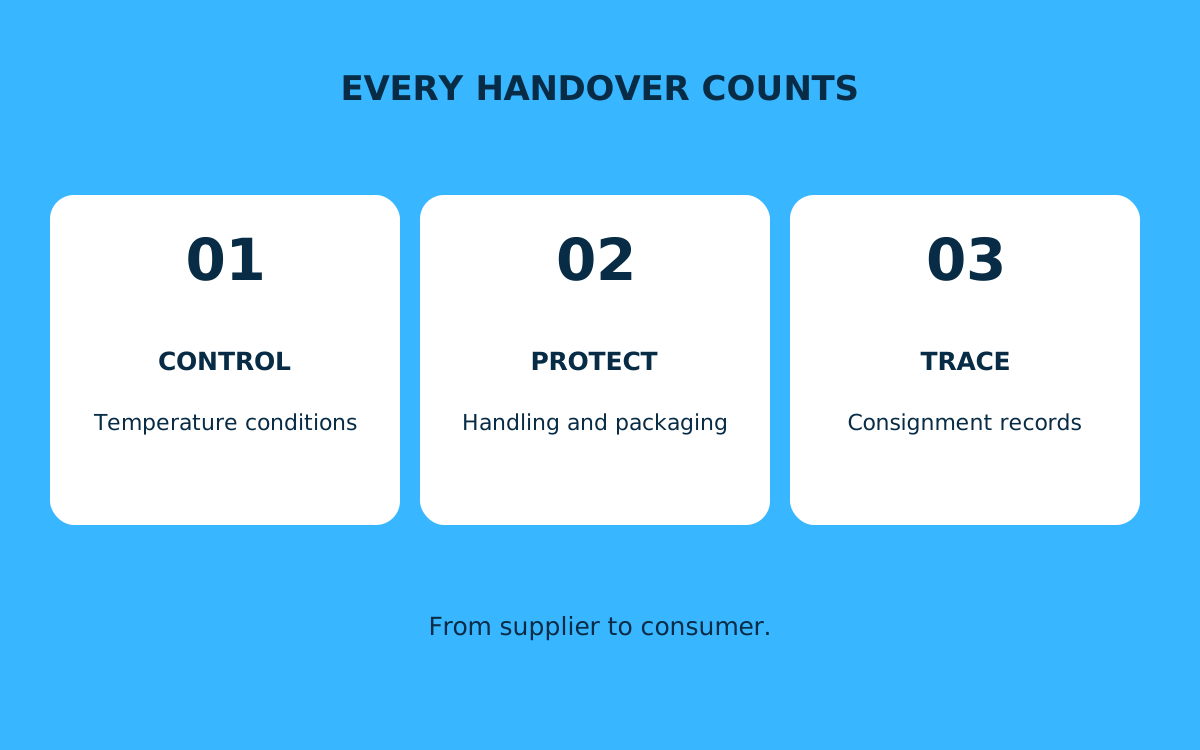
The advisory brings several operating requirements together: suitable clean and covered vehicles, prescribed temperatures, food-grade packaging, protection during loading and unloading, and records that make consignments traceable.
It also calls for vigilance during inspections and transport checks. Action in cases of non-compliance may include seizure and destruction under existing law.
This is an enforcement reminder, rather than a new regulation introducing one temperature for every food. The advisory does not specify a single numerical temperature across these different products.
The distinction matters. Buying refrigeration equipment does not by itself establish that the right conditions have been maintained throughout a shipment’s journey. Businesses also need to understand which product is moving, how it will be handled and who takes responsibility at each stage.
Why This Matters
Consider a dairy processor supplying several shops through an outside transporter. This is an illustrative example: the processor, vehicle operator and receiving shop each control a different part of the journey. A clear dispatch record cannot, on its own, demonstrate what happened during transport or unloading.
The operational response is to connect those stages. Supplier and logistics arrangements can specify handling requirements, receiving checks and what happens when conditions fall outside the agreed range. These are practical management measures; the advisory does not prescribe one universal checklist or require a particular tracking technology.
For smaller businesses, that makes this a coordination issue as well as an equipment decision. Records need to identify the consignment and remain useful when another business receives it. Staff need to know when to flag a problem instead of simply passing the goods onward.
The Big Picture
India’s cold-chain policy already recognises the importance of connected infrastructure. The food-processing ministry’s integrated cold-chain scheme covers facilities spanning farm-level preparation, storage, freezing and refrigerated distribution. Its stated objective is an unbroken chain from farm gate to consumer.
A commercial example shows the operating layers behind that ambition. Snowman Logistics describes multi-temperature warehousing, backup generators and a central team monitoring operations from first mile to last mile. Those are the company’s descriptions of its services, rather than independent proof of the performance of every shipment.
The point is that refrigeration capacity, reliable power, handling processes and oversight work together. Counting storage space alone cannot establish the quality of the complete journey.
The Crunch
The useful test for a food business is whether it can explain and document each handover, including who checks the goods and who handles an exception.
As enforcement attention turns to transport and storage, reliable delivery will depend on those everyday operating details as much as the cold room at either end.