
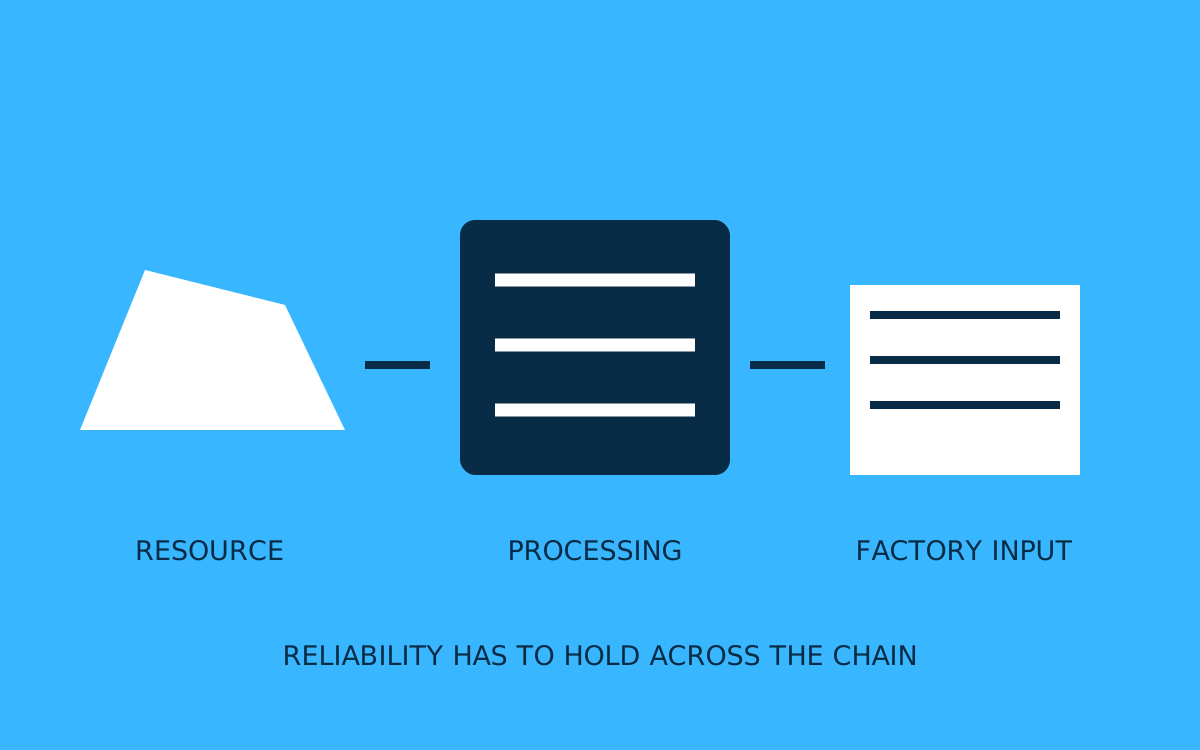
A mineral deposit and a reliable factory input are different things. Between them sit processing plants, technology, quality checks and buyers willing to commit. India’s new critical-minerals partnership puts that industrial middle stage in focus.
Breakdown
On October 16, the World Bank Group announced an India-led partnership seeking to mobilise $5 billion through 2031. It covers exploration, processing, manufacturing, recycling and skills. This is a capital-mobilisation ambition, not an announcement that the full amount has been disbursed.
The group separately plans $19 billion of metals and minerals support globally over FY26–FY30, combining its financing with private capital mobilisation. That global figure should not be presented as an allocation to India.
Why processing matters
The International Energy Agency’s 2026 outlook found that refining became more concentrated for most minerals in 2025. Rare earths were an exception: new US projects and higher Malaysian production modestly reduced concentration. Across the other key energy minerals assessed, the average share of the largest refining country rose from 70% in 2023 to 72% in 2025.
That distinction matters for manufacturers. More places to buy ore do not automatically mean more places to buy a material in the form and quality a production line needs. Diversification has to work at each relevant stage.
What the roadmap actually proposes
India’s accompanying roadmap starts with battery materials and rare-earth permanent magnets. It proposes shared utilities, testing laboratories and environmental infrastructure in processing parks and rare-earth corridors, alongside technology partnerships and recycling.
Its phases extend well beyond the announcement: foundational work in 2026–27, investment-ready parks and pilot projects in 2028–29, processing and recycling commissioning in 2030–31, then replication of viable models through 2035. These are intended milestones, not completed capacity.
The document also prioritises credible offtake, meaning commitments to buy future output. For a proposed processor, access to minerals answers only one commercial question. It also needs a route to customers, acceptable product quality and a financing structure that can withstand uncertainty.
The Big Picture
For Indian businesses, the opportunity deserves a project-level reading. A park announcement alone does not establish available utilities, proven technology or customer acceptance. The useful next evidence will be named projects, financing arrangements, supply and purchase agreements, and plants reaching operation.
The roadmap identifies a government-owned results framework and confirmation of initial central and state programmes as immediate priorities. That leaves implementation details to follow. Neither the partnership nor the IEA’s global findings establish that India’s supply risks have already fallen.
The Crunch
The important test is whether the investment ambition becomes dependable industrial supply. Track what gets financed, built and qualified for use, alongside the headline capital target.