
India’s data-centre expansion is being counted at several stages at once. That makes it possible to mistake a future project for available supply, or a customer commitment for computing already being used. The distinction matters before declaring either a shortage or a glut.
Sify’s disclosures offer a concrete example. In April 2026, the company reported 129 megawatts of cumulatively sold capacity at the end of FY2025–26, alongside another 81 MW contracted for delivery during FY2026–27. Its July 2026 results reported 5 MW sold in the June quarter. Those are different reporting periods and delivery categories, not figures to combine into a current installed-capacity estimate.
The Breakdown
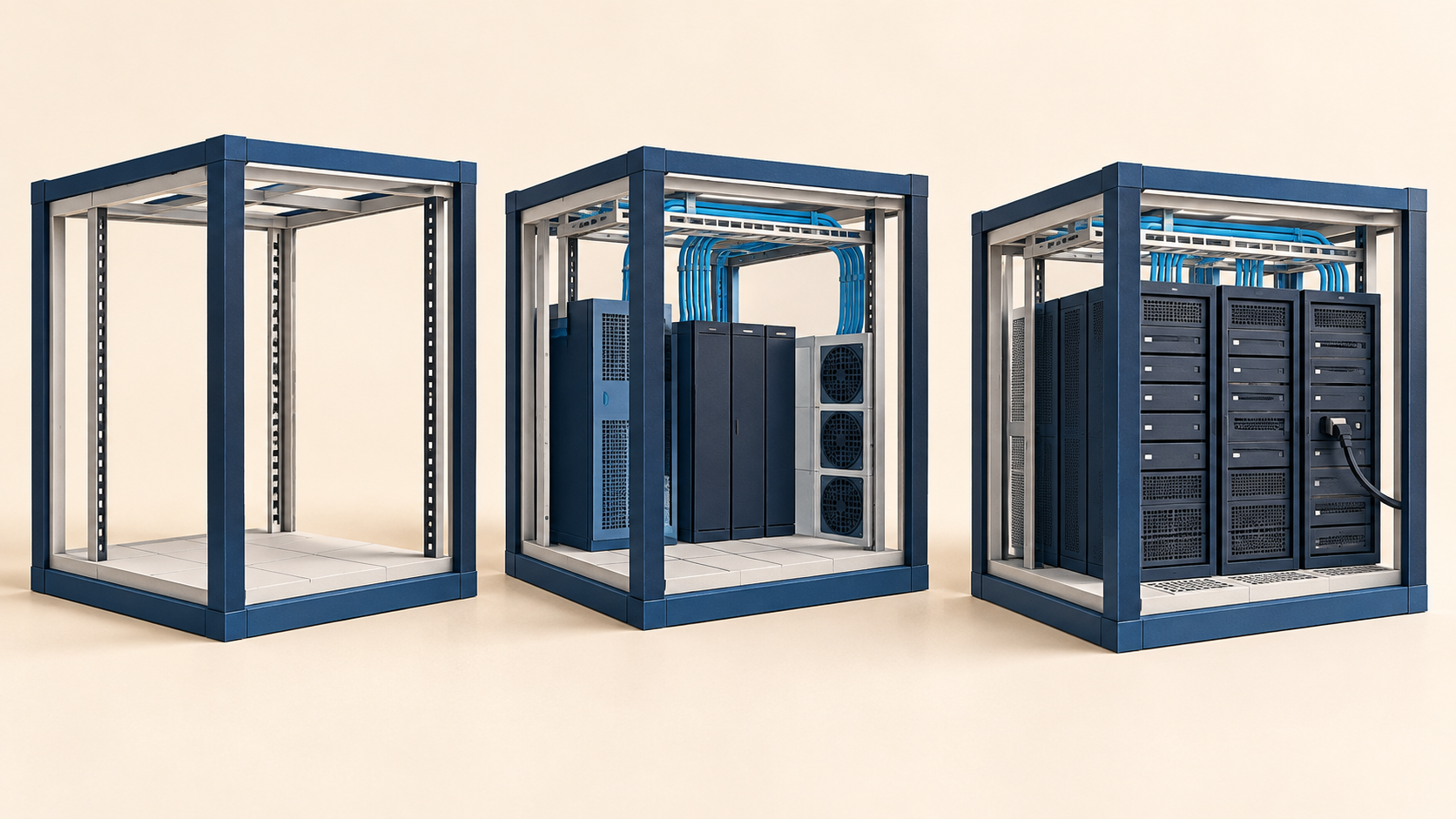
The definitions become clearer in Sify Infinit Spaces’ October 2025 draft prospectus. Its historical June 2025 table separates 188.04 MW of built capacity, 131.88 MW installed, and 113.67 MW operational. Built refers to the maximum IT load engineered into the design. Installed means equipped, powered and commissioned. Operational, in this disclosure, means capacity sold to customers that generates revenue.
Using the document’s definitions, the sold figure was about 86.2% of installed capacity, but 60.4% of built capacity. These are calculations from the same historical table. Choosing the larger denominator does not establish that roughly 40% of working servers were idle. The disclosure measures contracted IT power, rather than how intensively customers used their processors. These figures describe June 2025, not Sify’s position today.
A large pipeline can coexist with tight available supply
Cushman & Wakefield’s August 2026 update put Mumbai’s operational capacity at 890 MW and its development pipeline at 1,726 MW for the first half of the year. Across its Asia-Pacific coverage, it separately identified capacity under construction and capacity still being planned. A pipeline therefore needs a delivery timetable before it can be compared with demand for facilities available now.
The overseas evidence also needs its boundaries. CBRE’s August report recorded 1.4% vacancy across eight primary US data-centre markets in H1 2026. It said 80.4% of capacity under construction was already preleased. That denominator is the construction pipeline, not all existing inventory. The findings describe a tight leasing market in the locations surveyed; they do not measure Indian demand or GPU utilisation.
Those results do not settle whether every future development will earn an adequate return. A lease can support a building’s income before the tenant earns enough from the computing it supplies. Conversely, an announced campus may never become usable capacity on its original schedule. These are separate risks to investigate.
What this means for India
For businesses choosing a facility, the relevant evidence is the capacity available at the required location and date, with the necessary power and cooling. For a developer or lender, it also includes the customer's delivery commitment and ability to pay. A national investment total cannot answer either question by itself.
This is a commercial question alongside the resource-and-incentive assessment in MM’s earlier report on NITI’s data-centre framework. Neither should be replaced with a single headline number.
The Crunch
Read the definition beside the megawatts. Announcements indicate ambition; commissioning establishes readiness; customer commitments establish a commercial obligation. Claims about actual computing use need their own evidence.