
India’s self-reliance agenda is gaining a digital edge. The government has proposed new e-commerce rules that would require platforms to include “country of origin” filters, helping consumers easily identify domestic products. The move aims to strengthen local manufacturing visibility at a time when India is balancing trade pressures from rising US tariffs and ongoing negotiations for a new bilateral trade deal. It marks a convergence of policy, politics, and economic positioning in India’s broader trade strategy.
Breakdown:
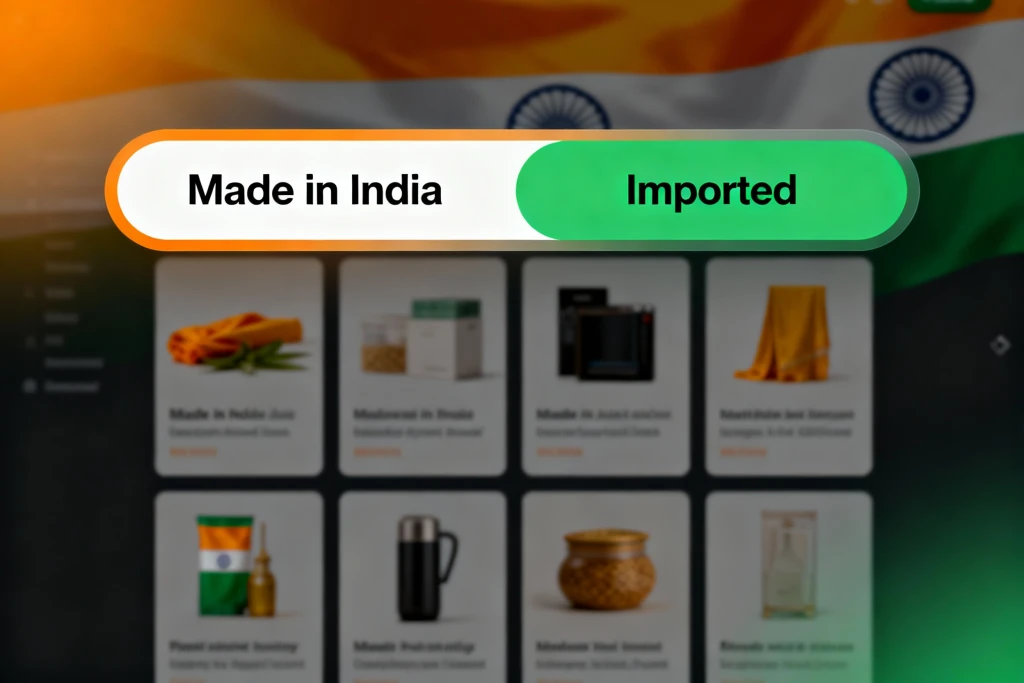
The proposed amendment to the Legal Metrology (Packaged Commodities) Rules, 2011, would make it mandatory for e-commerce platforms to display and filter products based on their country of origin. According to the Consumer Affairs Ministry, the change is designed to create a level playing field for Indian manufacturers, improve visibility for local goods, and encourage consumers to choose domestic alternatives.
The timing of the proposal is significant. Since the United States doubled tariffs on several Indian exports to as high as 50 percent in August, thousands of small businesses and artisans have struggled to maintain competitiveness. To offset the impact, a delegation of Indian exporters is visiting Moscow this week to explore new trade partnerships and diversify export markets beyond the United States.
Meanwhile, in Washington, President Donald Trump said his administration is “getting close” to reaching a new trade deal with India that would expand economic and security cooperation, boost energy exports, and encourage greater bilateral investments. The White House described the negotiations as an effort to achieve a fairer and more balanced economic relationship.
Together, these developments show India’s two-pronged approach: promoting domestic self-reliance while strengthening global trade alignment.
Why this matters:
The proposed e-commerce rule represents more than a digital update. It signals India’s intent to merge consumer transparency with industrial policy. By integrating “country of origin” visibility into online marketplaces, India is encouraging shoppers to consciously support homegrown businesses. The move aligns with national initiatives like Make in India and Vocal for Local, both aimed at strengthening domestic manufacturing and reducing import dependence.
At the same time, the evolving trade discussions with the United States highlight India’s challenge in maintaining its export growth amid global trade realignments. Striking the right balance between domestic protection and global cooperation will define India’s economic resilience in the coming decade.
The Big Picture:
Global trade dynamics are increasingly shaped by technology, transparency, and strategic nationalism. India’s latest proposal reflects this new era, where digital infrastructure and trade policy work together to shape consumer behavior. If implemented effectively, the rule could help small and medium enterprises gain visibility and improve competitiveness. However, overly complex enforcement could risk slowing compliance and innovation within the e-commerce ecosystem.
The Crunch:
India’s trade evolution will depend less on tariff battles and more on how it uses data and digital visibility to empower local industries. In a world where commerce is increasingly online, transparency may become India’s strongest economic advantage.