
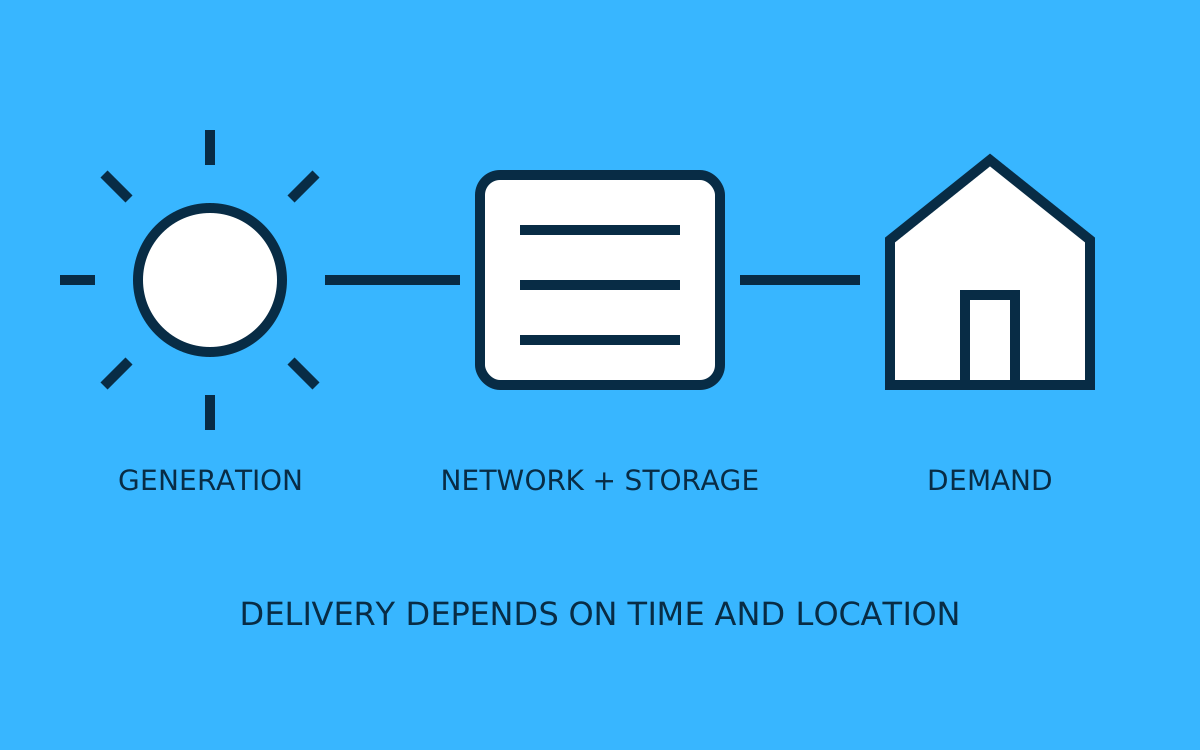
India is generating more renewable electricity while still asking some solar and wind projects to reduce output. The practical challenge is matching production with demand, transmission capacity and operating conditions at the time the electricity is available.
The Centre for Research on Energy and Clean Air reported that renewable generation excluding large hydro reached 101 billion units in July–September 2026. Its 12 October assessment put total electricity generation at 536 billion units, up 11% from a year earlier. Coal and lignite still supplied around two-thirds.
What September’s numbers show
JMK Research’s 16 October analysis of Grid-India data estimated that 378.52 million units of renewable electricity were curtailed in September. Curtailment means reducing available generation. The estimate was 43.31% below August and 24% below September 2025.
About 61% was recorded under emergency downward reserve instructions, with the remainder under real-time system constraints. JMK interprets the split as evidence that balancing supply and demand was a major issue alongside congestion. Its category explanations are interpretations, rather than formal definitions published by Grid-India.
There is also a data limitation: JMK treats days without published data as zero curtailment. The figures should therefore be read as the research firm’s compilation of reported data.
Read the units carefully
The analysis also gives a cumulative capacity figure of 118.6 GW. Its footnote says this adds daily observations. It does not represent that much capacity being switched off simultaneously, or establish the number of distinct plants affected. Energy curtailed during a month and generating capacity describe different things.
Why this matters
For a power buyer, the useful question is when electricity can reach the site. For a developer, it is how often the project can deliver the output assumed in its financial plan. A national capacity total cannot answer either question on its own.
Storage can move some available supply to a different time. Transmission upgrades can help move it to another location. Flexible consumption and better forecasting address different parts of the same operating problem. The appropriate combination depends on the local constraint; a monthly national average is insufficient to size a battery or choose its location.
The Crunch
Track delivered electricity and the completeness of the data alongside new capacity. A monthly improvement deserves attention, while long-term planning needs evidence about where constraints recur and which investments relieve them.