
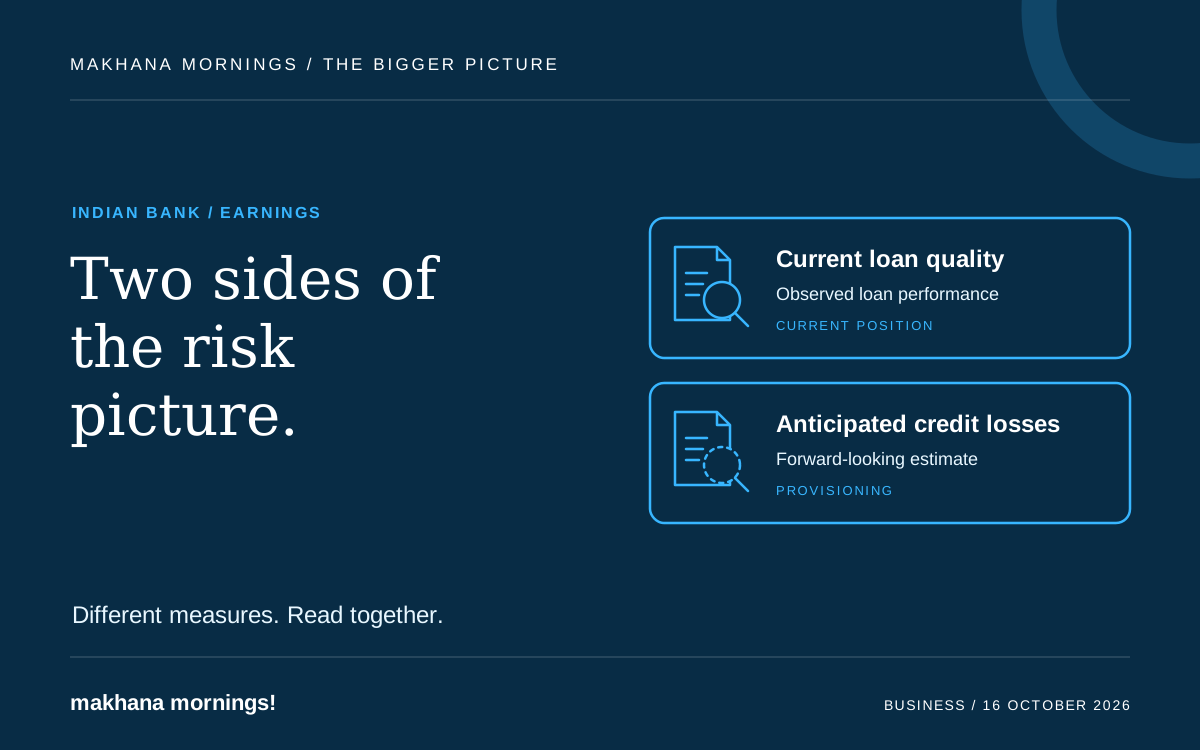
Indian Bank’s bad-loan ratio fell in the September quarter, but the lender increased its provisions for anticipated credit losses. That combination shows why a bank’s current loan quality and its preparation for future risks need to be read together.
The Breakdown
In its results approved on October 15, Indian Bank reported standalone net profit of ₹3,462 crore for the quarter ended September 30, 2026, up 14.7% from a year earlier.
Net interest income rose 17.8% to ₹7,719 crore. This is interest earned on loans, investments and other assets minus interest paid on deposits and other funding. It is a central source of a bank’s earnings, before operating costs and provisions.
Interest earned grew to ₹19,106 crore from ₹16,590 crore a year earlier. Interest paid increased more slowly, to ₹11,387 crore from ₹10,039 crore.
Why provisions can rise as bad loans fall
The gross non-performing asset ratio declined to 1.61% from 2.60% a year earlier. The amount of gross bad loans also fell, to ₹11,613 crore from ₹16,135 crore, so the improvement was not just a change in the ratio.
Separately, the bank recorded ₹1,672 crore of incremental provisions, net of reversals, on standard assets above the minimum regulatory requirement. This included ₹1,500 crore toward an anticipated expected credit loss, or ECL, impact.
ECL concerns estimates of future credit losses. The ₹1,500 crore provision is an accounting charge for that anticipated impact; it does not mean loans of that amount defaulted during the quarter.
An investment gain also lifted income
Other income included ₹1,386.67 crore linked to the National Stock Exchange’s listing. Of this, ₹252.50 crore was a realised gain from selling shares through the offer for sale. The larger ₹1,134.17 crore component came from revaluing shares as of September 30.
The distinction matters: a revaluation gain is different from a gain realised by selling shares. Both increased reported income, while provisions reduced profit before tax. Their individual after-tax effects cannot be read directly from those headline amounts.
The Crunch
A falling bad-loan ratio and rising provisions can sit together. Indian Bank’s interest earnings improved, while its accounts also recognised investment gains and an additional charge for anticipated credit losses. Each describes a different part of the bank’s performance.