
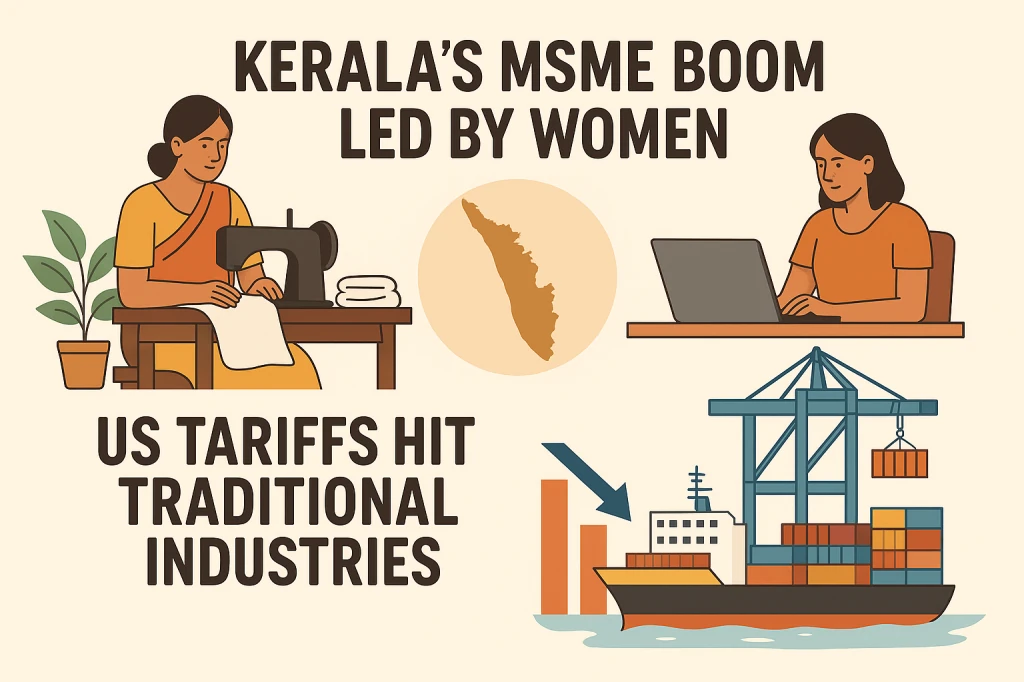
Kerala is living two economic realities at once. On one side, homes are turning into hubs of entrepreneurship, with more than 350,000 new micro, small and medium enterprises launched in just three and a half years. Almost a third of these ventures are led by women, many running businesses from their own living rooms. On the other side, the state’s traditional industries including marine products, spices, cashew, coir, tea and rubber face their toughest challenge in years. New penalty tariffs imposed by the United States are threatening to slash revenues, disrupt supply chains and imperil thousands of jobs.
Breakdown
Context
Kerala has long been associated with its export backbone in cashew, spices and coir. Yet the rise of household enterprises highlights a new wave of localised growth, powered by digital platforms, looser regulations and government backed support.
India and Business Angle
The MSME boom, led significantly by women, is widening participation in the economy, creating jobs and diversifying income sources. But Finance Minister K N Balagopal’s warning about United States tariffs underscores how global shocks can destabilise Kerala’s economic foundation. Traditional exporters and emerging entrepreneurs are both vital for sustaining growth.
What’s Next
The state must navigate a twin track strategy that supports grassroots MSMEs while mitigating the fallout from tariff blows. This may involve export diversification, stronger domestic markets for traditional products and policies that strengthen digital platforms for new enterprises.
Why this Matters
Kerala’s experience reflects the broader story of India’s economy, a dynamic mix of legacy industries and new age entrepreneurship. Women led MSMEs show the potential for inclusive growth, but external shocks reveal persistent vulnerabilities. How Kerala adapts will offer lessons for balancing resilience with innovation.
The Bigger Picture
As India pushes for Atmanirbhar Bharat, states like Kerala illustrate both the promise and the pitfalls of transformation. Domestic entrepreneurship can empower households and communities, but global interdependence means external shocks remain a constant risk. Building a resilient economy will require bridging these two worlds, sustaining the old while nurturing the new.