
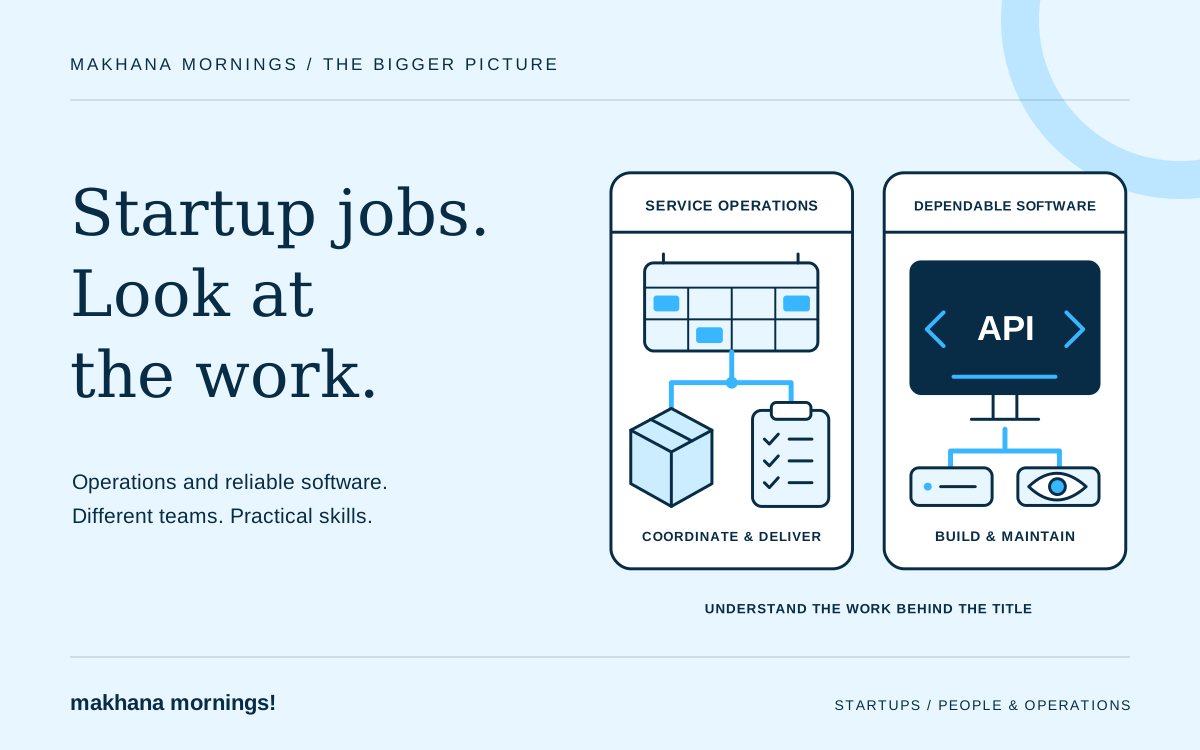
India’s emerging startup employers span two demanding kinds of work: getting everyday services to customers and building the technology behind new products.
LinkedIn’s Top Startups India list, published on October 14, puts Zepto first, followed by topmate.io and Matiks. Thirteen of the 20 companies are new entrants.
The list offers a useful starting point for understanding these employers. Reading the work behind the company names makes it more useful still.
The Breakdown
Quick commerce and on-demand services have a strong presence through Zepto, Snabbit, Swish, Pronto and FirstClub. AI-focused businesses include Sarvam and Emergent.
LinkedIn’s employee-profile data illustrates the difference. Store and operations managers are common roles at Zepto. Swish lists shift managers and quality-assurance executives, while Sarvam lists software engineers, machine-learning engineers and language specialists. These describe existing teams; they are not a count of current vacancies.
Swish’s own explanation of its business adds substance to the operations story. It says it runs its kitchens, sourcing and deliveries, supported by its own routing and kitchen systems. Expanding that model means coordinating food preparation, stock, service quality and delivery in each neighbourhood.
Why This Matters
For jobseekers, the sector label tells only part of the story. A company selling through an app may need deep operational experience. An AI company may need engineers whose main responsibility is keeping a service dependable after it launches.
A current Sarvam advertisement makes that second point concrete. Its model-API engineering role covers reliability, response times, monitoring and incident handling. It asks for four to six years of experience building and operating production backend systems.
That is a useful way to assess an opportunity: identify the problem the role owns, the skills needed to solve it and how success will be measured. A recognisable startup name cannot answer those questions by itself.
The Big Picture
LinkedIn scores employment growth, engagement, interest in jobs and recruitment from its Top Companies list. The measurement window runs from July 2025 to June 2026. Eligible businesses must be independent and privately held, no more than five years old, and have at least 30 full-time employees.
Those measures capture hiring and professional attention. They do not assess profits, cash reserves or investment returns. The published workforce insights also exclude profiles identified as contractors or part-time workers, an important limit when considering businesses with large service networks.
For a candidate weighing an offer, the next questions concern the team’s plans, funding available to support them, working conditions and the responsibilities attached to the role. For a business reader, the test is whether expansion improves customer retention and operating performance.
The Crunch
The ranking puts a useful range of young employers on the radar. Their prospects depend on turning that attention into dependable products and services, with teams equipped to deliver them.