
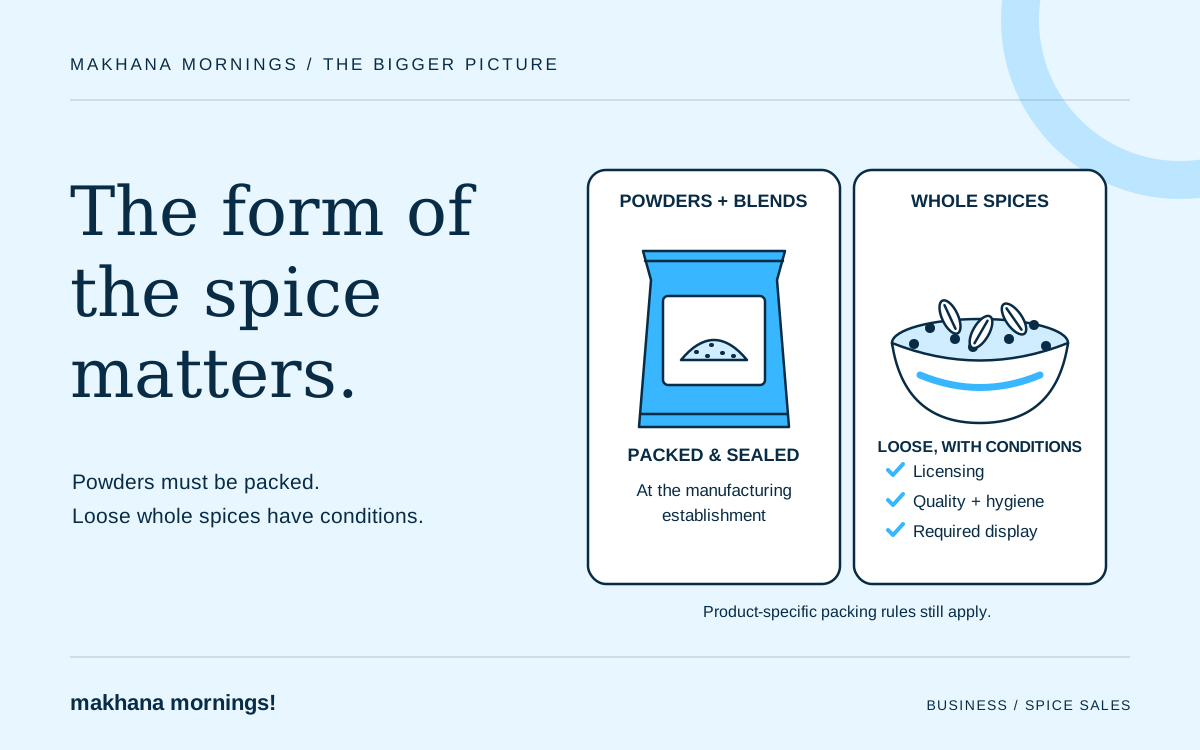
A fresh Maharashtra food-safety order has an important distinction for anyone buying or selling spices: powdered products must be packed, while whole spices may still be sold loose under specified conditions.
Issued on October 15 with immediate effect, the order directs statewide compliance across the spice supply chain. It covers manufacturers, processors, wholesalers, shops, online sellers and food-service businesses.
The Breakdown
Powdered and ground spices, blended spice mixes, curry powder and mixed masala must be sold in labelled packs filled and sealed at the manufacturing establishment. The order cites an existing national requirement for powdered spices to be sold packed.
Whole, unground spices may continue to be sold loose, subject to licensing, quality, hygiene and display requirements and any product-specific packing rules. Sellers must display the product name, best-before date and FSSAI licence or registration number. Point-of-sale packaging must be food-grade.
There is also a distinction for neighbourhood grinding services. A chakki that grinds a customer’s own spices and returns the entire quantity is distinguished from a business that grinds, stocks and sells powder on its own account. The latter must meet the appropriate licensing and packed-sale requirements.
Why This Matters
For shoppers, the useful question is what form of spice they are buying. A loose whole spice and a loose masala powder fall into different parts of the order. A headline referring only to “loose spices” misses that distinction.
For retailers, the commercial issue begins before a customer reaches the counter. Packaging, supplier records and product information need to follow the goods through the supply chain. The order places responsibility on the manufacturing establishment as well as the seller.
For small producers, that makes the route from grinding to a saleable pack important. The order gives no basis for estimating what the change will cost an individual business, or how much of any extra cost shoppers might bear.
The Big Picture
The broader direction covers hygiene, testing, traceability and adulteration controls. Its commercial significance is that a spice business is accountable for how a product is handled and documented, as well as what ends up in the packet.
This is an issued compliance and enforcement order. The direction itself does not establish that inspections have already led to new seizures, licence cancellations or convictions.
The Crunch
Keep the distinction clear: the packed-sale requirement covers powders and blended masalas; whole spices retain a conditional route to loose sale. For the trade, the next test is implementation across manufacturers, distributors and neighbourhood shops.