
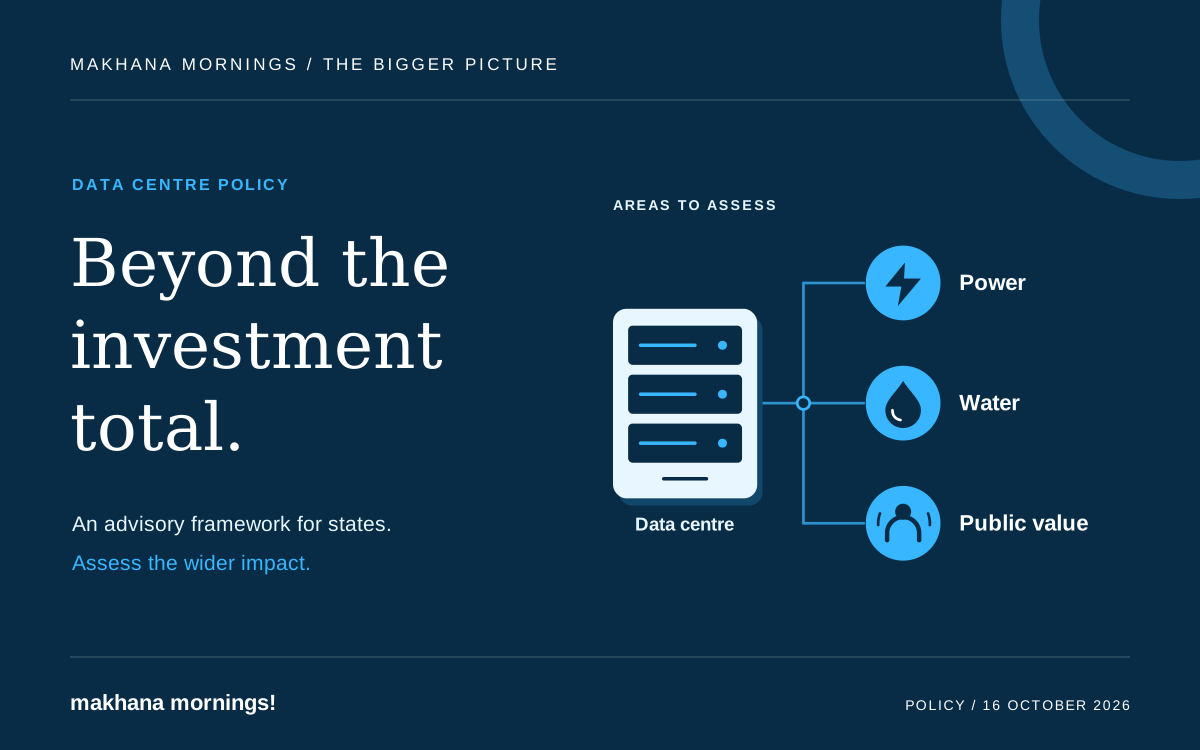
India’s data-centre investment announcements come with another set of numbers: electricity demand, water use and the public cost of supporting each project. NITI Aayog wants states to assess those alongside the economic benefits before committing support.
Its Frontier Tech Hub released a Data Centre Evaluation Framework on October 14, 2026, followed by an official announcement on October 15. The guidance helps states assess proposals and track delivery. It does not create a new regulatory layer, and states can adapt it to local priorities and resources.
The Breakdown
On power, the framework recommends planning for the whole campus, including future expansion and grid upgrades. Renewable energy and battery storage should reduce estimated grid demand only when delivery, connections, usable capacity and matching to the relevant time periods are verified.
On water, it recommends testing peak-summer demand against local supply and protecting existing users. Treated or recycled supplies should reduce projected freshwater demand only when they are contracted, connected and available at commissioning. Cooling choices should reflect local climate and the type of facility.
What should public money buy?
The framework recommends separately counting land, infrastructure, duty concessions, utility support and capital assistance when assessing a project’s net fiscal contribution. Incentive payments should follow measurable milestones within the recipient’s control, such as commissioning, efficiency, employment and procurement.
It also distinguishes facilities that rent out space and supporting infrastructure from businesses providing cloud or computing services. The proposed benefits and obligations should fit the business model and the entity responsible for delivering them.
The Big Picture
For states, the underlying trade-off is straightforward: attracting a project can require public spending and scarce resources before the promised benefits arrive. Clear responsibilities and delivery milestones make that trade-off easier to examine.
For developers, earlier agreement on infrastructure needs could make project planning more predictable. That is an intended benefit of the guidance, rather than evidence that approvals will now become faster or that every state has adopted the approach.
The Crunch
NITI’s framework puts a practical question before states: what will a data centre deliver after its demands on public resources and the cost of state support are counted? The next test is whether states use that assessment when choosing sites, setting incentives and tracking delivery.