
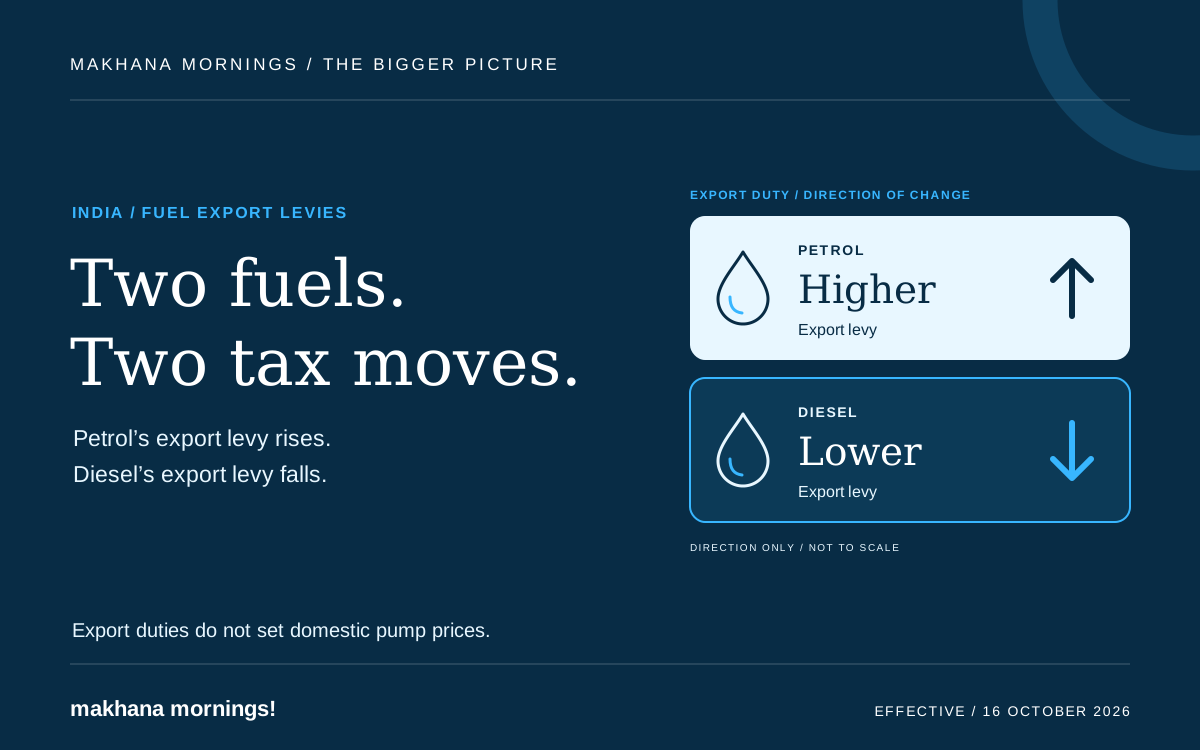
India has raised the levy on petrol exports while cutting it for diesel, changing the tax cost of the two fuels from October 16, 2026. The different directions matter for refiners, whose exposure depends on the products they ship abroad.
The Breakdown
The Petroleum Planning & Analysis Cell’s updated table puts Special Additional Excise Duty, or SAED, on petrol exports at ₹2.50 per litre, up from ₹0.50. Diesel’s rate falls to ₹8.50 from ₹16.00. Those comparisons use the rates shown for October 1.
That is an increase of ₹2 per litre for petrol and a reduction of ₹7.50 for diesel. The separate Additional Excise Duty component is zero for both fuels in the October 1 and October 16 entries, so the comparison is on the same basis.
The table shows no change in the aviation turbine fuel export levy, which remains ₹10.50 per litre.
Which sales are covered?
The underlying rate notification covers motor spirit, commonly called petrol, and high-speed diesel cleared for export. It excludes exports by public-sector oil companies to Nepal, Bhutan, Bangladesh and Sri Lanka from that notification’s scope.
These are export-duty rates. They do not set the price charged at Indian fuel pumps, and the diesel cut is not an announced retail-price reduction for motorists.
Why the product mix matters
For a refinery exporting both fuels, the two changes affect its tax bill in opposite ways. The combined effect depends on how much petrol and diesel it exports under the applicable rates.
Lower diesel duty reduces one cost of an export sale. The eventual profit still depends on the selling price, crude and processing costs, freight and other expenses. The rate change alone does not establish a rise in earnings or export volumes.
The Crunch
The revised export levies raise the tax cost of petrol and lower it for diesel. Their effect on refiners will depend on export volumes, product mix and margins; the rate change does not set domestic pump prices.