
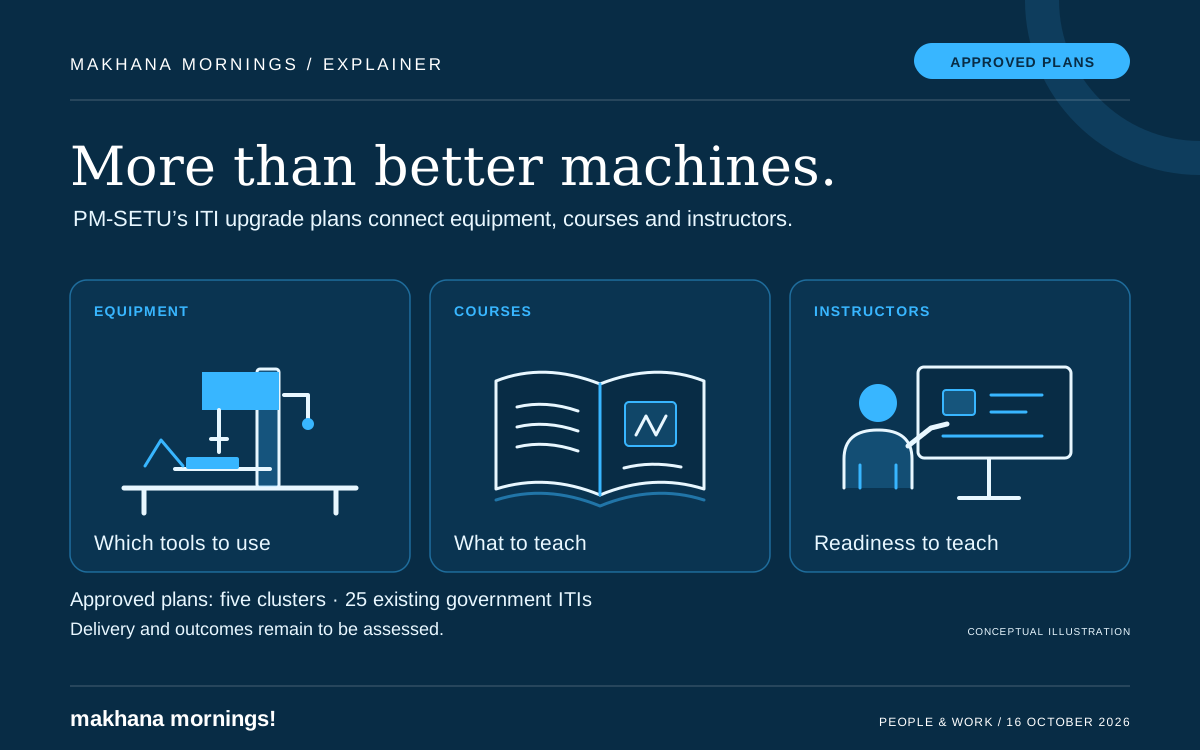
Better machines can improve a training workshop. They cannot, on their own, keep courses relevant or ensure that instructors know how employers use that equipment.
That is the challenge behind the latest PM-SETU approvals. On October 16, the scheme’s National Steering Committee approved investment plans worth ₹1,194.92 crore for five clusters of Industrial Training Institutes, or ITIs.
The Breakdown
Each cluster has one hub institute and four linked institutes, known as spokes. Together, the plans cover 25 existing government ITIs across Maharashtra, Odisha and Jammu & Kashmir.
The partners are Tata Steel Foundation for Kataka in Odisha; BVG India, with BVG Foundation, for Pune; Belrise Industries for Chhatrapati Sambhajinagar; Eagle Infra India for Jammu; and Inderdeep Infra India for Srinagar.
These are approved investment plans. The announcement does not establish that the full amount has been paid out or that the upgrades are complete.
A role beyond supplying equipment
PM-SETU’s published framework keeps the institutes government-owned while giving industry a role in their management. Dedicated companies set up for the clusters can oversee infrastructure, courses, trainers and operations.
The aim is to connect decisions that are often treated separately: which equipment to buy, what to teach and who is ready to teach it. Industry involvement could help those decisions reflect workplace needs, but the approval itself does not demonstrate that this has happened.
How the money fits
The scheme draws on central, state and industry contributions. Its investment plans cover both capital spending and running costs over five years. The latest release gives cluster totals without a contributor-by-contributor split.
Published guidelines link staged funding to co-funding and performance conditions. The ₹1,194.92 crore should therefore be read as the value of approved plans, rather than a single government cheque or a wholly private investment.
The next useful evidence will come from delivery: equipment being used, instructors prepared for new courses and trainees finding work that uses their skills. Spending and enrolment can show activity; they cannot by themselves establish better employment outcomes.
The Crunch
The new approvals set out an investment plan for five ITI clusters. Their value will depend on whether industry partners help turn upgraded facilities into relevant training and stronger employment prospects.