
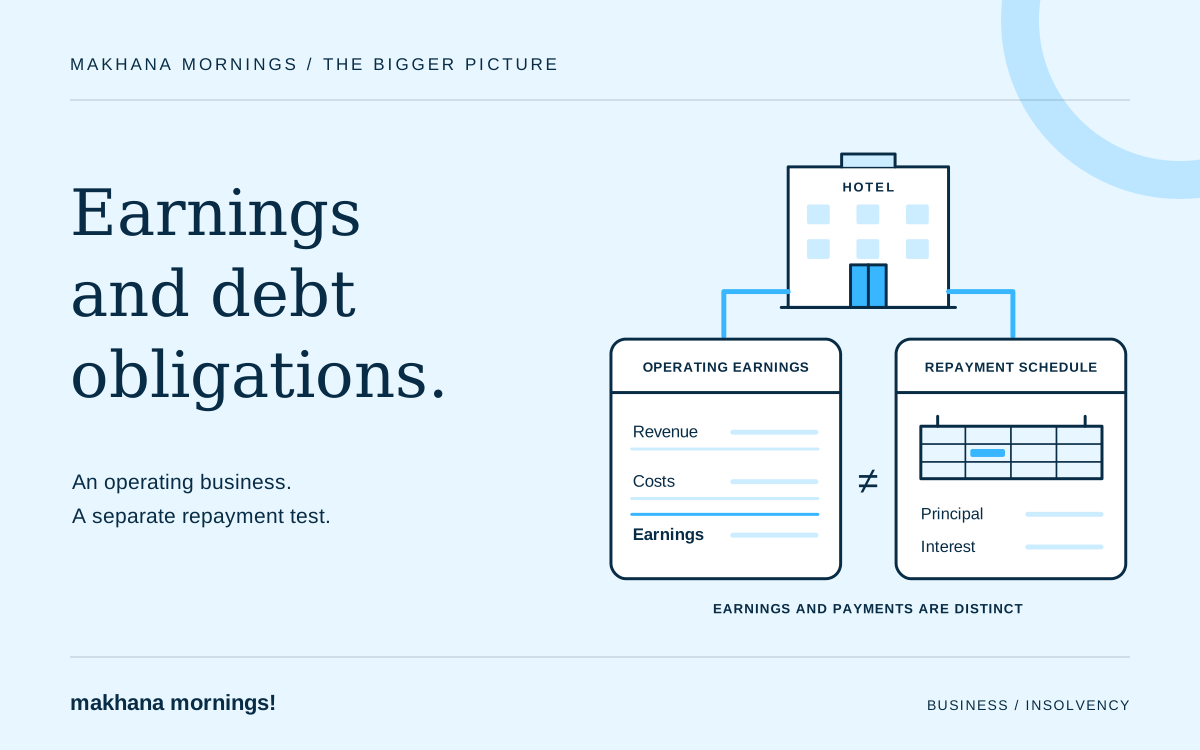
A company can report positive operating earnings and still struggle to pay its lenders on time. That distinction is central to an October 15 Supreme Court judgment upholding insolvency proceedings against two hotel companies.
In Deepak Raheja v Omkara Assets Reconstruction, the Court dismissed both appeals and directed that the companies’ corporate insolvency resolution processes continue. The decision settles these challenges to their admission into the process. The resolution of the businesses remains ahead.
The Breakdown
The case concerns GSTAAD Hotels Private Limited and Neo Capricorn Plaza Private Limited. The judgment identifies them as the owners and operators of the JW Marriott hotel in Bengaluru and Crowne Plaza hotel in Pune, respectively. The orders apply to those two companies.
Omkara Assets Reconstruction initiated the proceedings after acquiring loans originally extended by Piramal Finance. The appeals disputed the calculation of amounts due and argued that profitable businesses should not be put through insolvency.
The Court upheld the tribunal orders admitting the cases under Section 7 of the Insolvency and Bankruptcy Code, the route used by financial creditors to seek a corporate debtor’s admission into insolvency resolution.
Why This Matters
Profitability and the ability to meet a repayment schedule measure different things.
EBITDA, or earnings before interest, taxes, depreciation and amortisation, is calculated before interest costs. A positive figure therefore cannot establish that a company has enough money available to meet interest and principal payments as they fall due.
The Court illustrated the distinction using GSTAAD’s audited debt-service coverage ratio of 0.12 for FY2022–23. It explained that the company’s internal accruals covered only 12% of that year’s debt obligations. The figure relates to that historical financial year, rather than current trading.
The broader business point is straightforward. A promising operating business can carry a financing burden that its earnings cannot support. Its prospects and its payment obligations need to be examined together.
The Big Picture
The judgment also separates two stages of an insolvency case.
At admission, the tribunal must establish that a financial debt and a qualifying default exist, using documentary evidence. It does not have to settle every disputed accounting entry or determine the entire outstanding balance down to the last rupee.
That does not let a creditor rely on an unsupported claim. The Court explained the weight of records of default held by information utilities, regulated repositories of financial information, and how other documents can collectively establish default. The applicable statutory threshold and admission requirements still have to be met.
After admission, claims undergo detailed verification during the resolution process, with tribunal oversight. A dispute about the final amount therefore need not block admission where the evidence already establishes a default above the statutory threshold.
The Court connected this approach to the Code’s purpose: intervening while financial stress can still be resolved, rather than waiting until a business has no realistic future beyond liquidation.
The Crunch
These appeals are finished, but the companies’ resolution processes continue. The ruling does not order the hotels to close or decide their eventual buyer, creditor recoveries or liquidation. Its central lesson is that a claim of profitability cannot substitute for evidence that debt payments can be met.