
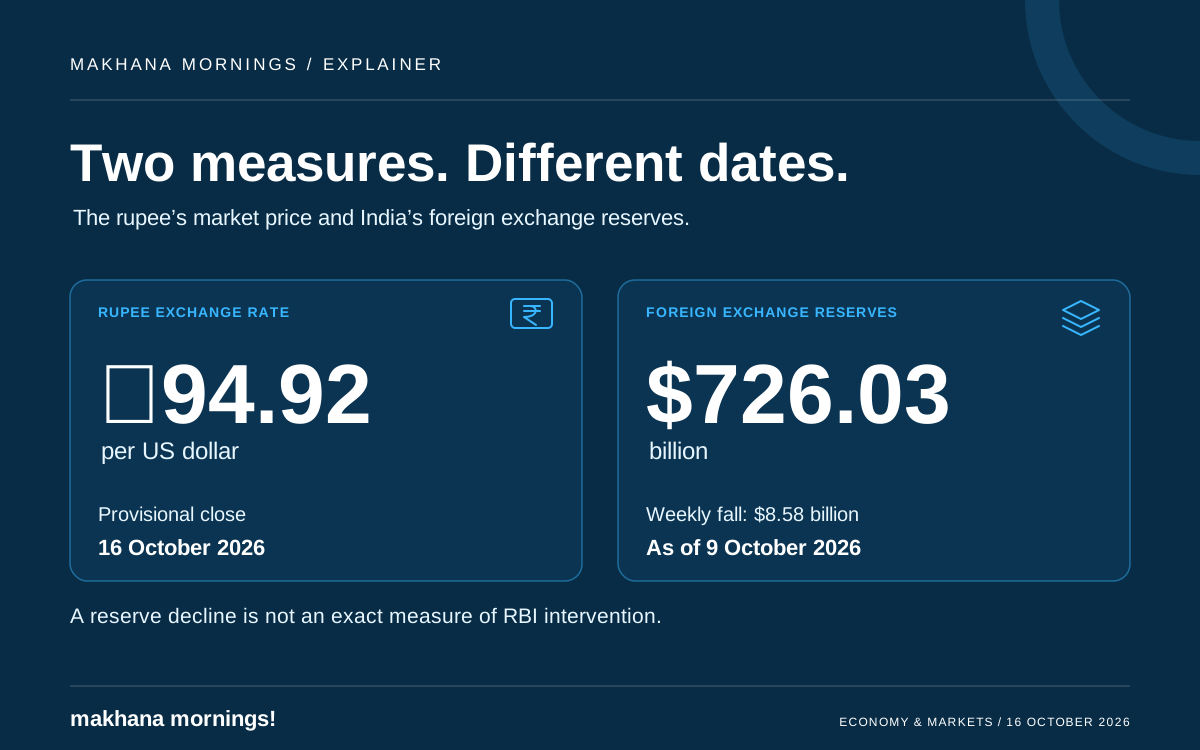
The rupee closed provisionally at ₹94.92 per US dollar on October 16, 2026, gaining seven paise for its sixth straight session of appreciation. Separately, RBI data released that day showed India’s foreign exchange reserves had fallen by $8.58 billion to $726.03 billion in the week ended October 9.
These figures offer two views of the currency story. The exchange rate tells us the rupee price of a dollar in the market. Reserves measure the value of a stock of assets, with a reporting lag.
The Breakdown
Most of the weekly reserve decline came from foreign currency assets, whose reported dollar value fell by $7.14 billion. The value of gold reserves fell by $1.32 billion. Smaller changes in India’s IMF-related reserve assets accounted for the rest.
The wider comparison also matters: total reserves were still $34.92 billion above their end-March 2026 level. A weekly fall and an increase since the financial year began can both be true.
Why a reserve fall is not an intervention bill
Reserve values change through transactions and through valuation. When the RBI sells foreign currency, that can reduce its holdings. But assets held in euros or other currencies also change in dollar value as exchange rates move. Gold’s market price affects its reported value too.
For example, a weaker euro can reduce the dollar value of euro assets even if none are sold. A decline in the value of gold does not, by itself, establish that gold was sold.
RBI’s own reserve accounting separates changes excluding valuation effects from changes including them. The October 16 weekly table does not split the $8.58 billion decline into intervention and other causes.
Choice Broking analyst Kaveri More pointed to RBI intervention as support for the rupee. That market assessment is different from an official disclosure of how much the central bank bought or sold.
Keep the dates separate
The October 9 reserve snapshot also predates the tighter currency-hedging measures the RBI announced on October 10. It cannot show the reserve impact of those measures or of trading on October 16.
Why businesses care
A stronger rupee lowers the rupee cost of an unchanged dollar payment, all else equal. As a simple illustration, a seven-paise move would reduce the cost of an unhedged $100,000 invoice by ₹7,000 at those exchange rates, before bank charges. Actual payments depend on the rate available and any existing hedge.
For a business, the immediate payment rate and the country’s reserve buffer answer different questions. Neither one day’s currency gain nor one week’s reserve change establishes where the exchange rate will go next.
The Crunch
The rupee’s recovery and the fall in reserves describe different things on different dates. The reserve decline deserves attention, but it cannot be read as an exact bill for RBI intervention or a verdict on the latest currency measures.