
A vehicle can be made in India without its underlying design coming from India. The expanded Tata–Stellantis partnership puts both parts of that equation in view.
The Breakdown
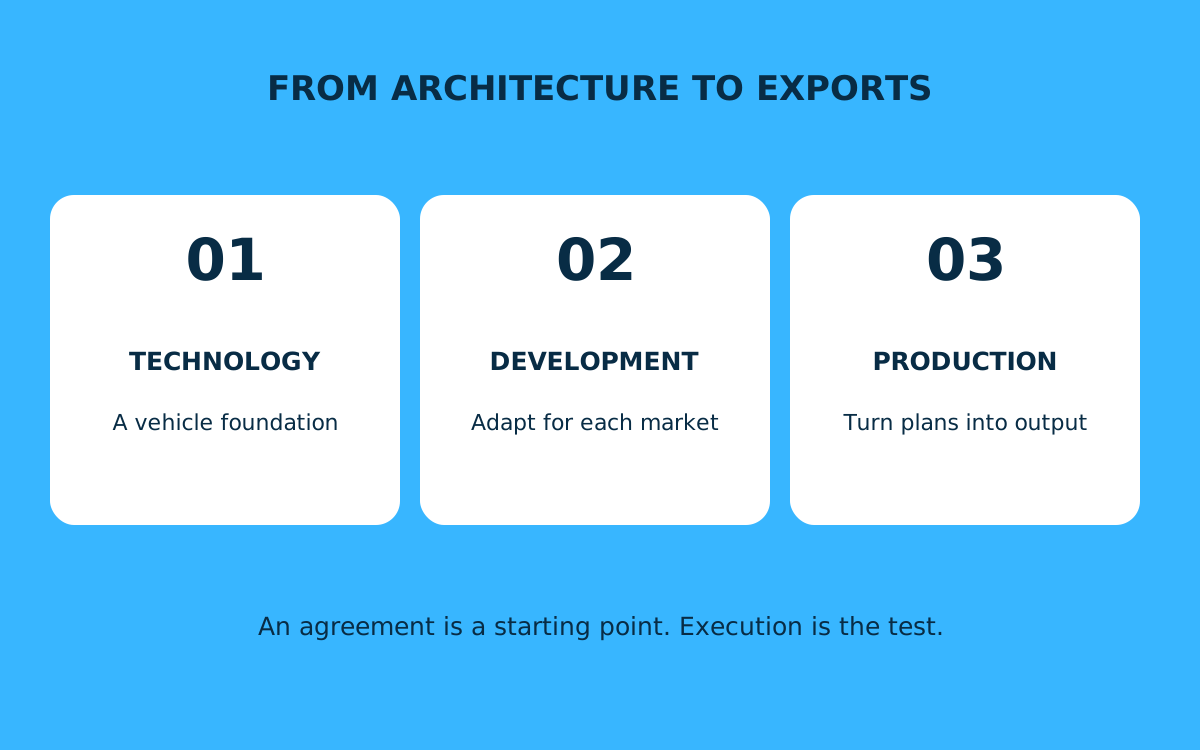
An October 12 agreement gives Stellantis access to Tata Motors Passenger Vehicles’ product technology and vehicle architecture. Stellantis plans to use its Indian development and engineering capabilities to adapt that foundation for the requirements of more than 50 global markets.
Manufacturing is planned at Fiat India Automobiles, the partners’ existing 50:50 joint venture. The agreement also includes Tata Passenger Electric Mobility and follows a February memorandum of understanding.
The significance is the move from exploring cooperation to a specific technology-and-product arrangement. The announcement does not provide launch dates, model-level volumes or the revenue each partner expects to earn. More than 50 markets describes the intended reach of the development programme; it is not a count of completed launches.
Why the architecture matters
Vehicle architecture is the underlying technical foundation on which products are developed. Sharing a foundation can allow companies to reuse engineering work while developing different products. It does not remove the need to test, adapt and approve a vehicle for the market where it will be sold.
That distinction creates a more useful question than how many cars leave a factory: how much of the development work, technical capability and commercial responsibility stays with the Indian operation?
The announced arrangement gives Indian technology a role in the programme. Its eventual financial value will depend on commercial terms and execution that the release does not disclose.
What suppliers should watch
For component makers and engineering-service businesses, a broad export ambition becomes a concrete opportunity only when it turns into specifications, supplier selections and production orders. Preparing for a programme and booking revenue from it are different stages.
Managers can watch for named vehicles, production schedules, localisation decisions and market approvals. Those milestones would help establish whether a platform-sharing agreement is developing into repeatable business.
The Crunch
India’s opportunity extends from assembling vehicles to contributing the technology behind them. This agreement makes that possibility tangible. The next evidence will come from products, orders and deliveries.