
A Tesla Roadster prototype climbed an inverted ramp, rotated in the air and landed back on its wheels at SpaceX’s test facility in McGregor, Texas, on October 15, 2026. The demonstration gave the new electric sports car a dramatic introduction. Customers still face a longer wait: Elon Musk said production is targeted for 2028.
The event also needs a careful reading. The short airborne manoeuvres took place in a controlled demonstration. They do not establish a vehicle ready for everyday flying, and Tesla’s own product page says its Rocket configuration is not approved for public road use.
The Breakdown
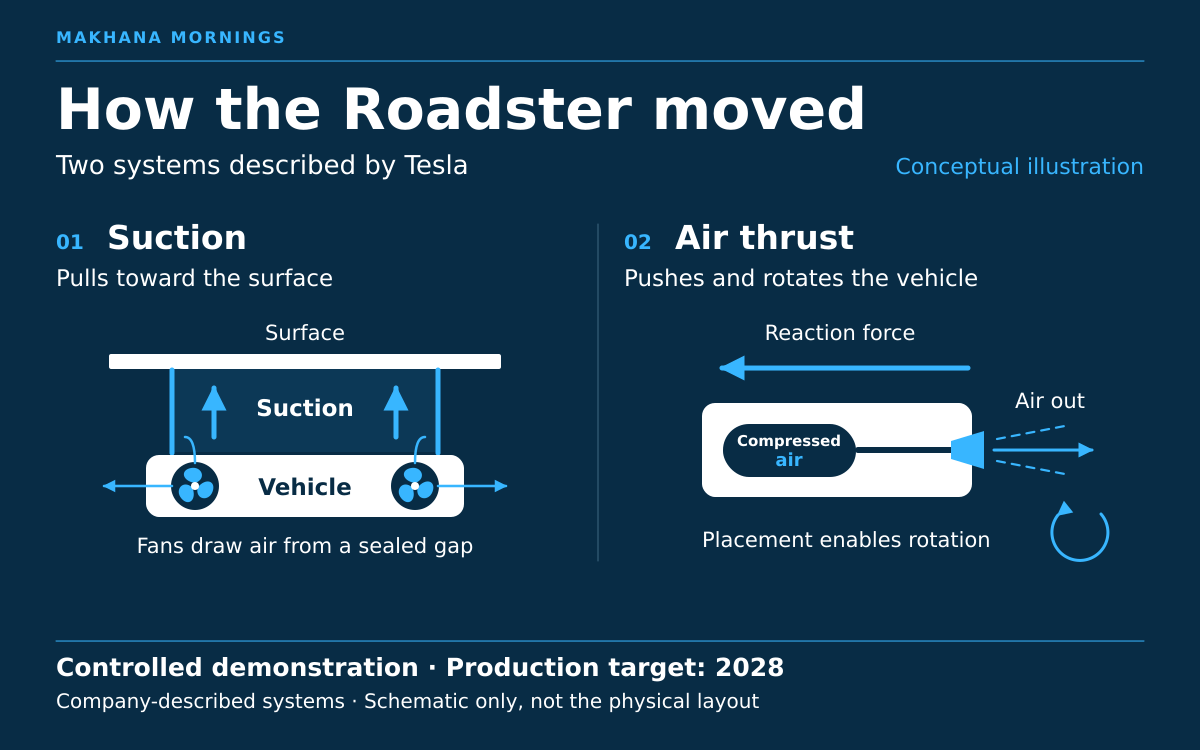
Tesla describes two systems behind the display. Fans and a sealing system draw air from beneath the car, creating suction that the company says can hold it against a surface even when it is upside down and stationary. Cold-gas thrusters provide a separate means of pushing and rotating the vehicle.
At the event, Tesla’s team said the thrusters use compressed air stored in high-pressure vessels, drawing on technology from SpaceX. This is an air-pressure system, rather than a combustion rocket engine. Tesla says the tanks can be recharged without special propellant.
Those functions explain different parts of the footage: suction helps the car remain attached to the inverted ramp, while the thrusters provide force for the airborne movement. Tesla said the demonstration car operated autonomously for safety and clarified that the figure visible inside it was not a human passenger.
The acceleration figures need context
In an October 16 specification post, Tesla listed 0–60 mph times of under 1.6 seconds for Performance, under 0.9 seconds for Thrust and under 0.59 seconds for Rocket. These are the company’s advertised figures for different configurations.
During the event, Tesla announced a 0.81-second result for a separate acceleration demonstration. That company-reported result should not be confused with independent verification of the faster, under-0.59-second specification. A comparison with other cars would also require a clear testing method and comparable conditions.
Which Roadster is being described?
Tesla presents Performance as a two-seat road-focused configuration with active aerodynamics and suction. Thrust adds rear-mounted cold-gas thrusters and retains two seats. The one-seat Rocket configuration places thrusters around the vehicle to support upward movement and rotation as well as forward acceleration.
The product page labels Rocket as invite-only and explicitly says it is not approved for public road use. Readers should therefore keep the version in view when assessing the flying-car footage. Tesla’s description of one configuration does not establish the capabilities or approvals of every Roadster.
The Big Picture
The demonstration gives Tesla a striking way to connect its sports-car ambitions with SpaceX’s engineering. The business question is how that work becomes a product with defined specifications, repeatable performance and an understood set of permitted uses.
For a prospective customer, the useful next milestones are final configuration details, applicable approvals and a credible delivery timetable. A production target is not a confirmed handover date. The October event showed what Tesla wanted to demonstrate at a test site; the manufacturing and ownership story will need further evidence.
The Crunch
Tesla has demonstrated a Roadster prototype performing brief airborne manoeuvres and set a 2028 production target. Its commercial test now includes final specifications, manufacturing and permission to use each version. The fastest advertised acceleration figure remains Tesla’s claim, while the Rocket configuration carries an explicit public-road restriction.