
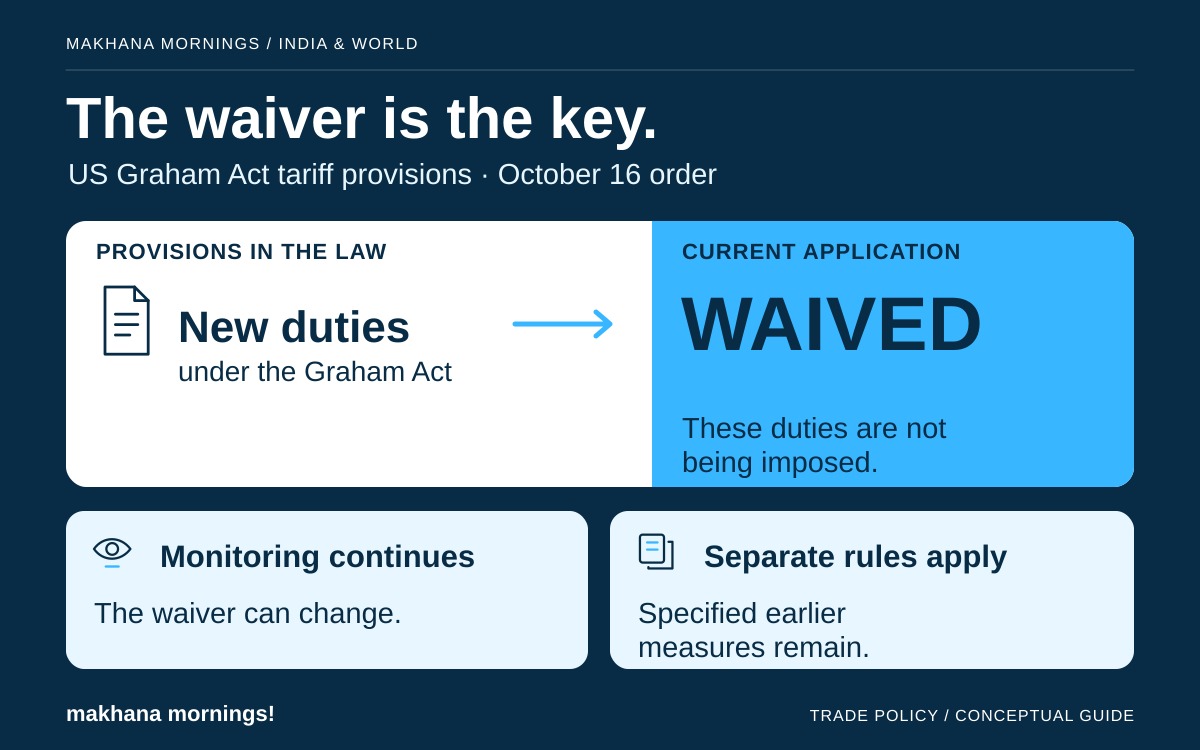
A new US executive order sets out steep tariffs tied to Russia, then waives their application. Reading both parts is essential to understanding what changed for businesses trading with the United States.
President Donald Trump’s October 16, 2026 order implements the Lindsey O. Graham Sanctioning Russia and Iran Act, signed into law on September 18. It waives the new duties under the law and the order itself, alongside specified sanctions and restrictions. The order sets no fixed expiry date for the waiver, but the administration can change it.
The tariff numbers need their conditions
The order describes an additional duty equal to 500% of the value of goods from Russia. It also sets out an additional 100% duty for goods from specified major buyers of Russian crude oil or natural gas, where they knowingly make new purchases on or after October 18, 2026. Another provision covers the leading countries facilitating Russian oil sanctions evasion.
Those provisions are subject to statutory exceptions and the waiver in the same order. Section 4 expressly waives duties under Sections 112 and 113 of the Act and under the order. The large percentages therefore describe the measures being waived, rather than a new charge currently taking effect under those provisions.
The law also defines which energy-buying countries can fall within its scope. It refers to the five largest importers by volume during the 12 months before enactment, combined with the new-purchase condition. The order does not name India or publish a country list. It should not be read as a separate India-only exemption.
Why the distinction matters for India
India’s trade relationships run in both directions: the United States is a major destination for its exports, while Russia is a significant source of imports. The India Brand Equity Foundation’s FY2025-26 trade summary puts imports from Russia at $55.36 billion, including $44.38 billion in the broad petroleum, crude and products category.
These are historical trade values, not the volume-based ranking used in the US law. They show why the issue matters without establishing a legal determination about India’s position under that ranking.
The tariff mechanism connects a country’s Russian-energy purchases with goods that businesses in that country sell to the US. That creates a potential trade concern beyond the refiners buying the oil. While the waiver applies, this particular additional duty is not being imposed. It does not settle the tariff treatment of every Indian export under other measures.
What remains in place
The order directs US agencies to keep monitoring Russian-energy purchases and sanctions-evasion activity. Its waivers last until the President or Secretary of State, under the specified consultation arrangements, determines that further action is appropriate.
The Act permits a waiver after the President sends Congress a written national-interest certification and a report explaining it. Trump says in the order that he has submitted those documents.
The order also expressly preserves sanctions and other measures under earlier executive orders addressing specified harmful Russian government activities, as they stood before the Graham Act was enacted. A waiver under this law therefore does not amount to clearance for every transaction involving Russia.
For a business, the useful distinction is between a country-based tariff, restrictions on particular transactions or counterparties, and a waiver covering specified provisions. An announcement affecting one of those layers does not answer every question about the others.
The Crunch
The US has waived the new Graham Act duties, including those linked to purchases of Russian energy. For Indian businesses, that removes the application of this additional tariff layer for now. Monitoring continues, the waiver can change, and separate sanctions and tariff rules still need to be considered.