
Zomato has taken a significant step forward in artificial intelligence by launching an official MCP (Model Context Protocol) server on GitHub. The release allows users to interact with Zomato’s platform through AI assistants like ChatGPT and Claude, transforming how people can search, order, and pay for food. This development is part of founder Deepinder Goyal’s larger vision of building future-oriented, technology-led companies that redefine user experience and automation.
Breakdown
The MCP framework, developed by Anthropic, connects AI systems to live data and services. It enables models to not only retrieve real-time information but also perform specific actions. For Zomato, this means that an AI assistant can now find restaurants, browse menus, create carts, and even generate payment QR codes on command.
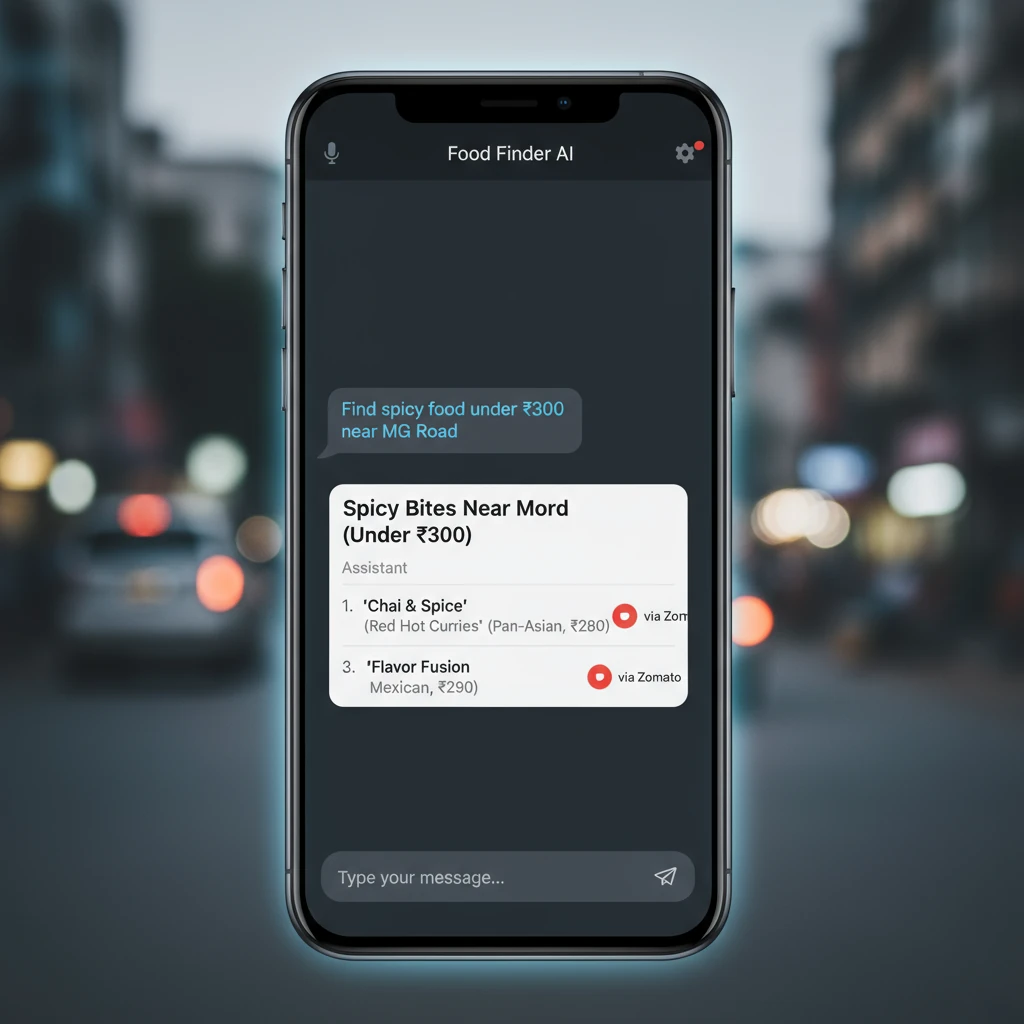
According to Zomato’s documentation, users can access the MCP server through ChatGPT or Claude using secure OAuth authentication. The setup requires a few manual steps, but once configured, users can interact with Zomato using simple natural language. For example, they can say, “Find me something spicy under 300 rupees near MG Road,” and the assistant will automatically search, filter, and present relevant options.
Shubham Palriwala, founder and CEO of Agnost AI, demonstrated how Claude can handle complete ordering conversations, from discovery to checkout. The system even generates QR codes for payments, ensuring security while maintaining a seamless experience. Zomato’s approach mirrors similar innovations by Zerodha and Razorpay, both of which have launched MCP integrations for real-time finance and payment automation.
Zerodha’s version allows users to review portfolios, track performance, and set alerts through chat-based interactions, while Razorpay’s version enables instant payment link generation through conversational commands. These developments collectively represent a growing ecosystem of Indian companies embracing conversational AI as a key interface for the future.
Why This Matters
Zomato’s integration of MCP highlights the growing importance of conversational AI in reshaping user experiences. Instead of navigating menus or scrolling through screens, users can now perform actions through natural dialogue, simplifying interaction and reducing friction. This shift represents a broader trend toward “invisible interfaces,” where technology performs complex tasks behind a simple conversation.
For Zomato, this marks a major evolution from being a food delivery platform to becoming a technology-first ecosystem. The company already employs AI through tools like Nugget, its AI-based customer support platform, and Espresso, its open-source document processing tool. With MCP, Zomato is expanding its AI foundation from automation to interaction, making its technology accessible and intelligent at the same time.
The Bigger Picture
The introduction of MCP into mainstream consumer applications signals a new era for AI. Global technology leaders including OpenAI, Google, Cloudflare, and Microsoft have also adopted the framework, which is quickly becoming a standard for connecting AI assistants to real-world actions.
In India, innovators like Zomato, Zerodha, and Razorpay are driving this momentum by creating practical, secure, and accessible applications that bring AI directly into users’ daily lives. Experts describe MCP as a modern bridge between data and decision-making, enabling systems to both understand and act.
While challenges remain, such as preventing hallucinations, ensuring efficiency, and maintaining user security, the potential of MCP lies in its ability to simplify how people interact with technology. As developers continue refining tool discovery and execution reliability, MCP could form the foundation for the next generation of intelligent consumer interfaces.
The Crunch
Zomato’s MCP initiative represents more than a technological experiment. It signals the beginning of conversational commerce in India, where users can interact with businesses naturally and intuitively through AI. The company’s broader strategy under Deepinder Goyal, from LAT Aerospace to the longevity research startup Continue, reinforces a clear direction: combining deep technology with everyday impact.
Zomato is no longer just a food delivery company. It is becoming a platform where AI, automation, and human convenience intersect. This is what the next phase of the digital experience looks like - less tapping, more talking, and seamless execution behind the scenes.