
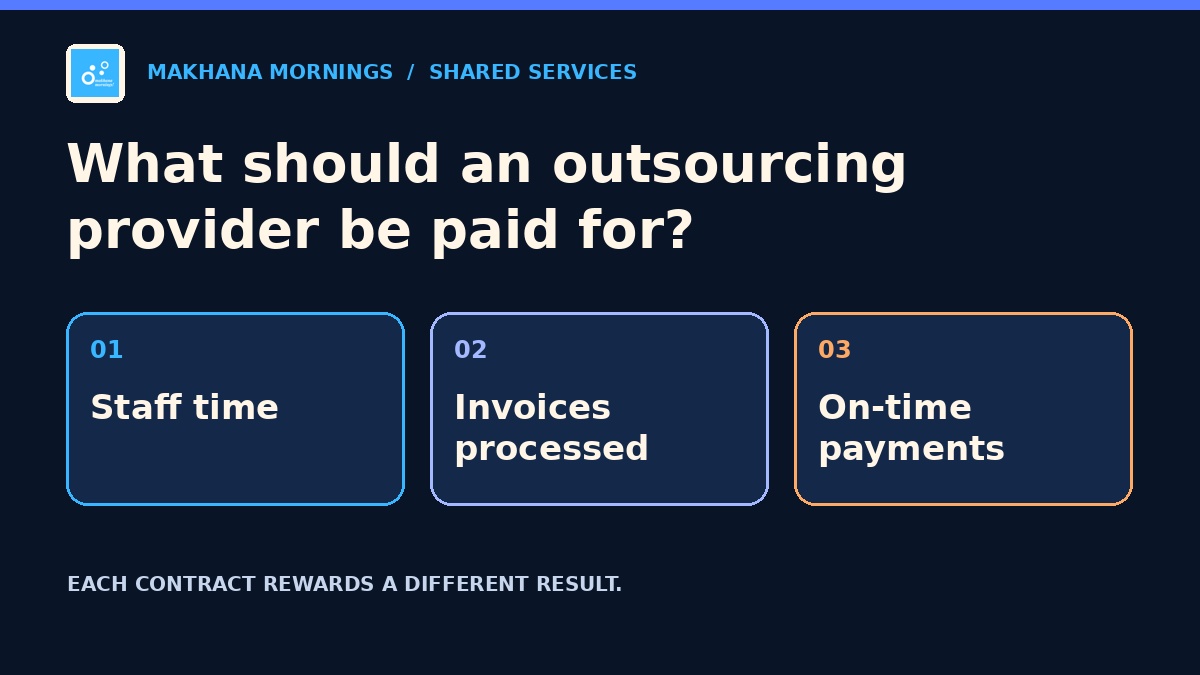
A company can pay an outsourcing provider for ten invoice processors, for each invoice processed, or for reducing late payments. Those are three different contracts. If AI handles more of the routine work, choosing the wrong one can reward the vendor for the wrong result.
What does each pricing model reward?
A staffing contract pays for people’s time. A transaction contract pays for completed units of work, such as invoices processed. An outcome contract ties at least some of the fee to a business result, such as more suppliers being paid on time. Processing an invoice does not necessarily mean the payment went out.
In its November 26 analysis of business process outsourcing, BCG argues that AI systems that can handle several steps of a workflow are pushing providers to sell more than staffing. But per-transaction pricing predates this wave of AI. An Infosys case study on Philips’s finance operations described fixed prices per transaction years earlier. The new question is how to price a process when software can handle routine cases and the people are left with a different mix of work.
Who handles the difficult invoices?
Imagine a system that can match a straightforward invoice to a purchase order and a goods receipt. A mismatch still needs someone to investigate. If the contract pays a flat fee that rewards only completed volume, the provider may have less incentive to prioritise the difficult cases. Define when an invoice counts, what happens when a case is reopened, and who owns the queue that needs human review.
A promise to improve on-time payments introduces a different problem. A provider may control how fast it processes an invoice, but not how fast the client approves it or whether the client has funds ready. Define which delays count, make the baseline and timestamp auditable, and check for duplicate payments or control failures alongside speed. Otherwise a better headline number can conceal worse work.
What should a buyer change first?
Keep the unit of billing separate from the measure of success. For a process with unpredictable volumes or hard cases, one option is a base fee for keeping the operation staffed, plus a measured bonus for improvements the provider can influence. Before negotiating whether that is cheaper, agree on what good work looks like and who is responsible when the software cannot complete it.
Related reading: Who owns the controls when finance work moves to a provider?
Related: Business & Brands




Leave your thoughts