
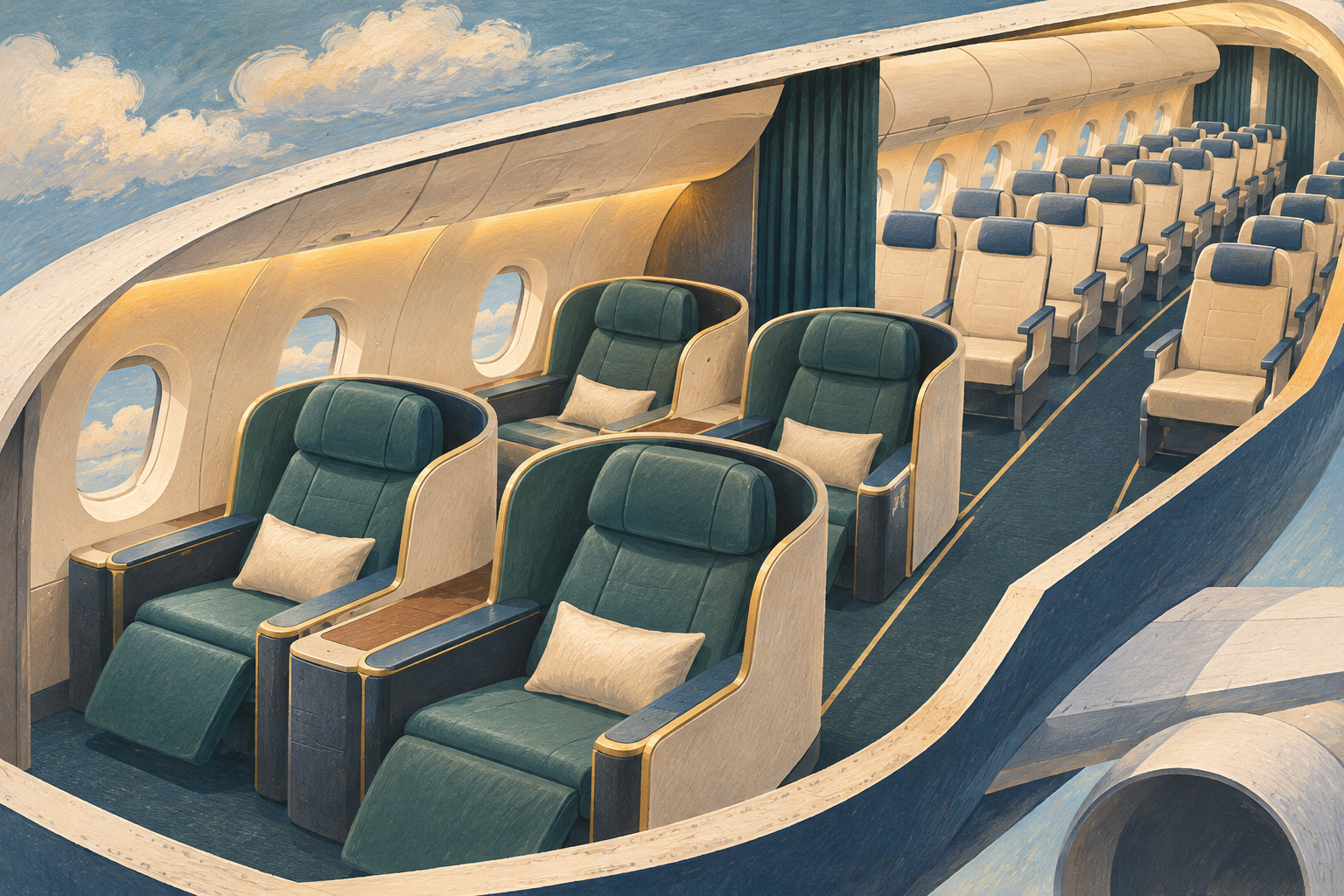
A bigger airline seat uses space that could hold more passengers. For a carrier, the decision to install it depends on whether the extra revenue can justify that space, the service costs and the investment in the cabin.
American Airlines’ third-quarter 2026 results illustrate the attraction. The company says premium products generate roughly half its ticket revenue from about 30% of its seats. It plans to expand premium seating through new aircraft and refits.
Breakdown
American reported premium revenue growth of 22.9% from a year earlier, compared with 19.5% in the Main Cabin. Separately, premium passenger unit revenue grew 18.5%, against 14.4% in the Main Cabin. Unit revenue measures revenue relative to capacity; it is not the same as total revenue growth.
Those figures help explain the investment case, but they do not establish profit per premium seat. American still reported a $269 million net loss for the quarter, with substantially higher fuel expenses. A stronger cabin mix can improve revenue without offsetting every cost.
Why this matters
Air India’s 19 April 2026 announcement provides an Indian example of the physical change. Its first retrofitted Boeing 787-8 moved from two cabin classes to three, with 20 Business suites, 25 Premium Economy seats and 205 Economy seats. This was an earlier fleet milestone, not a new November launch.
The distinction between Business and Premium Economy matters. An airline can offer several price points within the same aircraft, rather than asking every passenger to choose between a basic seat and its most expensive product. The benefits and space provided also differ by carrier and aircraft.
The Big Picture
A ticket price can change quickly. A cabin layout takes longer to change. Refitting means committing money and aircraft time before the airline knows how much passengers will pay across future seasons and routes.
The Crunch
For the passenger, the useful comparison is the actual seat and the services included on the booked flight. For the airline, it is the revenue earned from the available cabin space after the associated costs. Counting premium seats alone answers neither question.
Cover: original editorial illustration, not an actual airline cabin or seat map.



Leave your thoughts