
Amul Gold fresh milk costs ₹4 more per litre from November 12; Taaza costs ₹2 more, in markets across India. For a household buying one litre daily, that adds ₹120 or ₹60 over 30 days if consumption stays unchanged.
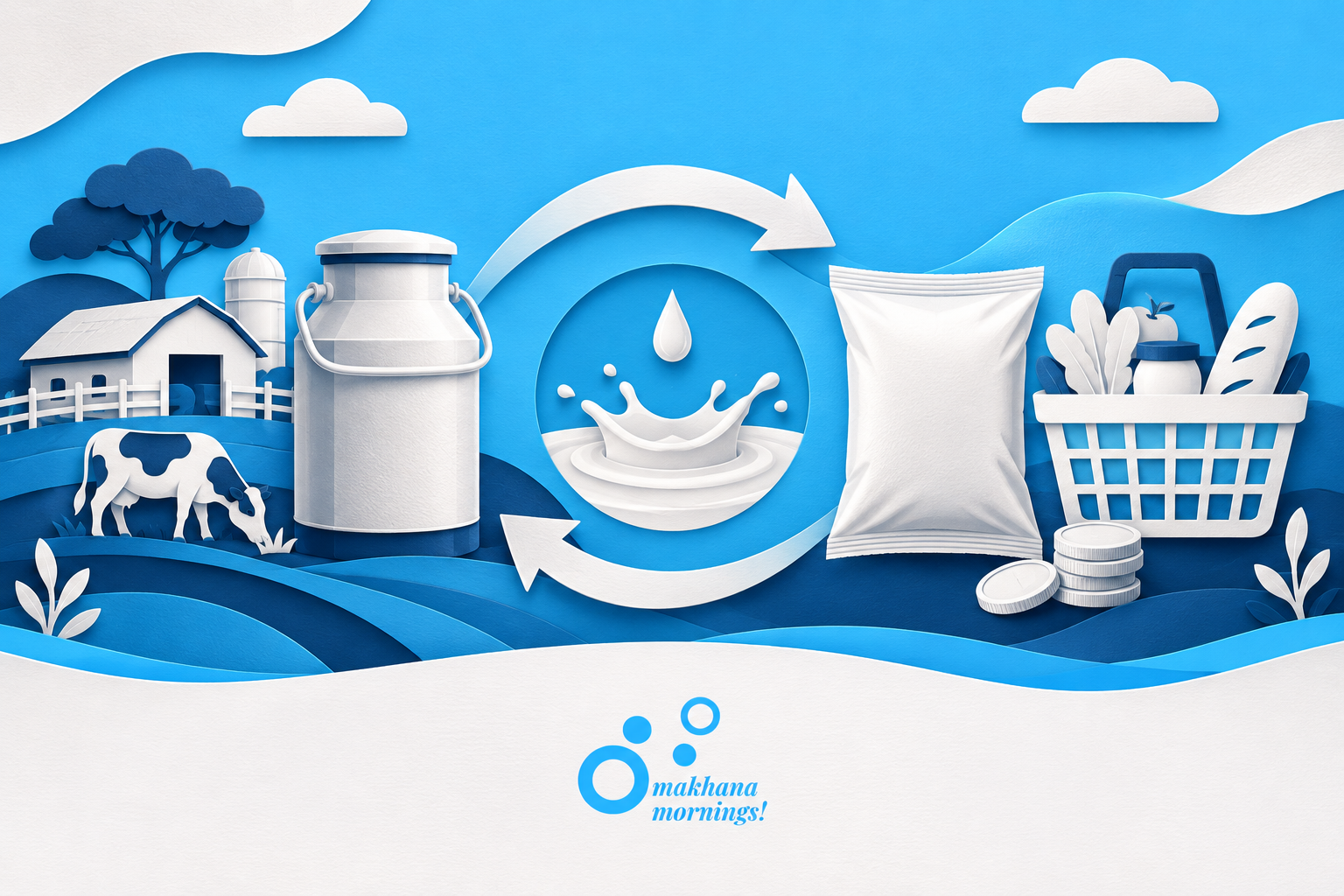
The bigger question is what happens before the packet reaches the fridge.
Update, 12 November 2026: Mother Dairy prices also rise in Delhi-NCR
Mother Dairy has increased liquid-milk prices in Delhi-NCR from November 12. Full cream and Pro Milk rise from ₹72 to ₹76 per litre; cow milk from ₹62 to ₹65; toned milk from ₹60 to ₹62; double toned milk from ₹54 to ₹56; and bulk-vended token milk from ₹58 to ₹60.
For a household buying one litre daily, the increase adds ₹60–₹120 over 30 days, depending on the variant and assuming unchanged consumption. Mother Dairy attributes the revision to higher fodder, cattle-feed and operating costs. That is the company’s explanation, not an independent assessment of its costs or farmers’ profits.
The Breakdown
Gujarat Cooperative Milk Marketing Federation (GCMMF), which markets Amul, says higher production and processing costs prompted the revision. It says its member unions have raised payments to milk producers by 4–5% over the past year.
The increase is not identical across products. Gold contains 6% milk fat; Taaza contains 3%. The announced changes concern fresh milk, not every item carrying the Amul name.
Why This Matters
A dairy has two prices to manage: what it pays producers and what consumers pay at the shop. Raising the second can help support the first, but it also increases a recurring household expense.
Farmers’ receipts are not the same as profits. If feeding animals becomes more expensive, a higher milk payment may largely cover that additional cost rather than improve the farmer’s margin.
The Big Picture
An October assessment by USDA’s Foreign Agricultural Service in New Delhi put average milk procurement prices in 2026 through August about 4% above the 2025 average. That is a separate industry measure, not an audit of Amul’s costs.
The assessment also identifies fodder availability and collecting milk from scattered small farms as persistent constraints. More national production does not automatically mean cheaper milk delivered to every market.
Its outlook still anticipates production growth in calendar 2027, but at a slower pace. That is a forecast, not evidence that next year’s supply has already fallen.
The practical distinction is between producing more milk and producing, collecting and processing it cheaply enough to keep retail prices steady.
The Crunch
For households, compare the revised price of the exact variant and pack you buy. For the dairy business, watch producer payments alongside feed costs. The retail increase alone cannot tell us how much better off farmers become.
Read more: How Amul turns daily milk deliveries into a national business.
Related categories: Economy & Markets



Leave your thoughts