
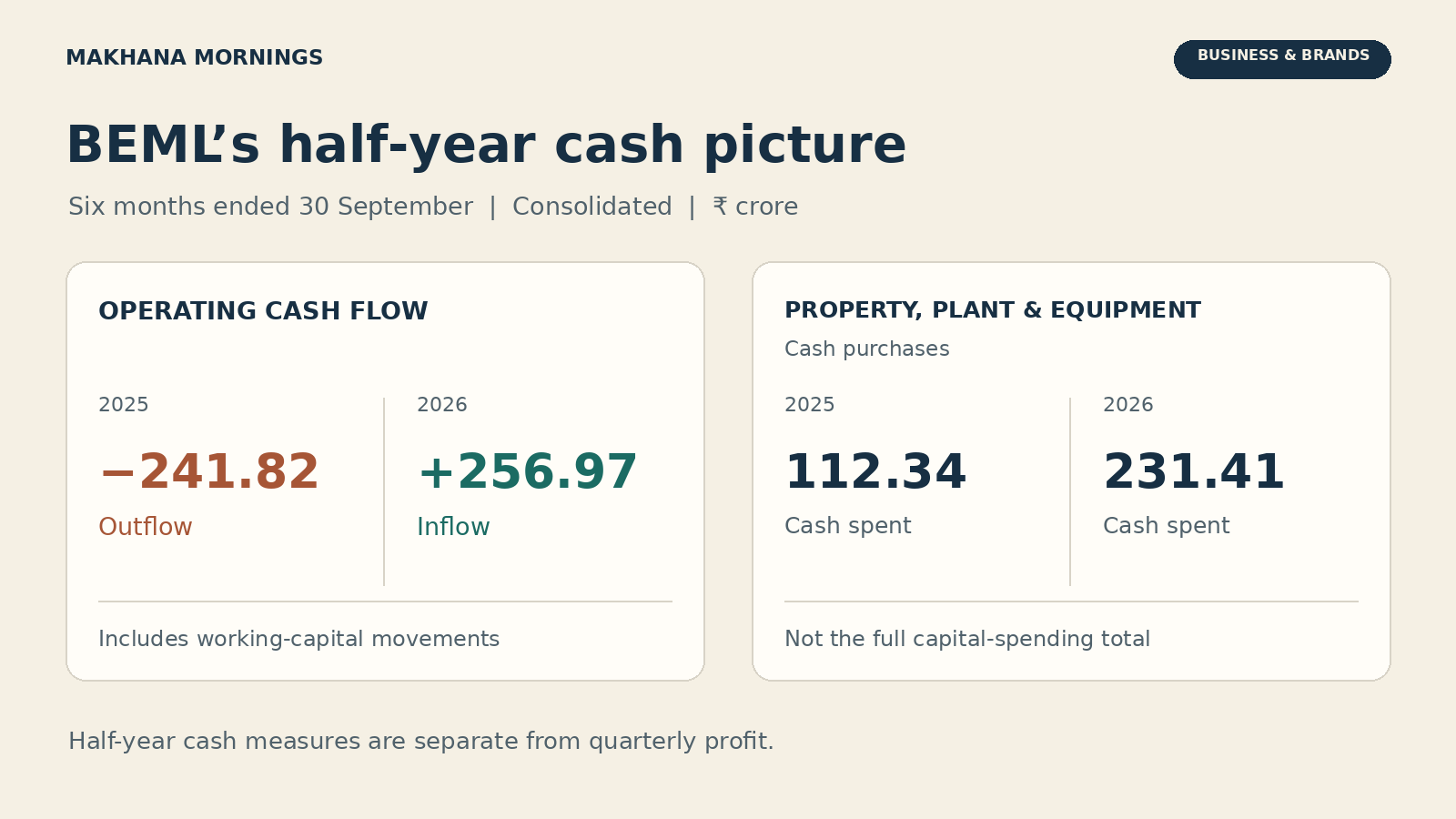
BEML generated ₹256.97 crore from operating activities in the six months ended September 30, 2026, reversing a ₹241.82 crore outflow a year earlier. At the same time, its cash purchases of property, plant and equipment rose to ₹231.41 crore from ₹112.34 crore.
The consolidated results released on November 5 put two practical questions about industrial growth alongside each other: how much cash the business brings in, and how much it spends on long-lived assets.
The Breakdown
The half-year cash-flow statement shows support from movements in trade receivables and several liability accounts, while inventory absorbed cash. Operating cash flow includes the timing of collections and payments, as well as the underlying business’s earnings.
A manufacturer can report a sale before the customer pays. It can also spend on components before the finished product leaves the factory. The movement of money between these stages helps explain why profit alone gives an incomplete account of how growth is being financed.
Why This Matters
For BEML, the improvement in cash generation is substantial. Whether it lasts will depend partly on how collections, inventory and payments move over subsequent reporting periods.
The September quarter produced a different earnings picture. Consolidated revenue rose about 42% to ₹1,191.61 crore, while net profit fell to ₹33.34 crore from ₹48.03 crore. Profit before tax declined more modestly, to ₹47.70 crore from ₹50.30 crore, with a higher overall tax charge widening the fall in profit after tax.
Those quarterly figures should be read separately from the six-month cash-flow comparison. They show that faster sales did not translate into higher quarterly earnings, even as half-year operating cash flow improved.
The Big Picture
The ₹231.41 crore figure is specifically the cash-flow statement’s purchase of property, plant and equipment. The filing separately records intangible-asset purchases and other capital payments. Calling the first number the company’s entire investment bill would lose that distinction.
Taken together, the results offer a useful way to assess an industrial business: follow sales into earnings, then follow earnings into cash, and compare that cash with the spending required to sustain the business. Each measure answers a different question.
The Crunch
BEML’s next test is whether stronger cash generation can accompany the higher investment spending over time, while more of its sales growth reaches the bottom line.




Leave your thoughts