
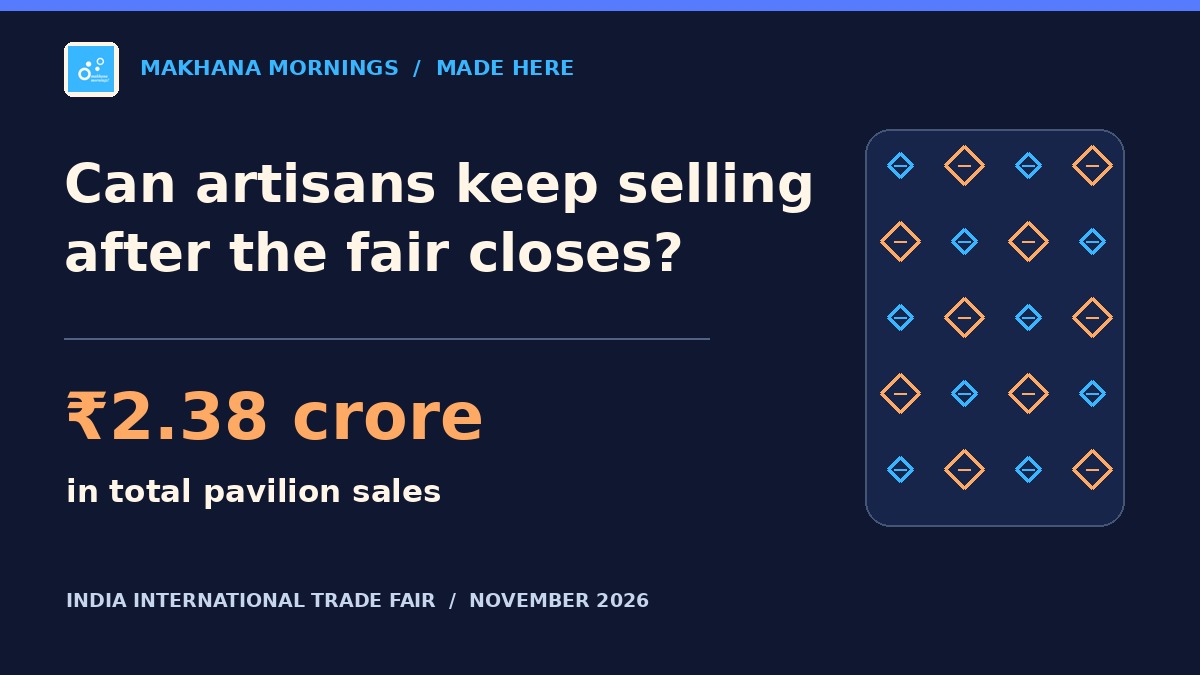
More than 130 artisans from 19 states took part in the Ministry of Social Justice and Empowerment’s pavilion at the India International Trade Fair in New Delhi. The ministry reported ₹2.38 crore in total pavilion sales during the fair, which ran from November 14 to 27, 2026, according to the final figures released on November 28. That shows what a busy venue can do for sales. It says less about whether buyers can find the same makers six months later.
A stall brings buyers and makers together
At the fair, shoppers can feel a fabric, see the size of a piece of décor and ask who made it. The artisan can also notice which products attract questions but do not sell. Online, a listing has to do much of that work without either person in the room. The pavilion sold a range of products, and the ministry did not publish sales by stall or say what makers kept after costs. The total is not a measure of what a typical artisan earned.
Selling online takes more than a catalogue
The ministry launched Bharat Tulip in 2024 to help eligible traditional artisans sell beyond their local markets. It uses a common brand and supports marketing, quality checks and delivery. A February 2026 tender sought a contractor to build and run online sales tools, including product catalogues, inventory software and links to existing marketplaces. The tender shows what the programme wanted to build, not whether every participating artisan has access to those tools. The programme already has a public catalogue, and its marketplace listing has displayed products such as embroidered clothing and shawls. A product listing shows up online before it tells you whether a seller can take and fulfil repeat orders.
The next sale is the better test
A national fair can bring customers who would never otherwise see a workshop’s products. A year-round channel has to let those customers find the right maker again, see what is in stock, get the order delivered and know what to do if it arrives damaged. The useful numbers after the fair are repeat orders, the share of artisans still selling and what they take home after fees, shipping and returns. The stall total does not answer any of those questions.



Leave your thoughts