
A convincing job interview can become a route into an employer’s systems if a coding exercise is run on a work computer with powerful access.
Binance’s initial report on its October 29 security incident describes that risk alongside compromised software and misuse of an internal AI tool. The exchange puts affected digital assets at approximately $6.34 billion. Its account remains subject to an ongoing investigation and independent review.
The Breakdown
The company says an engineer downloaded a malicious technical test during a fabricated recruitment process. It describes attackers subsequently moving across developer devices and reaching a service that authorises wallet transactions.
The role of the internal AI tool is part of that reported sequence. The report does not establish that an autonomous AI independently planned or carried out the theft.
In its update covering actions through November 3, Binance says approximately $2.85 billion in assets had been frozen or intercepted, with that figure subject to reconciliation and market prices. Frozen assets should not be described as money already returned to customers.
Why This Matters
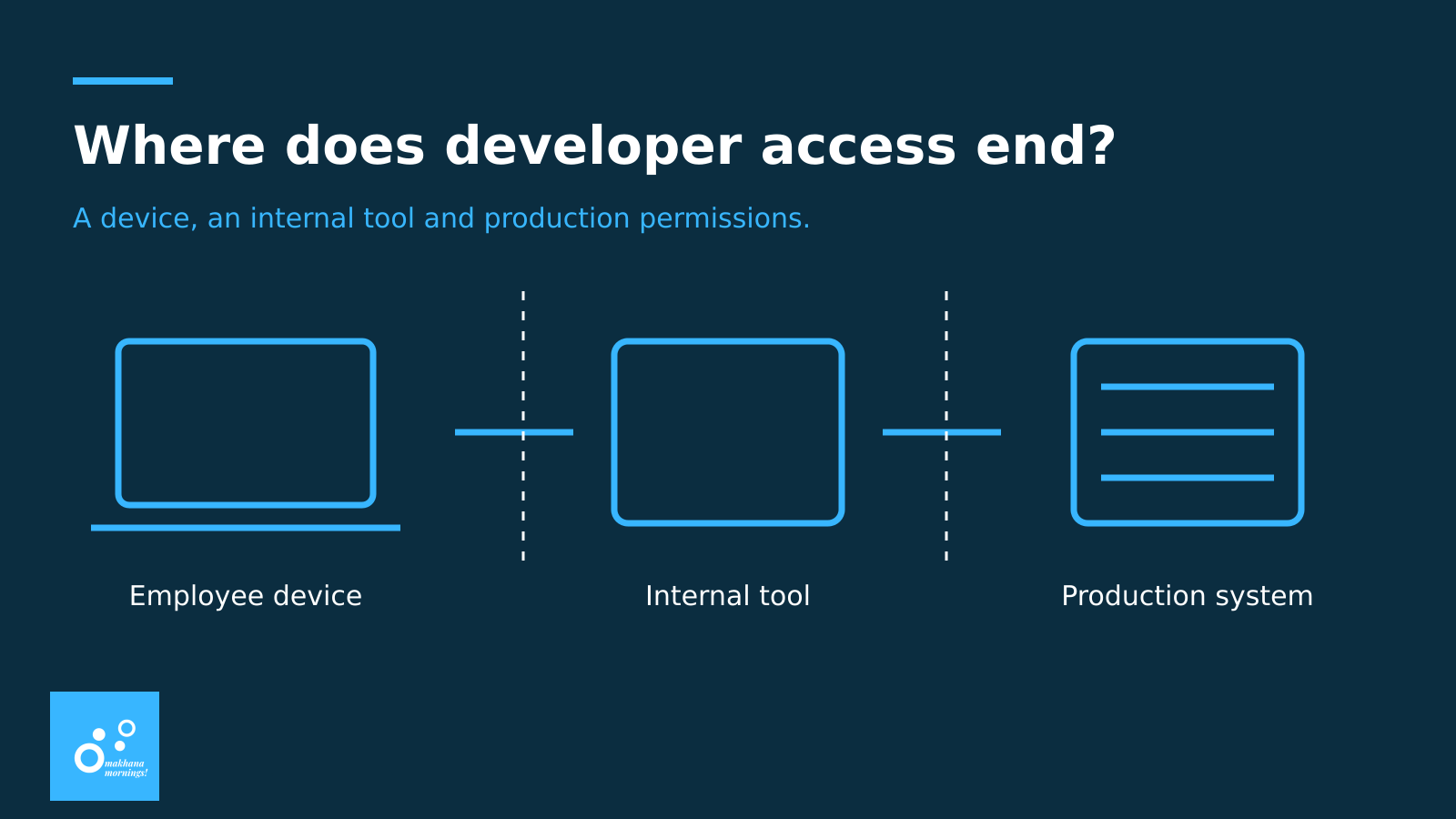
The relevant lesson for Indian technology teams extends beyond cryptocurrency. A developer’s device may connect external code, internal tools and production permissions. Each connection needs its own boundary.
CERT-In’s October 15 guidance recommends limited privileges and separate identities for deployed AI agents, alongside controls on network destinations and logs of consequential actions. That guidance predates this incident and does not attribute or explain the Binance attack.
The Big Picture
An organisation can evaluate these risks through a simple exercise: map which systems an employee’s laptop can reach, which credentials it holds and which actions those credentials permit. A useful incident drill tests whether revoking an account actually ends access throughout that chain.
The distinction matters because detecting the first suspicious action and containing every possible consequence are different tasks. The exchange’s preliminary findings offer a case to examine, not a complete independent assessment of every security control involved.
Related categories: Business & Brands




Leave your thoughts