
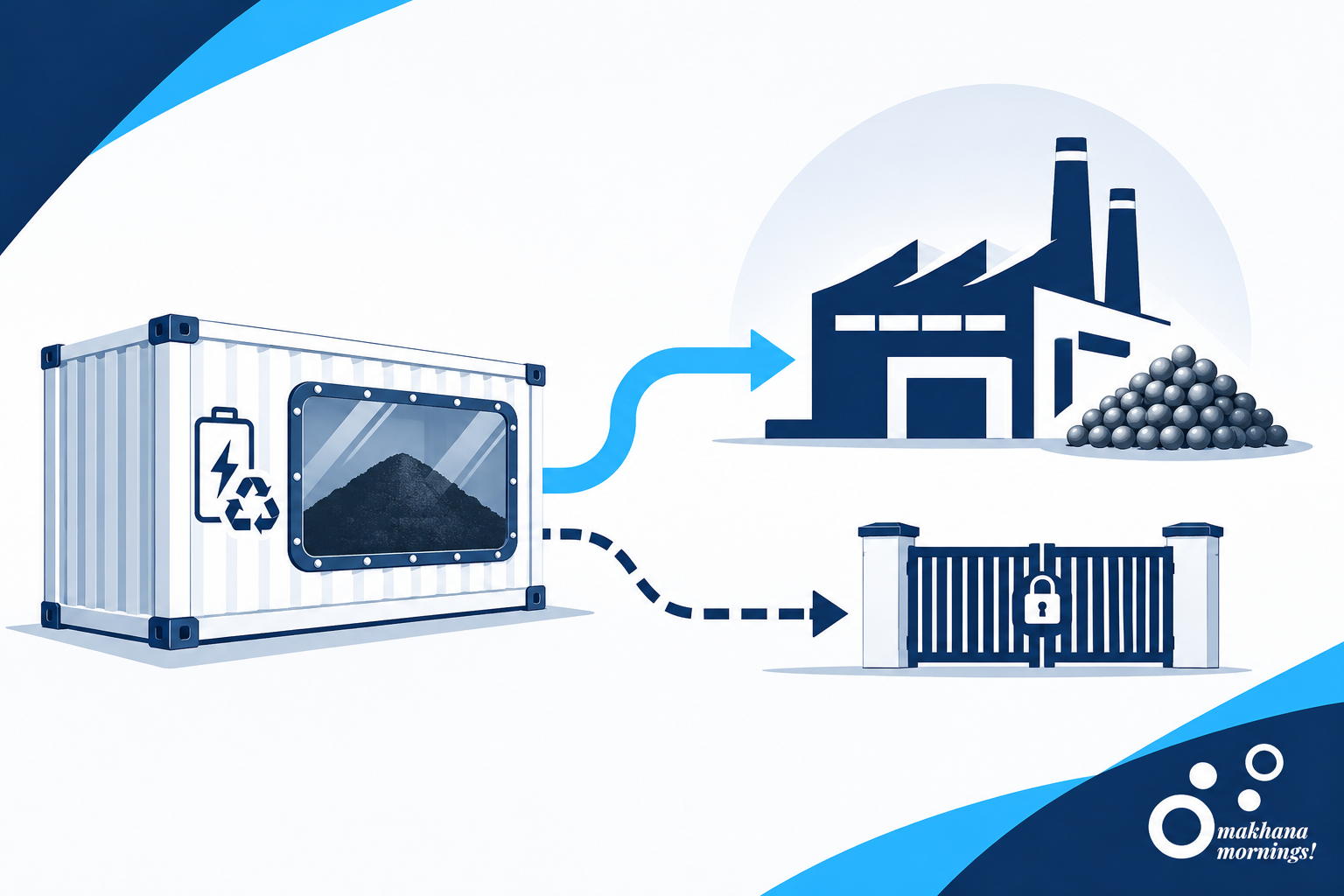
India wants more of the materials inside used batteries to be recovered at home. Its new export prohibition on lithium-ion battery black mass addresses one part of that ambition: keeping an intermediate material available to domestic processors. It does not, by itself, turn that material into a finished battery input.
The Breakdown
A notification dated November 10, 2026 changes the export policy for the specified item under trade code 85491400 from Free to Prohibited, with immediate effect until further orders. Its description covers unsorted battery waste and scrap not containing lead, cadmium or mercury, identifying lithium-ion battery black mass. This is not a blanket statement about every category of battery waste.
Black mass is the powdery material obtained from shredding end-of-life lithium-ion batteries and manufacturing scrap. It can contain recoverable critical minerals. Keeping it within India is intended to support the next stage: recycling and refining those materials domestically.
There is an important transition qualification. The notification expressly retains the Foreign Trade Policy’s paragraph 1.05 arrangements. Those protect exports already made before the policy change, as determined under the trade rules, and provide a route for commitments backed by a pre-existing irrevocable commercial letter of credit, within its remaining quantity, value and validity. The letter must be registered with the relevant regional authority within 15 days of the restriction. An ordinary prior contract is not, on its own, the same qualification.
Why This Matters
The government says inadequate feedstock has left domestic recycling and refining capacity underused, while some units have imported material. That is its stated diagnosis, not a published measure of how much extra output this prohibition will deliver.
The policy changes the choice facing a business that produces black mass for export. Subject to the transition rules, that overseas outlet is no longer freely available. For a domestic refiner seeking input, the same measure is intended to improve access to material. These are different positions in the chain, so calling the change a uniform windfall for every recycler would miss the distinction.
The Big Picture
The prohibition complements the ₹1,500 crore critical-mineral recycling incentive scheme approved in September 2025. One measure supports developing processing capacity; the other seeks to retain material for it. The connection is clear, but the results still need to be demonstrated.
The useful test is not merely whether less black mass leaves the country. It is whether domestic facilities take in suitable material and produce usable recovered output. The announcement does not establish a fall in battery prices, a quantified reduction in mineral imports or higher profits for particular companies.
The Crunch
India has changed the export rule for an intermediate battery material. The industrial payoff depends on what happens after that material stays: actual domestic processing, not just retained stock.
Related categories: Business & Brands



Leave your thoughts