
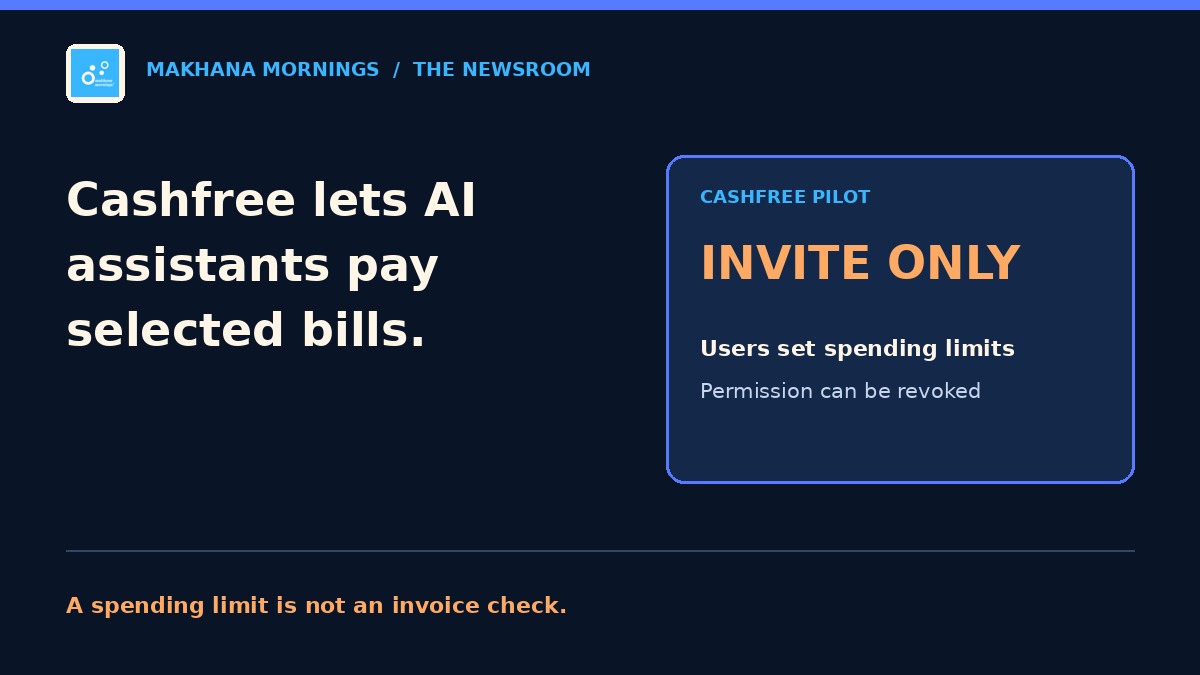
An AI assistant can remind you that the electricity bill is due. Cashfree’s new wallet experiments with giving it the authority to pay the bill too. The distinction is that you approve the limits first, while the assistant executes a payment later.
Cashfree introduced the wallet on 24 November. Its product page describes an invite-only beta for bills, including electricity, broadband, gas and postpaid mobile service. Travel, food, groceries and shopping are listed as future uses, not general features available today.
The wallet gives the assistant permission, not your bank credentials
A user loads a prepaid balance and sets the permitted amount, number of payments and expiry for each task. Cashfree says the assistant spends from that balance without seeing the user’s card, UPI or bank details. Users receive transaction alerts and can revoke access.
A spending limit does not identify the right bill
Imagine asking an assistant to pay one electricity bill up to ₹2,000 by Friday. The amount, count and deadline limit the instruction. But a ₹1,850 bill for the wrong meter could still fit all three. Identifying the correct account, recognising a bill that has already been paid and producing a receipt are separate tests from keeping within the budget.
That example illustrates how to think about delegated payments; it is not a claim that Cashfree has made such an error or that every account-matching rule is already available.
The first test is the receipt, not how well the assistant talks
For a bill payer, the useful questions are what was approved, what was paid and where to look if the result is wrong. An invite-only product for bill payments is a narrow test of those questions. It does not give an assistant unrestricted access to bank accounts or establish that every retailer will take agent payments.




Leave your thoughts