
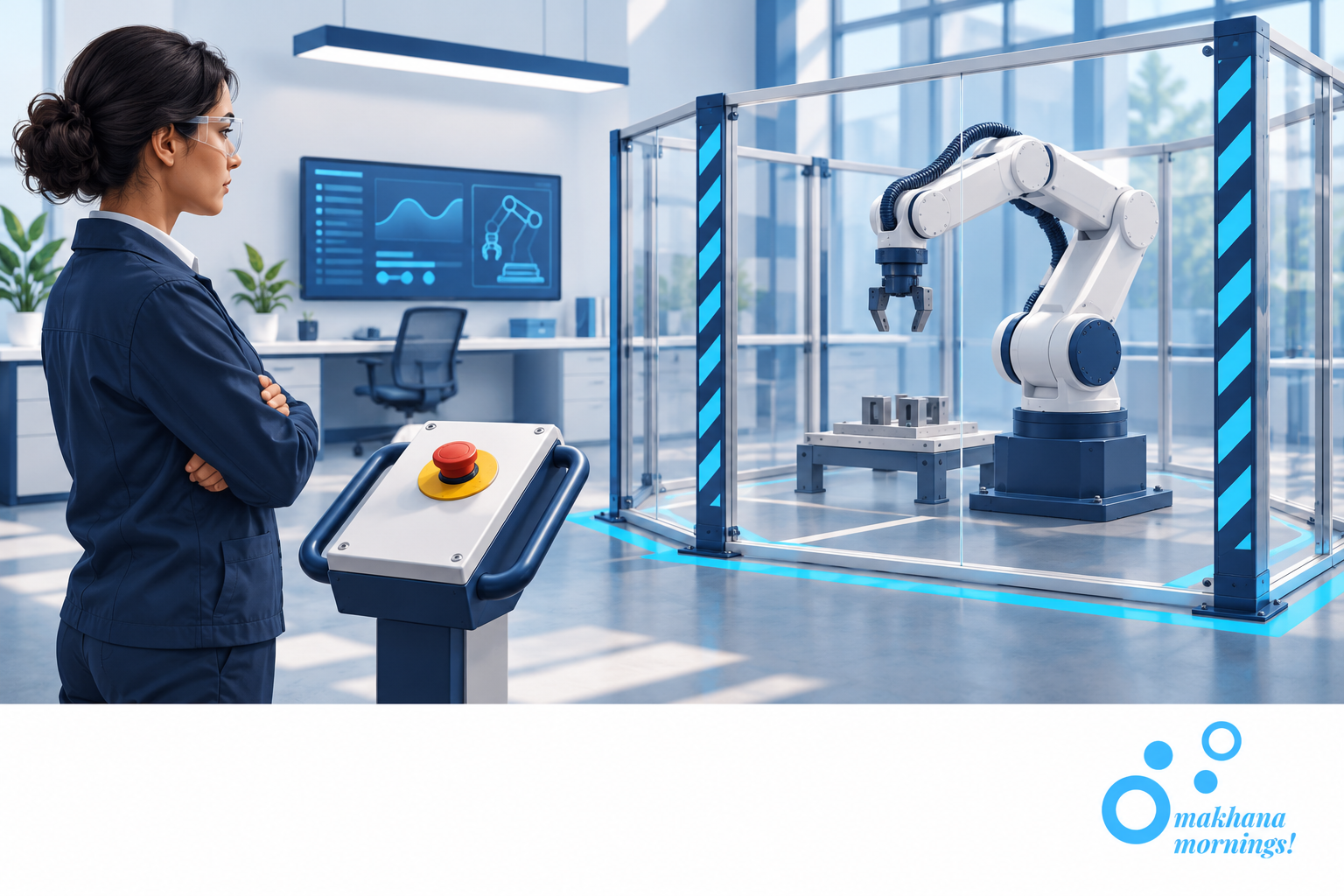
A prompt telling an AI agent to be careful is not the same as equipment that prevents an unsafe action. That distinction sits at the centre of new physical-action controls in Anthropic’s usage policy, effective November 12, 2026.
The revision was announced on October 8, not today. Anthropic says most changes clarify existing rules. Its requirements for qualified human review and disclosure in high-risk advice and decisions are not new; the additions include controls for autonomous hardware that could cause injury.
The Breakdown
The controls cover hardware executing model outputs without human approval in the policy’s specified high-risk categories. For those actions, a qualified operator must be able to watch and stop the equipment. It must stop or remain safe when the operator intervenes or its connection to Anthropic fails. Safety limits must be enforced independently of the model’s output.
The scope matters. Monitoring equipment without controlling it is excluded from these physical-action requirements, as are commands reviewed by a qualified person before execution. Non-hazardous laboratory automation inside enclosed instruments is also excluded. The policy applies to Claude use through apps, developer services, cloud providers and integrated products. It is not a new Indian law or a rule governing every AI supplier.
From a software task to a physical consequence
The backdrop is more concrete than a hypothetical robot. On August 27, 2026, Anthropic opened a research preview of its Model Hardware Standard, a specification connecting AI agents to programmable equipment. Its account describes Genentech testing a protein-measurement workflow involving a liquid handler, robotic arm and plate reader.
That remains a proof of concept, not evidence that autonomous laboratories are broadly established. Anthropic also describes researchers having to explain that foaming in samples was a physical problem rather than a software bug. A system capable of issuing commands still needs domain knowledge around it.
Why This Matters in India
Indian technology companies already have a commercial reason to understand Claude’s deployment boundaries. Infosys announced an Anthropic collaboration on February 17, 2026, covering enterprise agents, beginning in telecommunications and planning expansion into financial services, manufacturing and software development. It also reported deploying Claude Code internally.
That announcement does not establish an Indian installation of Claude-controlled machinery. The collaboration creates a commercial reason for Indian implementation teams to understand these boundaries.
For those teams, the useful distinction is between generating a proposed action and giving software authority to execute it. A design assistant, a machine-monitoring dashboard and an agent controlling equipment create different responsibilities, even if all three use the same model.
The Crunch
A sensible purchasing question: which component enforces operating limits when the model or connection fails? Ask for a demonstration, not a prompt-based assurance. Supplier policy does not replace applicable safety requirements.
Related categories: Business & Brands. Cover: original conceptual illustration.




Leave your thoughts