
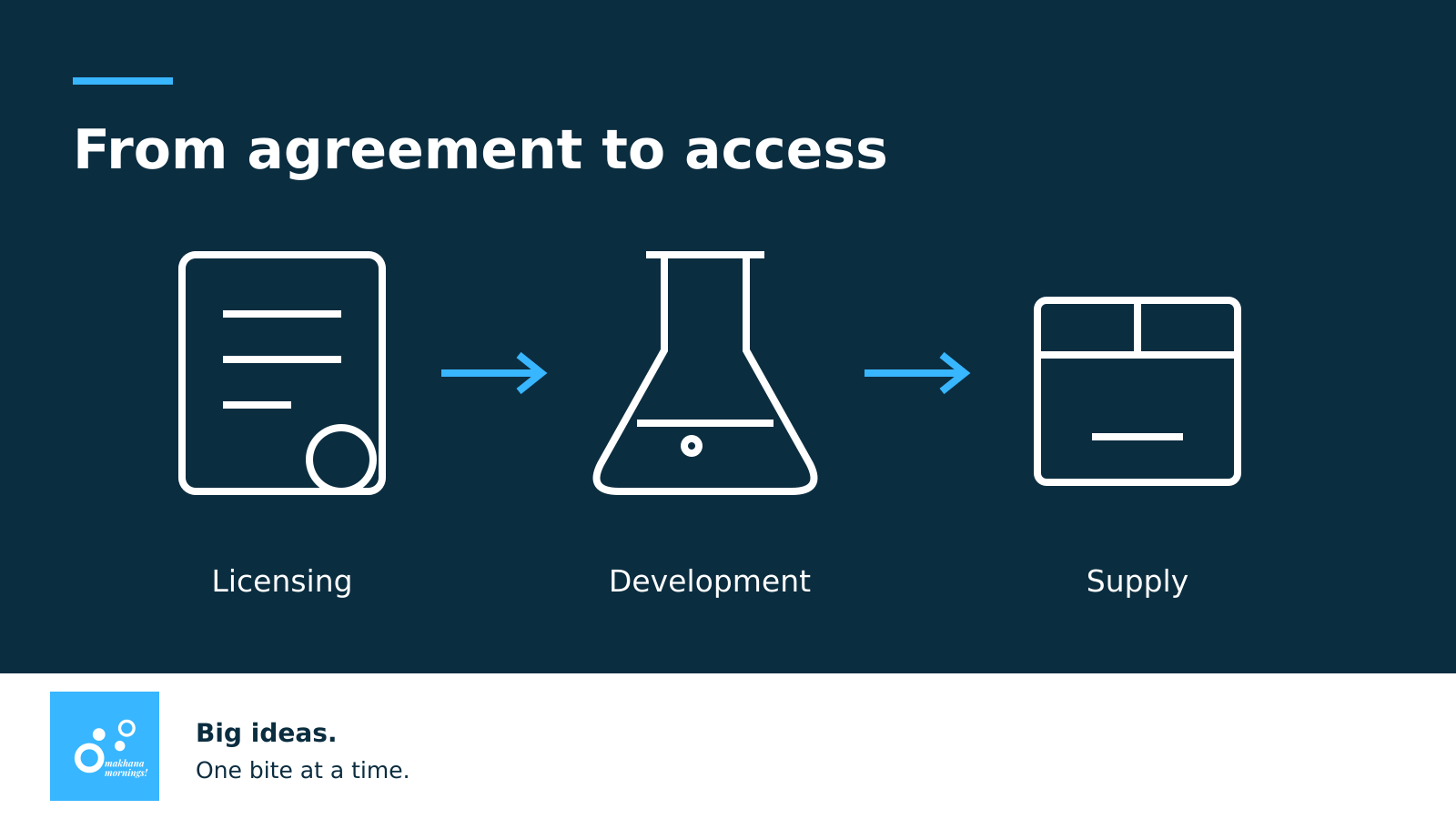
For an Indian drugmaker, an access agreement can shape a product’s commercial journey before the first shipment. Dr Reddy’s lenacapavir programme offers a concrete example of how licensing, development support and pricing can be organised together.
The Breakdown
In a November 2 announcement, CHAI and its partners said Dr Reddy’s had secured tentative US FDA approval for generic injectable lenacapavir for HIV prevention. Their existing agreement sets a US$40-per-person annual price for 120 low- and middle-income countries covered by Gilead’s voluntary licence. First supplies are expected by end-2026, with broader availability in 2027.
The September 2025 pricing agreement combined an early price commitment with financial, technical and regulatory support from Unitaid, Wits RHI and CHAI. The partners say national approvals and country introduction remain part of the work ahead.
The earlier business decision
The licensing structure predates that agreement. On October 2, 2024, Gilead announced non-exclusive, royalty-free licences for six manufacturers, including Dr Reddy’s, Emcure and Hetero. Manufacturing and sales were subject to required regulatory approvals. Gilead said the agreements preceded global regulatory submissions for prevention, and that its chosen partners already had experience collaborating on generic infectious-disease medicines and producing sterile injectables.
That sequence matters. A manufacturer could plan development around an agreed licensing framework rather than wait until a product was already widely established. Non-exclusive rights also place the business within a multi-supplier framework, rather than giving one manufacturer ownership of the entire licensed market.
Why This Matters
The commercial question extends beyond how cheaply a medicine can be manufactured. A company must connect development work, an acceptable selling price and a route to buyers. Bringing those discussions together early can make the intended market clearer, although it cannot establish future order volumes or profitability.
For India’s pharmaceutical industry, this is a specific example of participation in a global access programme, not a measure of the whole sector’s performance. The arrangement combines a manufacturer’s work with commitments and support from other organisations. Its significance should be assessed through that shared structure rather than credited to price competition alone.
The Crunch
The next business milestone is delivery. The announced timetable remains an expectation; the licensed territory is not a tally of countries already supplied. Actual shipments and country-level introductions will show how the agreement translates into access. A regulatory milestone, a price commitment and a completed sale are different stages of that process.
Related categories: Economy & Markets


Leave your thoughts