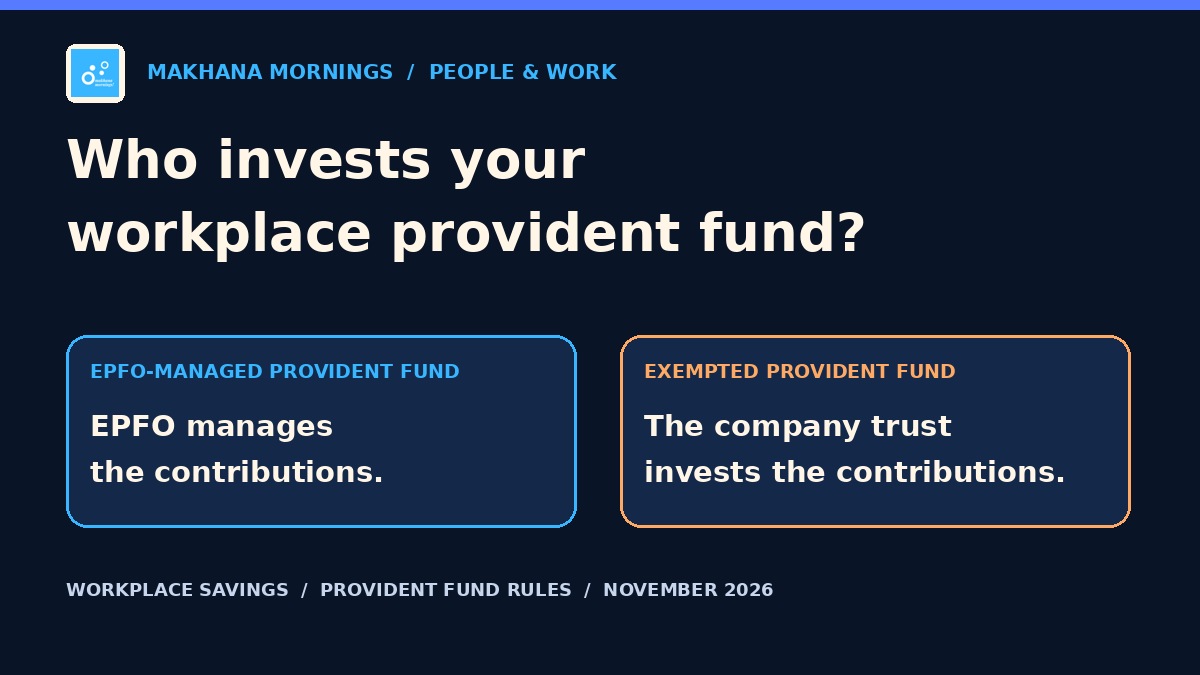
Some employers send provident fund contributions to the Employees’ Provident Fund Organisation (EPFO). Others have an exemption and transfer the money to a trust whose board invests it for employees. A November Labour Ministry notification sets out the investment rules for the second group under the Code on Social Security.
The 65% limit is not a new increase
The notification prescribes a 45% to 65% range for government securities and related investments. The original 2015 notification capped this category at 50%, but a 2016 amendment had already raised that ceiling to 65%. The latest notification carries that range forward. It does not require a trust to invest 65% in government securities.
The November text separately prescribes 35% to 45% for eligible debt instruments and related investments. EPFO’s earlier audit form for exempted trusts used a 20% minimum for the same category, with the same 45% ceiling. The November text also specifies a 5% to 15% range for equities and related investments. Short-term debt and the category covering asset-backed, trust-structured and other eligible investments each have a 5% ceiling. These are separate limits. For example, not every instrument that a fund might consider a bond belongs in the government securities category.
Payroll and the trustees have different deadlines
The employer must transfer monthly contributions to the board of trustees within 15 days after the month closes. The board must then invest within two weeks of receiving the contributions. The second clock starts on receipt, not at month-end. Trustees must account for contributions, interest and obligatory outgoings and follow category and instrument limits.
The notification does not set your PF interest rate
The rules govern the use of money held by an exempted trust. They do not change the amount deducted from an employee’s pay, announce a new interest rate or give employees a personal allocation choice. If your employer manages your PF through an exempted trust and the passbook is not available in the UAN portal, EPFO directs you to ask your employer for your PF statement.