
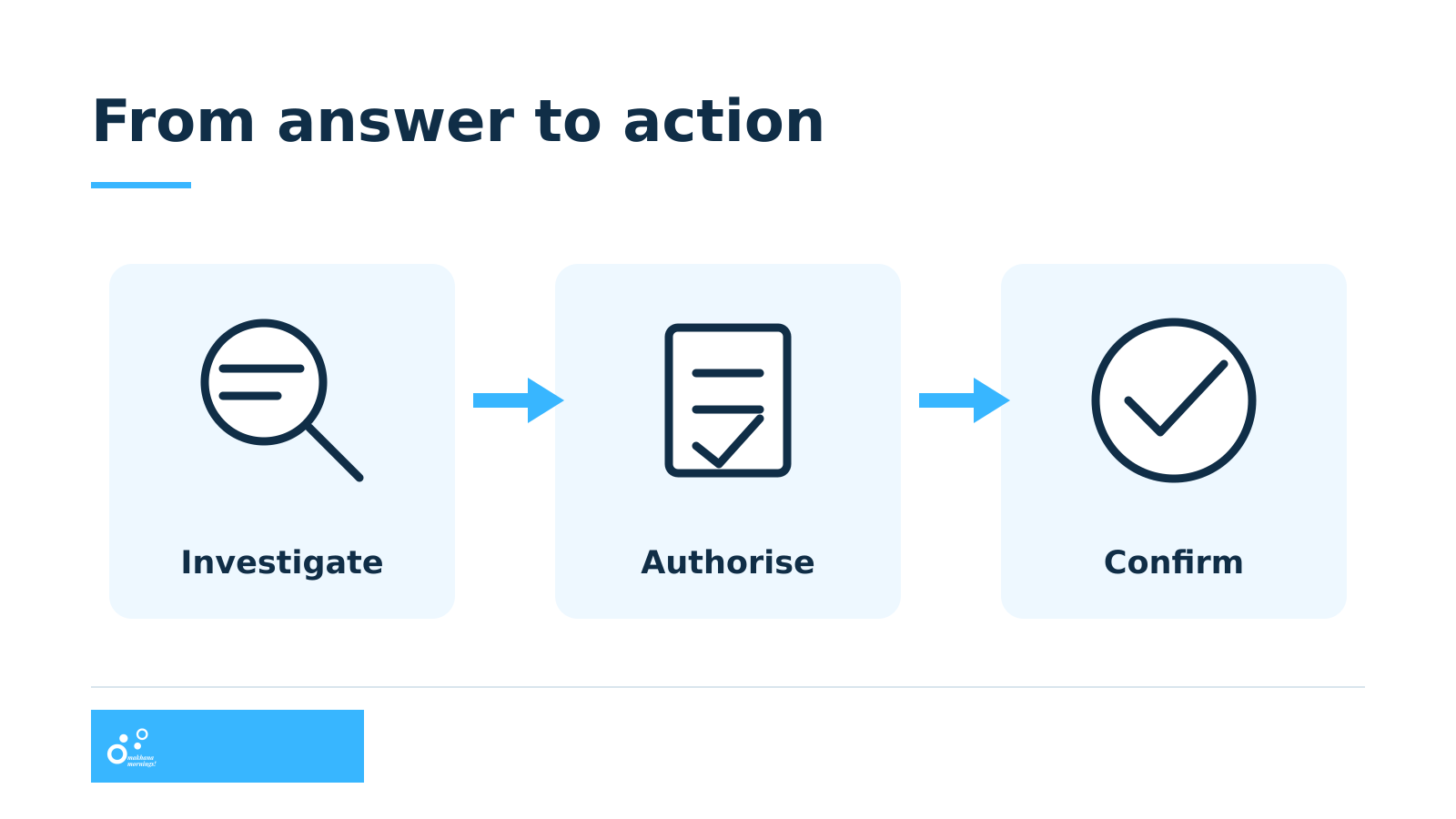
A closer look at the work between finding an answer and changing a business-critical system.
A mainframe modernisation project can begin with the person keeping the system running, rather than with a plan to move its applications elsewhere. That makes the operations desk an important place to understand the next round of enterprise AI spending.
HCLTech announced an AI-Powered Operations offering on November 2. It combines specialist mainframe agents and conversational assistants for administration, monitoring, optimisation and workflows, with human oversight. The company has not disclosed customer deployments, contract values or measured results for this launch.
The Breakdown
Mainframes are enterprise computers used for demanding business workloads. Operating them involves keeping software and infrastructure healthy, investigating incidents and applying changes. Those responsibilities are different from rewriting the applications that run on them.
HCLTech’s existing service catalogue includes capacity management, performance tuning, batch scheduling and incident management. These describe its wider mainframe practice, not a list of newly launched AI capabilities.
Consider a delayed overnight processing job. Finding the relevant incident history, explaining a possible cause and authorising a change are separate tasks. An assistant might help with the first two while the operations team retains responsibility for the third. This is an illustrative workflow, not a reported HCLTech customer incident.
An older example makes the work tangible
IBM’s own CIO case study, carrying a 2024 copyright notice, describes an earlier internal use of watsonx Assistant for Z. Its initial tasks included answering documentation questions, suggesting responses to incidents and coordinating Db2 database patches.
In the patching example, staff specify the timing. The assistant retrieves workflow details, opens a change request and triggers automation, including an additional response if the operation fails. Staff then confirm that the patch was applied. This is IBM’s account of its own implementation, not evidence that HCLTech’s new service performs the same sequence.
The useful distinction is between supplying an answer and coordinating a controlled action. Documentation retrieval can help an engineer find the relevant procedure. Applying a patch additionally requires access to the right system, an approved change process and a reliable record of the result. A fluent answer alone does not complete that chain.
Why This Matters
For an Indian technology services company selling this work, the commercial opportunity lies in combining software with knowledge of a client’s operating environment. The practical buying decision includes which tasks the supplier will perform, which actions remain with the client and how responsibility is divided when a change fails.
This also gives technology workers a more concrete view of the skills involved. Understanding a system’s dependencies and change procedures remains relevant when the interface becomes conversational. The announcement does not establish job losses or a new hiring target.
The Crunch
The mainframe AI story reaches beyond a better chatbot. It concerns how a question becomes an operational action inside systems a business depends on. HCLTech has announced an offering for that work; its customer implementations will determine how much of the process it can improve.
Related categories: Business & Brands


Leave your thoughts