
A state electricity distributor can have more solar power available than it needs at noon and still have to buy more power in the evening. The two situations can coexist because a contract for renewable capacity does not, by itself, guarantee electricity at the time the distributor needs it.
At the State Power Ministers’ Conference in New Delhi on 27 November, the Centre called on states to sign more contracts, with 41 gigawatts of clean energy capacity awaiting buyers, Reuters reported. It also reported that Minister of State for Power Shripad Naik urged states to contract for battery storage alongside clean power. The Ministry of Power’s conference summary separately confirmed that faster storage deployment and transmission were on the agenda.
In its 29 November account of the conference, the power ministry said states agreed to submit revised plans for meeting electricity demand through FY2030 within a month. The ministry said the plans should use realistic forecasts and verify that projects can connect to the transmission network. It also pointed to upcoming 40 gigawatt-hour storage plans at NTPC and SECI, one at each organisation. Those are plans, not batteries the grid can use today.
A contract, an operating plant and an evening delivery are different
A long-term contract gives a project a buyer for its electricity under agreed terms. That can help a developer plan financing, but a project still has to be built, connected and ready to supply. The reported 41 gigawatts describes capacity awaiting buyers. It is not a measurement of electricity the grid has already generated and discarded.
The October numbers show why the distinction matters. Renewables, including large hydro, made up 53.89% of India’s installed generating capacity at the end of the month but accounted for 24.43% of the electricity in the Central Electricity Authority’s October generation mix. The authority counts a small amount of imported Bhutan hydropower separately in that mix. Capacity is how much power equipment is rated to deliver at once; generation is how much electricity was supplied over the month. Neither share tells a distributor what it can count on at a particular hour.
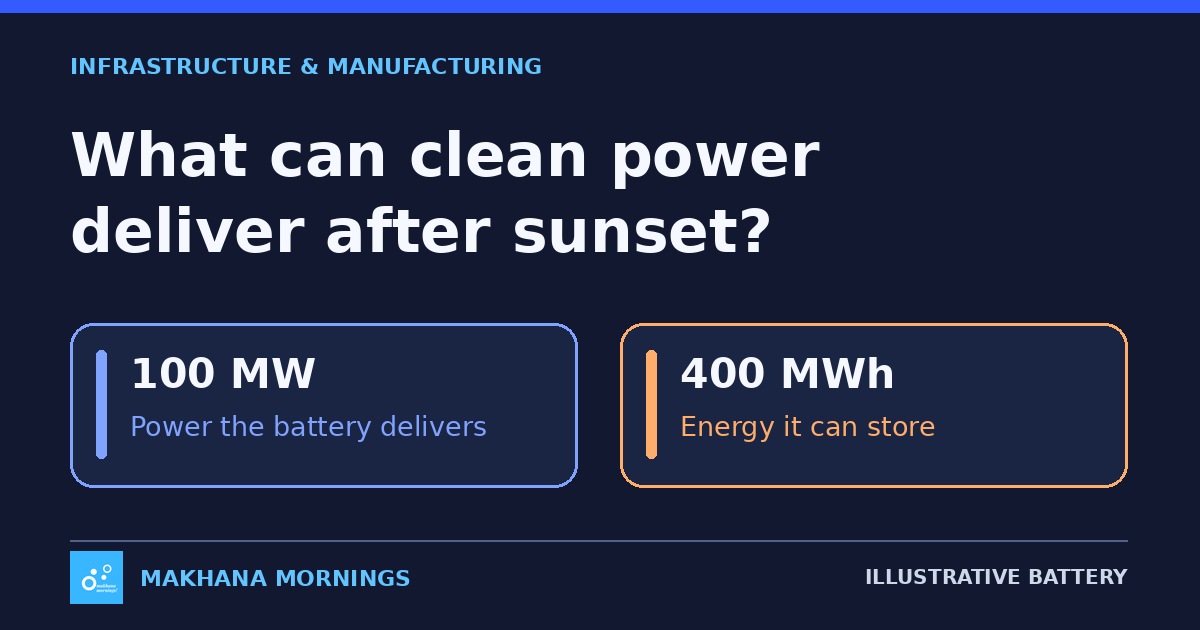
There is also a difference between the speed and the duration of delivery. A battery rated at 100 megawatts with 400 megawatt-hours of usable storage can, in a simplified example, supply its rated power for about four hours if it starts full. The megawatts tell a buyer how much it can draw at once. The megawatt-hours tell it how much it can draw in total.
The useful question is what the contract delivers after sunset
When states announce new contracts, look for when projects are due online, which hours they are expected to supply and whether storage or transmission upgrades are included. A larger capacity figure matters for the evening peak only if the electricity is available and can reach customers at that hour.



Leave your thoughts