
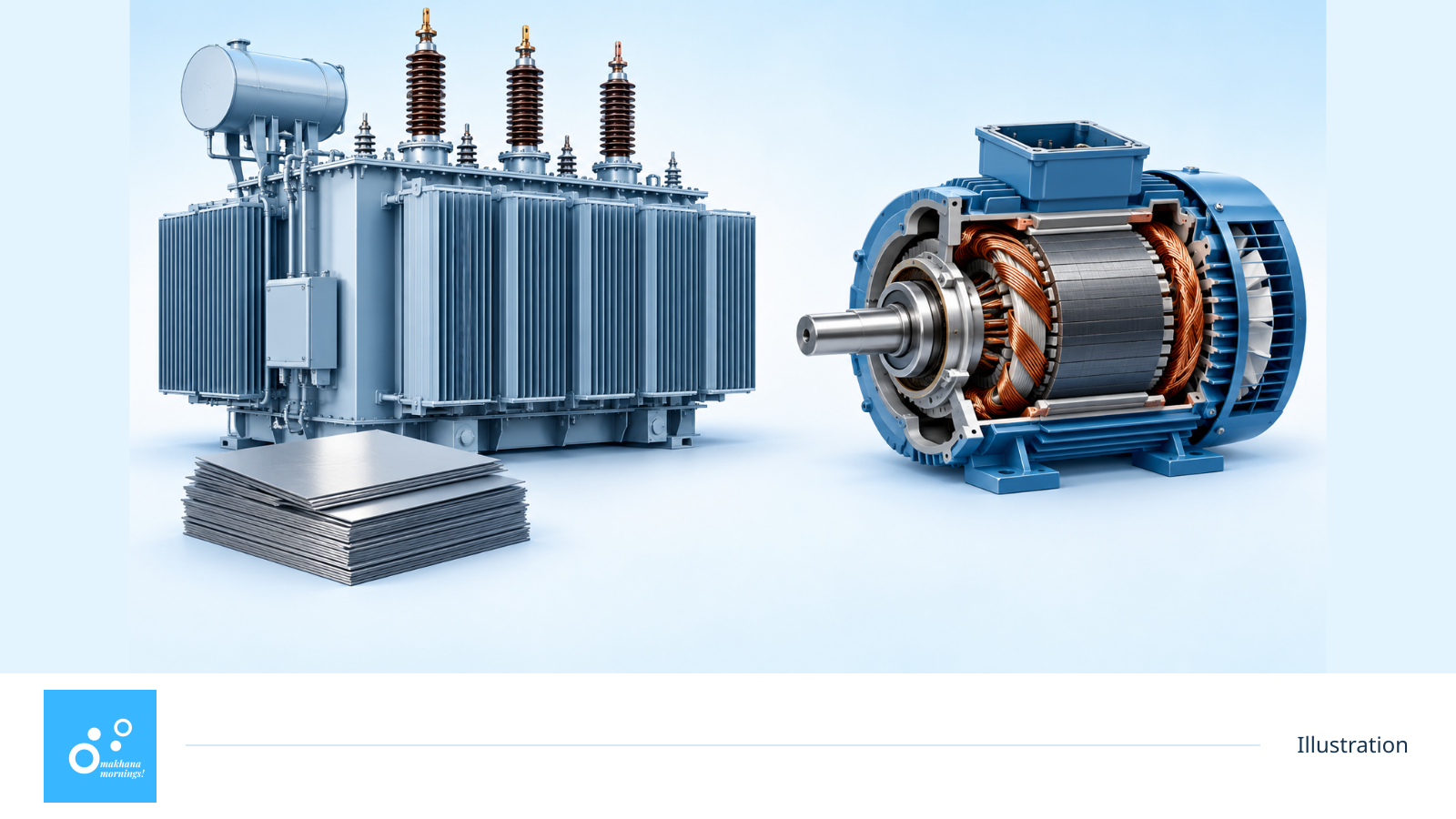
The steel inside a transformer and the steel inside an electric motor are doing different jobs. Understanding that distinction makes India’s next set of steel investments easier to read.
In its 30 October assessment, Crisil argues that India’s steel industry needs to build capabilities for specific applications alongside increasing production. Electrical steel is among the areas it identifies. Two earlier Indian project announcements show what that shift means in practice.
The Breakdown
Electrical steel is used in the magnetic cores of equipment. Its magnetic performance affects how much energy the equipment loses as it operates. Grain-oriented steel has its strongest magnetic properties along the direction in which the sheet was rolled and is mainly used in transformers. Non-oriented steel has more uniform magnetic properties across directions and is mainly used in motors. These are broad application distinctions, not an exhaustive list of uses.
The point for a business reader is practical: “more electrical steel” is an incomplete description. Ask which type, for which equipment and at what stage of production.
Two projects, two end uses
On 18 September, the Japan Bank for International Cooperation announced a loan agreement signed the previous day with JSW JFE Electrical Steel. The financing is intended to establish high-grade grain-oriented electrical-steel facilities in Karnataka. JBIC’s portion is up to $171 million, within total cofinancing of $285 million.
That project concerns a material used in transformer cores to reduce power losses. A financing agreement establishes the intended investment; it does not establish that the facilities are operating or that households will receive cheaper electricity.
The motor side has a separate example. On 4 June, equipment supplier Fives announced a contract with JSW Steel to design and build three processing lines at Vijayanagar Works in Toranagallu. The lines are intended for non-grain-oriented electrical steel used in electric vehicles and motors.
This is a supplier’s account of its contract, not independent confirmation that the lines have entered production. The June and September announcements also predate Crisil’s latest assessment; neither was announced this week.
Why This Matters
For readers following India’s manufacturing growth, the useful connection is between a material and the equipment that needs it. A national steel-output figure cannot, on its own, tell a transformer manufacturer or motor maker whether the required product will be available from a particular domestic plant.
For suppliers evaluating an opportunity, the starting questions are more specific than the size of the investment: what is being built, what will the facility produce, and which part of the work could they realistically supply?
The Crunch
Track the next announcements by milestone: financing, equipment installation, production and customer deliveries. Each answers a different question. The evidence here supports planned investment in two distinct applications. It does not yet settle delivery timelines, commercial volumes or the effect on end-user prices.
Related categories: Economy & Markets


Leave your thoughts