
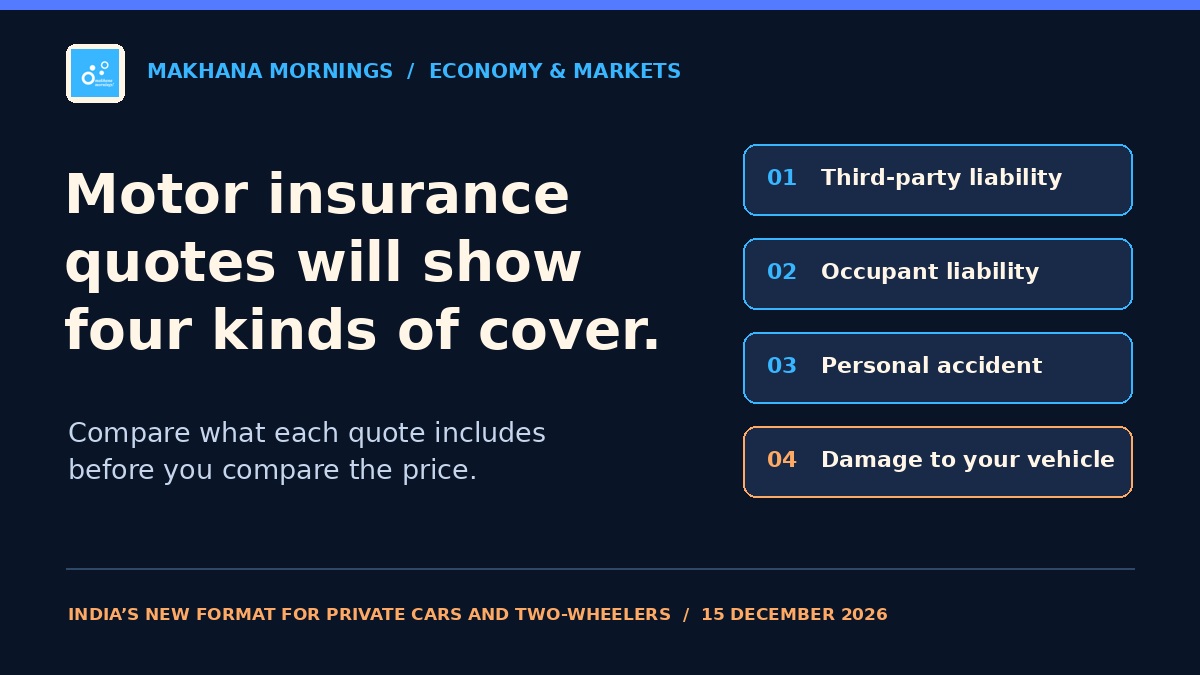
Two motor insurance quotes can have similar prices and cover different risks. One may include damage to your car but leave out separate cover for passengers. From 15 December 2026, the Insurance Regulatory and Development Authority of India (IRDAI) has directed insurers to spell out the choices for private cars and two-wheelers in four sections and show what they charge for each.
That is a change to the insurance policy itself. Bima Sugam, the industry’s online insurance marketplace, is a separate way to buy it. The same circular directs insurers to integrate the new format with the marketplace. A November report says the planned motor insurance beta was deferred. A requirement to integrate is not evidence that people can already buy a policy there.
The four sections cover different risks
Third-party liability. This compulsory section covers the insured’s legal liability to others, subject to the policy terms.
Liability to occupants or a pillion rider. This optional section addresses legal liability to people travelling in or on the insured vehicle. Check who counts as an occupant under the policy.
Personal accident cover. The circular distinguishes mandatory owner-insured cover from optional cover for occupants, pillion riders and drivers other than the owner-driver. Check whether the owner-driver requirement applies to your circumstances and what any cover you already hold satisfies.
Damage to your vehicle. This optional section covers loss of or damage to the insured car or two-wheeler under the policy terms. Insurers can still price their own-damage cover differently.
Compare what is covered before comparing the total premium
The circular requires an option form and a Customer Information Sheet at the point of sale, online or offline. The policy schedule should specify which sections were selected and the premium charged for each. When you compare two quotes, line up the selected sections first, then check the insured value, deductibles and exclusions. A lower total is only meaningful once you know what is included.
If you already have a policy and want to add occupant liability during its term, the circular says your existing third-party insurer should make that available for an additional premium. Check the effective date and time on the endorsement rather than assuming the extra cover starts as soon as you request it. The circular does not require you to cancel your existing third-party policy to add it.




Leave your thoughts