
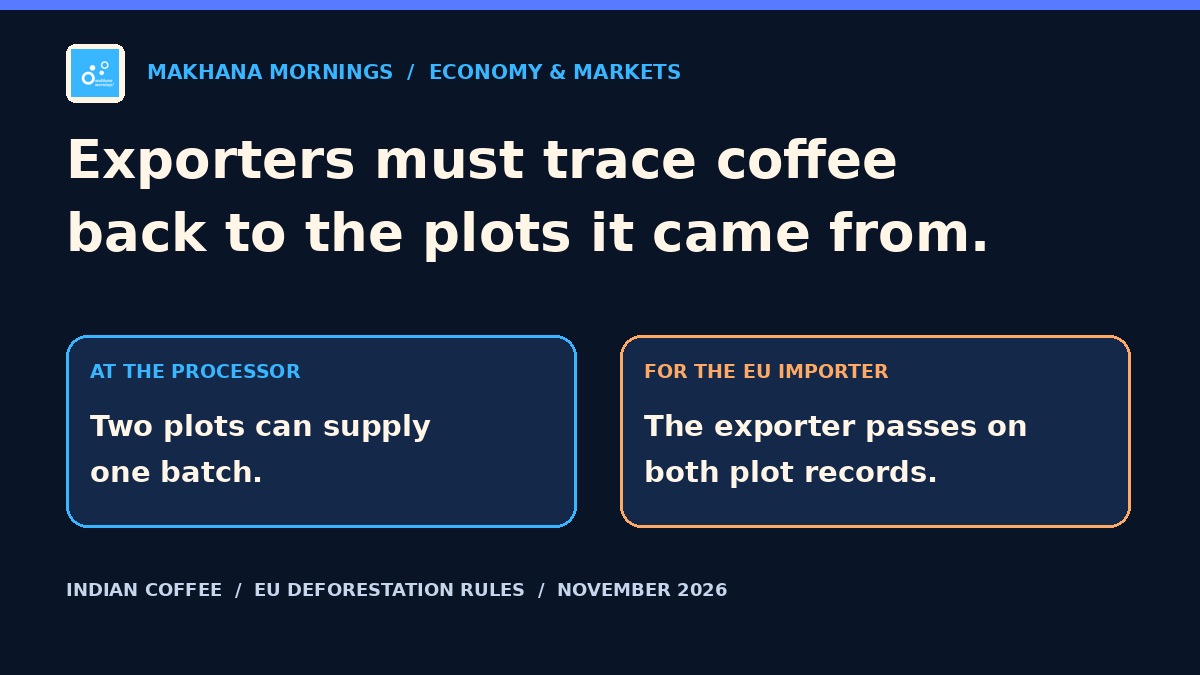
Two farms sell coffee to the same Indian processor. The beans are combined into one batch and shipped to Europe. A label can identify the batch, but it cannot tell the buyer where the coffee was grown unless the processor kept records linking that batch to both plots.
That is the problem behind the Coffee Board’s 27 November decision to cancel its earlier call for traceability software providers and issue a replacement. The Board wants a list of providers that can already track coffee from farm to shipment. The European Union’s deforestation rules, meanwhile, apply to large and medium operators from 30 December 2026.
What the importer needs from the exporter
The relevant EU operator, usually the importer that first places the coffee on the EU market, is responsible for due diligence. The Indian exporter supplies the underlying information. For the two-farm batch, that means recording the location of both contributing plots, preserving the link through purchases and processing, and reconciling the quantities with the batch that was shipped. Knowing the district or recognising the exporter’s brand is not the same as knowing which plots supplied the coffee.
The records help the EU operator check that the coffee was legally produced and did not come from land deforested after 31 December 2020. The rule does not ban mixing coffee from two known sources. Mixing in coffee of unknown origin leaves the importer without the plot evidence it needs.
The Coffee Board’s list is optional, and it has its own calendar
The Board will evaluate and list existing providers. It is not commissioning or operating its own platform through this process. Growers and exporters can buy services directly from listed providers if they choose. Being listed is not a condition for EU compliance and does not guarantee that a shipment meets the rules.
For software providers, the 30 November session at 11 am IST is now an optional pre-submission meeting, not the earlier planned demonstration. Fresh applications and the specified hard-copy documents are due by 6 pm IST on 4 December. Shortlisted firms are due to demonstrate their products on 15 December. The Board aims to publish the list by 31 December, which could be after the first EU application date.
The Crunch
Exporters do not need to wait for the Board’s list to ask suppliers for plot records and agree with buyers on what to send. The EU dates depend on the regulated operator and product, not the size of the Indian farm. Eligible micro and small EU operators generally have until 30 June 2027. Newly covered products such as soluble coffee under the specified tariff code come into scope on 30 December 2027.

Leave your thoughts